Vidéo disponible en anglais uniquement.
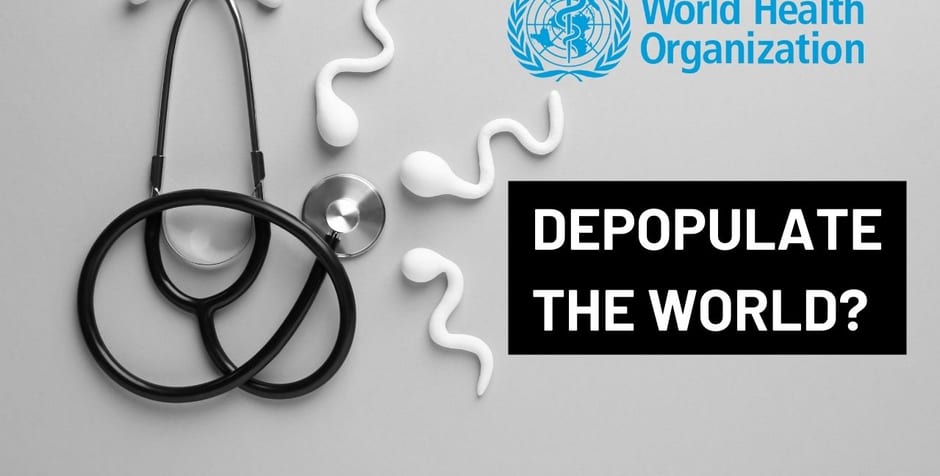
Professor Giuseppe Benagiano was the Director of the Human Reproduction Programme (HRP) of the World Health Organisation between 1993 and 1997. He is a key expert and witness of what the United Nations really funded and promoted over the last decades in the contraception and abortion field.
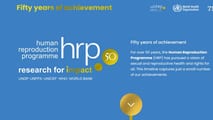
Indeed, the “HRP (the UNDP/UNFPA/UNICEF/WHO/World Bank Special Programme of Research, Development and Research Training in Human Reproduction) is the main instrument within the United Nations system for research in human reproduction, bringing together policy-makers, scientists, health care providers, clinicians, consumers and community representatives to identify and address priorities for research to improve sexual and reproductive health.”
In this interview, Professor Benagiano explains the different HRP task forces that existed, their purpose, and what they achieved. He unveils some truths about the intentions that presided over this project to limit the population growth, and dispels some myths that still surround the rather secretive HRP.
The ECLJ does not endorse everything that was said in this interview, but is convinced that his contribution will inform people on the Human Reproduction Program that promoted contraception and abortion worldwide and influenced the world’s demography.
We encourage you to listen to him and to read our publication on the History of the Human Reproduction Program of the World Health Organization. The link to this publication is in the description below.
Giuseppe Benagiano was born in Rome in 1937. He is a former Professor and Department Chairman at, “La Sapienza” University of Rome. He obtained his Degree (Laurea) of Doctor in Medicine and Surgery from the University of Rome in 1961, and a Libero Docente (Ph.D.) in Gynaecology and Obstetrics, from the University of Rome in 1967. Between 1973 and 1981 he joined the World Health Organisation (WHO), Human Reproduction Programme. In 1993 he was named Director of the Special Programme of Research in Human Reproduction at WHO, and from 1996 to 2003 he acted as Associate Professor of Gynaecology and Obstetrics at the University of Geneva, Switzerland.
---------
The book: "70 Years of Population Policy: History of the Human Reproduction Program of the World Health Organisation 1950-2020"
https://ethicspress.com/products/70-years-of-population-policy
Also available in French: https://www.editions-harmattan.fr/livre-l_oms_et_le_programme_de_reproduction_humaine_1950_2020_70_ans_de_politique_demographique_louis_marie_bonneau_giuseppe_benagiano-9782336451954-79991.html




 Appel à la réforme du HRP de l’OMSPar Louis-Marie Bonneau
 Trisomie 21: Tribune pour les enfants Par Louis-Marie Bonneau
 France : Observations finales du CDPHPar Priscille Kulczyk
 Eugénisme en France : l’ONU préoccupéePar Grégor Puppinck