The European Centre for Law and Justice (ECLJ) has just submitted a written contribution to the United Nations (UN) Special Rapporteur on violence against women and girls, its causes and consequences, on the situation of poor and isolated women facing motherhood, particularly during pregnancy. This was in response to a call for input from Special Rapporteur Reem Alsalem to support her upcoming report on “Violence against mothers”.
This will be particularly significant as it will be the first report on this subject to be presented to the UN Human Rights Council. The Special Rapporteur aims to “highlight in a comprehensive manner the patterns of discrimination and violence against mothers that are often overlooked; review current policies and practices to end severe discrimination and violence against mothers highlight good practices as well as respond to the needs of mothers that are survivors of violence”.
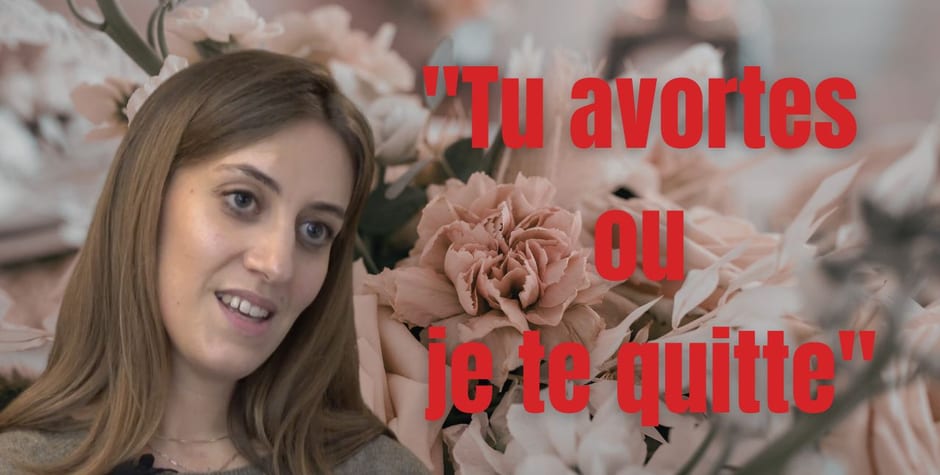
The ECLJ therefore asked the Special Rapporteur to address the various pressures faced by pregnant women who are coerced into having an abortion, i.e. giving up motherhood during their pregnancy, as such pressures constitute “violence against mothers”. The ECLJ based its submission on its many years of research in this field, as well as on a collection of testimonies from women describing their experiences of abortion, the violence they experienced and the resulting suffering: several stated that they had wanted to keep the child but had resigned themselves to having an abortion under pressure.
The ECLJ first highlighted the fact that abortion is more often endured than actually chosen, in the sense that the same woman in more favourable circumstances would carry her pregnancy to term. A few years ago, the Guttmacher Institute reported that in the United States, 75% of women who had abortions did so because of social or economic constraints.[1] Thus, the poorer and more isolated a pregnant woman is, the more likely she is to give up on carrying her pregnancy to term. The pressures in this regard are particularly material and affective or family-related. The former are linked in particular to precarious income, work and housing: according to data published in January 2026, England and Wales have seen a record number of abortions ‘due to the cost of living’. In the latter case, it is not uncommon for the child's father or parents who are concerned about their daughter's future to pressure the pregnant woman to have an abortion. In addition, women who wish to keep the child or who are unsure about the decision report that they have consulted organisations such as Family Planning but have not been informed of alternatives or have been subjected to additional pressure to have an abortion.
The ECLJ then demonstrated that such acts constitute “violence against mothers”. First of all, a pregnant woman is a mother from the beginning of pregnancy, as motherhood is both the state of being a mother and the process of carrying and giving birth to a child. Various international texts also require the protection of mothers even before birth.[2]
The ECLJ then recalled that forced abortion is a crime against humanity, as established by the Nuremberg trials, but also by European and international law, in particular the 1995 Beijing Conference Platform for Action, the 1998 Rome Statute of the International Criminal Court, the Istanbul Convention and the case law of the European Court of Human Rights. However, it is often difficult to distinguish between forced and coerced abortion. The latter is nonetheless a serious form of psychological, physical and reproductive violence against women in their status as mothers, since it affects their decision whether or not to give birth, and therefore strikes at the heart of motherhood, resulting in the termination of the pregnancy, i.e. the killing of the unborn child of which she is the mother. The potential consequences of abortion for the woman's physical and psychological health and her relational well-being, as well as for the couple, also fall within the scope of this violence. However, this is largely overlooked, even denied, by rhetoric that presents abortion as a trivial choice based on a “right to control one’s own body”, which amounts to eliminating the question of its real causes.
Finally, the ECLJ has shown that, in line with States’ international commitments to protect motherhood, both before and after birth, they have also repeatedly committed themselves to preventing recourse to abortion, for example by working to empower fathers. The aim is to guarantee pregnant women the “right not to be coerced into having an abortion”, i.e. to protect them from violence generated by circumstances that largely determine their situation. This is the first of their rights related to sexuality and procreation.
The previous reports published by Ms Alsalem have proved to be extremely valuable, courageously addressing issues such as prostitution and pornography (May-June 2024) and surrogacy (July 2025), practices which she calls on States to work towards abolishing. The ECLJ hopes that this future report will address the issue of violence against mothers in an equally ambitious manner: it is a question of denouncing the vulnerability of pregnant women to the various pressures that can lead them to have an abortion and reminding States of their commitment to preventing such violence.
____
[1] https://www.guttmacher.org/fact-sheet/induced-abortion-united-states
[2] International Covenant on Economic, Social and Cultural Rights, Art. 10.2; European Social Charter, Art. 8; Protocol on Economic, Social and Cultural Rights to the American Convention, Art. 15.3.a.






 UN recognises “coerced” abortion as a form of violence against mothersBy Priscille Kulczyk
 Massachusetts Allows Abortion Up Until BirthBy Constance Avenel
 The Protection of Maternity in the EUBy ECLJ
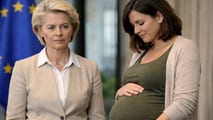 Our letter to Ursula von der LeyenBy ECLJ