
Eastern DRC: Christians Under Attack by Islamic State-Affiliated ADF
Eastern DRC: Christians Under Attack
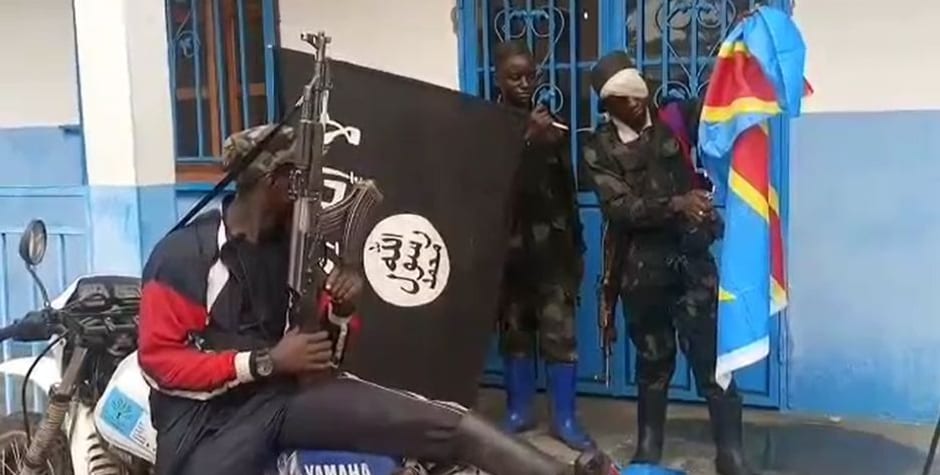
In eastern Democratic Republic of the Congo, the Allied Democratic Forces (ADF), an armed group affiliated with the Islamic State, are intensifying their attacks against Christian communities amid an almost total silence. Massacres at funerals, beheadings in churches, mass kidnappings: while the international community focuses its attention on the M23 conflict, the ADF are expanding both their territory and their atrocities. Faced with the inaction of the Congolese government, the ECLJ is documenting these persecutions and calling on the international community to take action.
Civilians in eastern DRC continue to suffer from ongoing armed conflicts involving the M23 rebel movement, which is reportedly supported by Rwanda, as well as the Allied Democratic Forces (ADF), an Islamist armed group affiliated with the Islamic State’s Central Africa Province (ISCAP), local militias, and other foreign armed actors.
Beyond their devastating humanitarian consequences, these conflicts are also fueled by competition for territorial influence and control over the region’s vast natural resources, including gold and strategic minerals concentrated in North Kivu and Ituri provinces. This situation is further compounded by political paralysis and the manipulation of the electoral process by political elites. Freedom House’s 2025 report consequently classified the DRC as “Not Free.”[i]
While international diplomatic attention and military resources have largely focused on the M23 insurgency and broader regional tensions, violence carried out by the ADF has continued to intensify, benefiting from the resulting security vacuum. ADF attacks disproportionately target civilian populations, including many Christian communities. In its May 2026 report I’d Never Seen So Many Bodies, Amnesty International concluded that the group’s actions may amount to war crimes and crimes against humanity.[ii]
With approximately 96 percent of the DRC’s population identifying as Christian (out of 108 million people),[iii] communities in eastern DRC continue to face massacres, abductions, forced conversions, destruction of villages, and attacks on places of worship motivated by extremist anti-Christian ideology.[iv] This statement is submitted in cooperation with information provided by our local partner, Africa New Day.
1. Continued Violence Against Christians
1.1. Targeted Attacks in Kivu and Ituri Provinces
In just the months of March, April, and early May, 2026, more than 260 civilians were reportedly killed, according to field reports and monitoring organizations. Between May 6 and 7, 2026, at least 40 people were killed in the Beni territory and Ituri province by ADF, who also burned and looted homes. Some residents are still missing.[v] On April 28, 2026, 70 civilians were killed in a single day.[vi] On April 1, 2026, ADF set fire to houses in the village of Bafwakoa, leading to a death toll of 43 as reported by Congo’s military. However, locals reported the death toll at 56 with residents missing and at least 2 known to have been taken hostage.[vii] In March 2026 alone, 29 attacks by ADF occurred, causing the deaths of 89 civilians. In a record high, another 547 civilians were kidnapped by the extremist group.[viii] On March 10, 2026, ADF reported on social media that they captured and beheaded 2 Christians near the village of Mayuano, and later on March 13, the group claimed that 17 Christians were killed in Mushasha.[ix]
1.2. Religious Motivations
While ADF also conducts military operations, it primarily targets civilians. The group has repeatedly demonstrated hostility toward Christian communities in its attacks. In social media statements, ADF has referred to murdered civilians as “Christians,” even when the victims’ specific religious affiliation was not publicly known.[x] This terminology suggests that the group increasingly frames its violence in explicitly anti-Christian terms. ADF has also claimed massacres of Christians and has reportedly forced abductees to convert to Islam under threat of death.[xi]
Additionally, ADF frequently attacks civilians around Christian-specific events or locations: in early 2025, around 70 men, women, and children were abducted and beheaded in a Christian church in the Lubero region.[xii] . In response to these horrific massacres, the ECLJ has mobilized to alert the United Nations, the European Union, as well as African institutions. In July 2025, ADF killed more than 40 men, women, and children in a violent attack on Catholic worshippers attending a night vigil in Komanda, Ituri Province.[xiii] On September 8, 2025, ADF killed at least 61 civilians at a funeral using machetes, hammers, and some guns in Lubero territory, Kivu: the group itself claimed that it had killed nearly 100 Christians. Around thirty houses were also set on fire.[xiv] These killings did not occur indiscriminately; the ADF deliberately planned these attacks. In the September 8 massacre, ADF members mingled in the crowd of mourners until the signal was given.
2. Inadequate Action Taken Against ADF
2.1. Government Silence
The DRC government has been either silent or inactive regarding the most recent attacks against Christians in eastern DRC. The last Universal Periodic Review (UPR) of the DRC by the Human Rights Council was held on November 5, 2024 during the fifty-eighth session.[xv] In the State Party’s national report, there was not a single mention of the Christian killings occurring in eastern DRC. There was no mention of the expansion of ADF. The only mention of any concerns in eastern DRC occurred in the introduction: “The preparation and submission of this report reflect the State’s determination to respect its human rights commitment, despite the political, economic, and social context of insecurity in the eastern part of the country.”[xvi] The murders, rapes, and kidnappings of the DRC’s own countrymen are more than “insecurities.” They are injustices that require action.
The UN Summary of Stakeholders’ Submissions specifically noted ECLJ’s documentation of killings and attacks against Christians committed by the ADF,[xvii] alongside reports from Open Doors International documenting attacks on churches, schools, health centers, and convents in eastern DRC, near law enforcement stations without effective government response. In response to these concerns, the Holy See urged the DRC to “increase efforts to end the targeted killings of Christians in the east of the country” (Recommendation 141.130).[xviii] However, in its official response, the DRC did not support the recommendation and merely “noted” it.[xix]
President Félix Tshisekedi has stated that continued insecurity in eastern DRC could affect the organization of future elections, raising concerns regarding the constitutional two-term limit. He stated: “If we cannot end this war, unfortunately we will not be able to organize elections in 2028.”[xx] Tshisekedi has been president since 2019, but the violent attacks by ADF have only increased.
2.2. Military Response
While the military forces of the RDC (Forces Armées de la Republique Démocratique du Congo [FARDC]) have coordinated with the Ugandan military, this combined effort is mainly focused on countering M23. FARDC forces have been stretched thin While the military forces of the RDC (Forces Armées de la Republique Démocratique du Congo [FARDC]) have coordinated with the Ugandan military, this combined effort is mainly focused on countering M23. FARDC forces have been stretched thin especially in Kivu province.[xxi]
One eyewitness whose report was collected by Amnesty International reported that a FARDC camp was only five kilometers away from the Lubero village attacked on September 8, 2025, but even after civilians attempted to call them, no FARDC forces arrived until the next morning.[xxii]
ADF continues to expand its territory, however: the ADF headquarters relocated and now borders Ituri province and Haut-Uele province located north of Ituri, exposing Haut-Uele to ADF attacks not experienced in fifteen years.[xxiii] With military forces unable to adequately cover the entire affected area, attacks on Christian communities and villages are likely to continue without stronger national and international action.
3. Recommendations
The situation in eastern DRC demonstrates the urgent need for a more comprehensive international response that addresses not only the M23 conflict, but also the escalating threat posed by ADF against civilian populations, including Christian communities in North Kivu, Ituri, and Haut-Uele. The current concentration of diplomatic and military efforts on the M23 peace process has contributed to dangerous security gaps increasingly exploited by ADF forces. The ECLJ therefore calls on the Human Rights Council and Member States to strengthen civilian protection mechanisms in ADF-affected areas, support independent investigations into massacres, abductions, and forced conversions, and ensure accountability for those responsible for war crimes and crimes against humanity.
The ECLJ further urges the international community to reinforce support for local civil society and humanitarian organizations operating on the frontlines of the crisis, including organizations such as Africa New Day and its local partners, which provide essential assistance to victims of violence, displaced families, former hostages, and vulnerable communities. A sustainable peace in eastern DRC will require not only diplomatic engagement and security cooperation, but also long-term support for local actors working to protect civilians, document abuses, promote resilience, and restore stability in communities devastated by years of armed violence.
_____
[i] Freedom House, “Freedom in the World 2025: Democratic Republic of the Congo,” last updated 2026, https://freedomhouse.org/country/democratic-republic-congo/freedom-world/2025#CL.
[ii] https://www.amnesty.org/en/documents/afr62/0860/2026/en/
[iii] U.S. Commission on International Religious Freedom, “Religious Freedom Concerns in Central Africa,” February 2023, page 3, https://www.uscirf.gov/publications/religious-freedom-concerns-central-africa.
[iv] U.S. Commission on International Religious Freedom, “Nonstate Violators of Religious Freedom in the Democratic Republic of Congo (DRC),” March 2026, https://www.uscirf.gov/publications/nonstate-violators-religious-freedom-democratic-republic-congo-drc.
[v] Jean-Yves Kamale, “Islamic militants attack Congo village near Uganda, killing 40 people, local group says,” AP World News, May 8, 2026, https://apnews.com/article/congo-attacks-villages-allied-democratic-forces-killings-563bef10f07e476759c2738b820a6091.
[vi] AFRICA NEW DAY, “Escalating Atrocities in Eastern DRC: Mass Killings, Abductions, and the Failure of International Protection Mechanisms,” May 2026. On file with the author.
[vii] Justin Kabumba and Ruth Alonga, “Islamic State-linked rebels kill at least 43 in attack in eastern Congo,” AP World News, April 2, 2026, https://apnews.com/article/congo-adf-attack-islamic-state-cc6839296f82a4268ba743124db3e383.
[viii] AFRICA NEW DAY, supra note vii.
[ix] Barnabas Aid, “Seventeen Christians killed and around 100 abducted in fresh D.R. Congo attack,” March 16, 2026, https://www.barnabasaid.org/gb/news/seventeen-christians-killed-and-around-100-abducted-in-fresh-d-r-congo-a/.
[x] Id.
[xi] Ryan O’Farrell, Caleb Weiss, Tara Candland, & Laren Poole, “Clerics in the Congo: Understanding the Ideology of the Islamic State in Central Africa,” Hudson Institute, April 11, 2024, https://www.hudson.org/terrorism/clerics-congo-understanding-ideology-islamic-state-central-africa#141.
[xii] APA-KINSHASA, “RDC: plus de 70 civil retrouvés décapités dans une église,” February 16, 2025, https://fr.apanews.net/news/rdc-plus-de-70-civils-retrouves-decapites-dans-une-eglise/.
[xiii] Joseph Winter and Emery Makumeno, “More than 40 killed in DR Congo attack linked to Islamic State,” July 28, 2025, https://www.bbc.com/news/articles/c3ezjg34lw4o.
[xiv] Thomas Reuters, “Islamic State-linked rebels attack at funeral in east Congo, killing at least 61 people,” CBC, last updated September 9, 2025, https://www.cbc.ca/news/world/congo-east-funeral-attack-allied-democratic-forces-ntoyo-1.7628695.
[xv] Universal Periodic Review—Democratic Republic of the Congo, OHCHR, https://www.ohchr.org/en/hr-bodies/upr/cd-index (last visited May 19, 2026).
[xvi] Id.
[xvii] http://media.aclj.org/pdf/ECLJ-47th-UPR-Democratic-Republic-of-Congo-April-2024.pdf
[xviii] Report of the Working Group on the Universal Periodic Review—Democratic Republic of the Congo, OHCHR, https://www.ohchr.org/en/hr-bodies/upr/cd-index (last visited May 19, 2026).
[xix] Report of the Working Group on the Universal Periodic Review—Democratic Republic of the Congo: Addendum, OHCHR, https://www.ohchr.org/en/hr-bodies/upr/cd-index (last visited May 19, 2026).
[xx] Jean-Yves Kamale and Saleh Mwanamilongo, “Congo’s president warns next elections can’t take place unless the conflict in the east is resolved,” AP World News, May 7, 2026, https://apnews.com/article/congo-election-felix-tshisekedi-m23-7b51a769b9d2d1327e7e2b4da23669b7/.
[xxi] AFRICA NEW DAY, supra note vii.
[xxii] Amnesty International, “Democratic Republic of the Congo: ‘I’d never seen so many bodies’: War crimes by the Allied Democratic Forces in the eastern Democratic Republic of Congo,” May 5, 2026, https://www.amnesty.org/en/documents/afr62/0860/2026/en/.
[xxiii] Ladd Serwat et. all, “Africa Overview: May 2026,” Democratic Republic of Congo: The ADF moves northward to Haut-Uele province,” ACLED, May 11, 2026, https://acleddata.com/update/africa-overview-may-2026#democratic-republic-of-congo-the-adf-moves-northward-to-haut-uele-province-0.

 Christians in Iraq at Risk: The ECLJ Raises the Alarm AgainBy Constance Avenel
 Secularism, Catholic Schools, Protection of Life: Leo XIV Has Spoken OutBy Constance Avenel
 Baptism and the “right to be forgotten”By Alicja Słowik
 France: The Church's Suffering & HopeBy Grégor Puppinck