
European Parliament condemns the massacres of Christians in Nigeria
European Parliament condemns the massacres of Christians in Nigeria
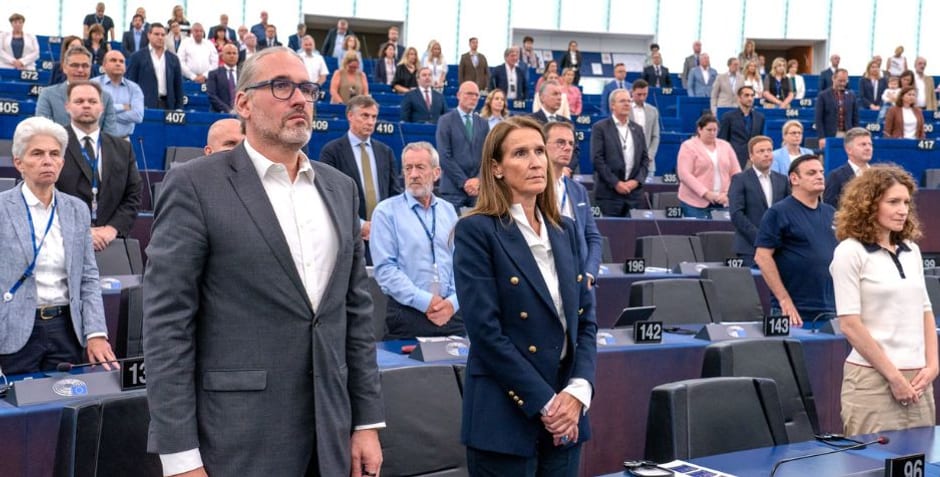
The European Parliament adopted a resolution on the persecution of Christians in Nigeria, following the massacre in Kawel, Plateau State during its last summer session. The resolution condemned the persistent impunity, called for independent investigations and recognised that Christians are the most persecuted religious group in the world. While continuing to attribute the violence to a combination of causes, the Parliament gave particular attention to the persecution of Christian communities and called for stronger protection for them.
On 9 July 2026, the European Parliament adopted an emergency resolution on the persecution of Christians in Nigeria, following the massacre carried out on 22 June in the village of Kawel, in Plateau State. MEPs firmly condemned the attack and stressed that it is not an isolated event. They recalled that this attack forms part of a broader pattern of violence across Nigeria's Middle Belt, where predominantly Christian farming communities, religious leaders, schools, health facilities and places of worship are regularly targeted.
The Parliament in Strasbourg also criticised the Nigerian authorities, finding that they had failed to prevent these attacks despite repeated warnings from local communities, churches and human rights organisations. The MEPs called for independent investigations and for an end to the impunity enjoyed by the perpetrators of these crimes.
A few weeks before the Kawel massacre, the European Centre for Law and Justice (ECLJ) had submitted a contribution to the United Nations Special Rapporteur on freedom of religion or belief, Nazila Ghanea, ahead of her official visit to Nigeria from 8 to 19 June 2026. Drawing on testimony gathered in the field, hospital records and the identities of the victims, that submission had already documented a recurring pattern of attacks directed specifically at Christian communities in northern and central Nigeria.
Clear recognition of the persecution of Christians
By recalling that Christians are the most persecuted religious group in the world today, and that the failure to respond to this persecution undermines the protection of freedom of religion or belief, the Parliament placed the situation in Nigeria within the wider context of faith-based persecution worldwide. At the close of her official visit to the country, the Special Rapporteur on freedom of religion or belief had similarly denounced the persistent impunity and called on the Nigerian authorities to protect freedom of religion more effectively.
The European Parliament also drew attention to the particularly worrying situation of women and girls in Nigeria, denouncing the rise in targeted kidnappings, abductions and violence that strike them disproportionately. On 8 June 2026, several United Nations experts had also raised the alarm over the killings, abductions, forced conversions, forced marriages and gender-based sexual violence directed at Christian communities and other religious minorities in Nigeria.
The data gathered by the ECLJ confirm that the situation is worsening. According to the 2026 report of the Observatory for Religious Freedom in Africa (ORFA), 28,551 Christians were killed in Nigeria between 2019 and 2025, whilst the death toll for Muslims sat at 13,224. When adjusted proportionally to the religious composition of the populations concerned, Christian communities show a death rate 4.4 times higher than that of Muslims, confirming that the violence strikes them disproportionately.
A resolution that remains cautious about the causes of the violence
Despite these advances, the resolution continues to present the violence as the product of multiple factors. The European Parliament attributes it to a combination of religious, ethnic and intercommunal tensions, conflicts between farmers and herders, land disputes, climate pressures, organised crime, extremist activity and impunity. This approach reflects the MEPs' concern to do justice to the complexity of the Nigerian context. It tends, however, to play down the specifically anti-Christian dimension of the attacks, a dimension that partners on the ground, human rights organisations and several United Nations experts keep documenting in increasing detail.
The violence is not confined to clashes over land or resources. It repeatedly targets predominantly Christian villages, churches, religious celebrations and pastors, as well as women and children subjected to forced conversions and forced marriages. The United Nations experts themselves acknowledge that "violence targeting Christians and other religious minorities continues to be rampant", while documenting attacks directed specifically against these communities.
Information gathered recently by the ECLJ's partners on the ground shows that this persecution continues. At the end of June 2026, another mass kidnapping in Borno State brought the number of Christian children currently kidnapped to more than 190, a figure that could exceed 200 according to reports from the field.
A resolution that now calls for concrete action
The European Parliament's resolution sends an important political signal, inviting the European Union Special Envoy for freedom of religion or belief to give particular attention to the deteriorating situation of Christians and other persecuted religious communities in Nigeria. That call must now translate into concrete measures.
Since 2013, the ECLJ has brought the persecution of Christians in Nigeria before the United Nations on more than thirty-five occasions. Yet the attacks continue to multiply. Ending impunity, protecting civilians effectively, and acknowledging more explicitly, at the UN and in the European Parliament, the anti-Christian dimension of part of this violence remain the essential conditions for halting this tragedy.



 Christians in Syria, Algeria, and Morocco: ECLJ takes action in BrusselsBy ECLJ
 EU 2025 Human Rights Report: 7 Key Countries for the ECLJBy Thibault van den Bossche
 Brussels: Conference for Christians in SyriaBy ECLJ
 Venezuela: A Country Turning Against Its Own PeopleBy ECLJ