
The ECLJ warns the UN about the situation of Christians worldwide
The ECLJ warns the UN about the situation of Christians worldwide
Across the globe, Christians are increasingly being targeted because of their faith, both in Europe and elsewhere, and particularly in certain Muslim-majority countries. Violence against them is on the rise, as is the hostility they face, whether from the media, society or culture. Added to these pressures, in some cases, is state-sponsored repression, despite national and international commitments to religious freedom.
In April 2026, the European Centre for Law and Justice (ECLJ) submitted a contribution to the United Nations Secretary-General to draw attention to this worrying situation. In response to his call for a report on combating religious intolerance, this document calls for greater protection for Christians worldwide, particularly in Europe, but also in Algeria, Turkey and Pakistan.
A Hostile and Violent Society Toward Christians in Europe
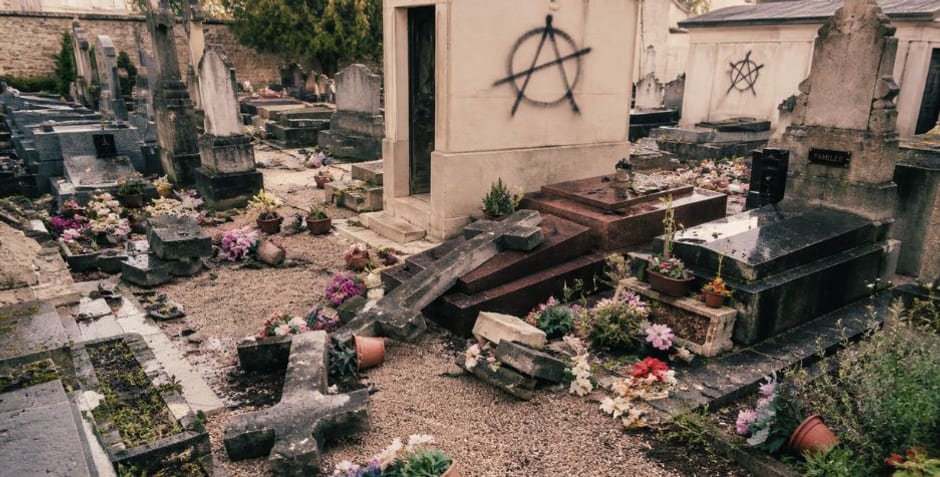
In Europe, the Observatory on Intolerance and Discrimination against Christians (OIDAC) recorded 2,211 anti-Christian hate crimes across 35 countries in 2024, including acts of vandalism, church arson, physical assaults, and even homicides. France is the country most affected (770 incidents recorded by the police), followed by Germany (337 incidents, up 22%) and Spain. In September 2025 in Lyon, an Iraqi Christian refugee was killed with a machete whilst sharing his faith on TikTok, by an Algerian man living in the country illegally who had ties to the Islamic State.
This violence is not limited to physical acts. Christians face widespread hostility in the media, online and in the workplace. In the UK, 56% of Christians report having been mocked or socially rejected because of their beliefs. Conscientious objectors are increasingly under pressure: in Germany, abortion is now included in compulsory medical training; in Spain, doctors who refuse to perform abortions must register on an official list. The ECLJ documents this reality in a report on ‘Christianophobia and anti-Christian hatred in Europe’.
Despite UN resolutions recognizing anti-Christian hatred as a form of religious intolerance, there is no dedicated European institutional mechanism to combat anti-Christian hatred, like those in place for anti-Semitism and anti-Muslim hatred. The European Parliament itself acknowledged this in its resolution of 21 January 2026: “although Christianity is today the most persecuted religion in the world, no European coordinator for combating anti-Christian hatred has been appointed”. This imbalance is also reflected in data collection and political priorities: anti-Christian incidents are generally lumped together under the generic category of ‘religion’, whereas anti-Semitic and anti-Muslim acts are monitored separately and given priority.
A resolution was adopted by the Parliamentary Assembly of the Council of Europe on April 21, entitled “Combating discrimination based on religion and protecting freedom of religion or belief in Europe.” However, in reality, this resolution does not fully reflect the reality of attacks and discrimination targeting Christians. The ECLJ has therefore submitted a petition to the President of the PACE calling for a balanced consideration of the violations suffered by Christians, as well as concrete responses.
These trends observed in Europe are even more worrying in certain Muslim countries such as Turkey, Pakistan, and Algeria, where attacks on Christians are more systemic and systematic.
Turkey: Institutional Discrimination and Systematic Expulsions of Christians
In Turkey, Christian communities face discrimination that is deeply entrenched within the legal and institutional framework. These issues are examined in detail in an ECLJ report entitled ‘The Persecution of Christians in Turkey’. No church – whether Greek, Armenian or Catholic – has legal personality, making it impossible for them to own property, employ staff or open a bank account in their own name. Thousands of properties have been expropriated or placed under state control. The European Court of Human Rights (ECHR) has repeatedly condemned Turkey for these violations, cases in which the ECLJ regularly intervenes.
Furthermore, since 2016, Turkey has been pursuing a systematic policy of expelling foreign Christians—pastors, missionaries and spouses of Turkish nationals—on the basis of opaque “national security” classifications. Between 2019 and 2025, at least 178 foreign Christians were banned or deported, with nearly 380 people affected in total. The European Parliament strongly condemned these expulsions in a resolution adopted in February 2026. The ECLJ is directly involved in defending these victims, particularly in the Wilson case, where some twenty applications have been joined.
Pakistan and Algeria: Legal Repression and Marginalization
In Pakistan, Section 295-C of the Criminal Code prescribes the death penalty for blasphemy against the Prophet of Islam. Christians find themselves arbitrarily on death row on the basis of often unfounded accusations. Furthermore, around 1,000 women of Christian or Hindu faith are reportedly forced each year to convert to Islam and marry Muslim men. In February 2026, the ECLJ referred the matter to the UN Special Rapporteur on extrajudicial executions to draw attention to these serious violations. In a resolution dated April 22, 2026, UN experts expressed concern over forced conversions in the context of marriage in Pakistan.
In Algeria, Islam is the state religion, and the 2020 constitutional amendment removed protection for freedom of conscience. In a report published this April 2026 on ‘The Oppression of Christians in Algeria’, the ECLJ details the legal repression to which the authorities subject Christians. A 2006 decree subjects non-Muslim places of worship to a licensing regime that is almost systematically refused: 58 Protestant churches have been forced to close since then. Practicing Christianity also exposes its members to criminal prosecution for proselytizing or blasphemy, punishable by up to five years’ imprisonment.
These various measures taken against Christians in Turkey, Algeria, and Pakistan raise serious concerns under international law. Many of them are incompatible with the provisions of the ECHR and the International Covenant on Civil and Political Rights (ICCPR), to which these States are parties, and which guarantee the right to freedom of religion or belief, including the freedom to manifest one’s religion through worship, teaching, practice and observance. More broadly, these measures reflect a pattern of structural discrimination, contrary to the principles of equality and non-discrimination enshrined in these same instruments.
ECLJ Calls for Action
The ECLJ calls on the UN Secretary-General and Member States to strengthen equal protection for all religious groups, in particular by improving data collection on anti-Christian incidents and ensuring that hate crimes are effectively investigated. We also call on Turkey, Pakistan and Algeria to bring their domestic law into line with their international obligations, notably under the International Covenant on Civil and Political Rights.





 China: Pastor Cao Must Come HomeBy ECLJ
 Tunisia: Christians Facing Kais Saied’s Identity-Driven ShiftBy Constance Avenel
 Syria: Christians left Behind?By Thibault van den Bossche
 The EU Condemns the Systematic Persecution of Christians in PakistanBy Thibault van den Bossche