
The PACE Remains Silent on Attacks and Discrimination Against Christians in Europe
Attacks Against Christians: PACE Remains Silent
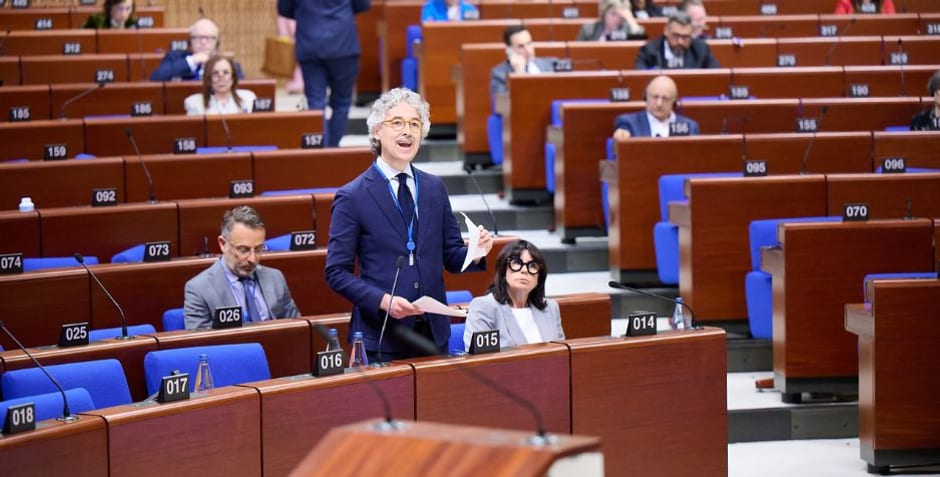
The resolution entitled “Countering discrimination based on religion and protecting freedom of religion or belief in Europe,” adopted by the PACE on 21 April 2026, maintains a clear imbalance in the treatment of different religions. It fails to fully reflect the reality of attacks and discrimination against Christians, despite their extensive documentation by the ECLJ.
During its April 2026 session, the Parliamentary Assembly of the Council of Europe (PACE) adopted a resolution entitled “Countering discrimination based on religion and protecting freedom of religion or belief in Europe,” reaffirming key principles. However, it maintains an imbalance in the way European institutions address violations affecting Christians. This imbalance is not merely rhetorical: it reflects an implicit hierarchy between forms of religious intolerance and reveals an ongoing reluctance to fully acknowledge anti-Christian acts.
The resolution refers to a “significant resurgence of anti-Semitism” and “an increase in antisemitic incidents,” linked to “the terrorist attack of 7 October 2023 and the conflict in Gaza,” as well as “an increase in Islamophobic incidents” (§4). It also refers to two specific resolutions adopted in 2022 on combatting antisemitism and “Islamophobia, or anti-Muslim racism” (§3). Once again, this illustrates the almost exclusive focus of European institutions on these phenomena.
It is necessary to go back to 2015 to find any mention of Christians, and even then only marginally, in the resolution “Tackling intolerance and discrimination in Europe with a special focus on Christians.” This absence of explicit recognition is consistent with the current mandate of the Special Representative of the Secretary General “on antisemitism, anti-Muslim hatred and all forms of religious intolerance,” which does not explicitly mention Christians. The current office-holder also took part in the Antalya Diplomacy Forum, in Türkiye, from 17 to 19 April, where she addressed anti-Muslim hatred online.
Yet the 2,211 anti-Christian incidents recorded in Europe in 2024, according to the Observatory on Intolerance and Discrimination against Christians in Europe (OIDAC), call for equally explicit recognition. The ECLJ has extensively documented these attacks and discrimination in its 2025 report “Christianophobia and Anti-Christian Hatred in Europe.” Such an imbalance weakens the overall coherence of the resolution and raises concerns about equal treatment among religious groups.
A welcome but still limited recognition of discrimination against Christians
Importantly, the Assembly acknowledges that “intolerance and discrimination on grounds of religion or belief affect both majority and minority religious groups in Europe” and that “the expression of faith is sometimes unduly limited by national legislation and policies” (§10).
This formulation deserves attention. It introduces a real, albeit implicit, recognition of the violations experienced by Christians, including in countries where they remain numerically predominant. It also confirms the ECLJ’s analysis regarding certain restrictive interpretations of secularism, particularly in France, where it can lead to disproportionate limitations on the public expression of Christian beliefs.
A positive step on data collection, but major shortcomings remain
The resolution calls on States to “collect data on intolerance and discrimination on the grounds of religion” (§14.1.1). The ECLJ fully supports this objective. Accurate documentation is a prerequisite for any effective public policy. In this respect, the work of independent organisations such as OIDAC or the Observatorio para la Libertad Religiosa y de Conciencia (OLRC) in Spain plays a crucial role.
However, three limitations remain significant. Christian victims often underreport incidents due to self-censorship, fear of stigmatisation, or reluctance to appear as victims. Public authorities tend to undercount anti-Christian acts, retaining only those with clearly established political motives. Finally, the transmission of such data to international bodies such as the OSCE Office for Democratic Institutions and Human Rights (ODIHR) remains incomplete in many States. These gaps contribute to the continued invisibility of a substantial portion of violence and discrimination affecting Christians in Europe.
The absence of conscientious objection and protection of places of worship
Despite these positive elements, two major omissions weaken the scope of the resolution. It makes no reference whatsoever to the right to conscientious objection, despite its central importance in many contemporary situations. For instance, should a religious sister be required to perform euthanasia in a Catholic hospital? This question was raised by the ECLJ and Sister Agnès, a doctor from the Little Sisters of the Poor, before the United Nations Special Rapporteur on freedom of religion or belief in Geneva.
The resolution also contains no specific provision regarding the protection of places of worship, even though acts of vandalism and attacks against churches continue to increase across Europe. As an example, France allocated nearly €48 million between 2015 and 2025 to secure religious sites, notably through surveillance systems and reinforced protective infrastructure.
An encouraging opening towards civil society
The Assembly introduces a positive perspective by calling to “strengthen consultation and communication with religious communities and civil society organisations in the drafting of legislation” (§14.3.2). The ECLJ already contributes actively to this dialogue at national, European and international levels by providing legal expertise. It will continue to engage proactively in defending the freedom of religion of Christians in Europe.
Ensuring effective protection requires that attacks and discrimination against Christians be recognised and addressed without bias. Freedom of religion, protected under Article 9 of the European Convention on Human Rights, cannot be effectively guaranteed without compliance with the principle of non-discrimination enshrined in Article 14. This implies a balanced acknowledgment of the violations affecting Christians and the implementation of concrete responses. In this regard, the ECLJ has formally submitted a petition to the President of the Parliamentary Assembly calling for a firm response to attacks and discrimination against Christians.


 Secularism, Catholic Schools, Protection of Life: Leo XIV Has Spoken OutBy Constance Avenel
 Baptism and the “right to be forgotten”By Alicja Słowik
 France: The Church's Suffering & HopeBy Grégor Puppinck
 China: Pastor Cao Must Come HomeBy CeCe Heil