
Death Penalty for Blasphemy in Pakistan: The ECLJ Calls on the U.N. to Act
Death Penalty for Blasphemy in Pakistan: The ECLJ Calls on the U.N. to Act
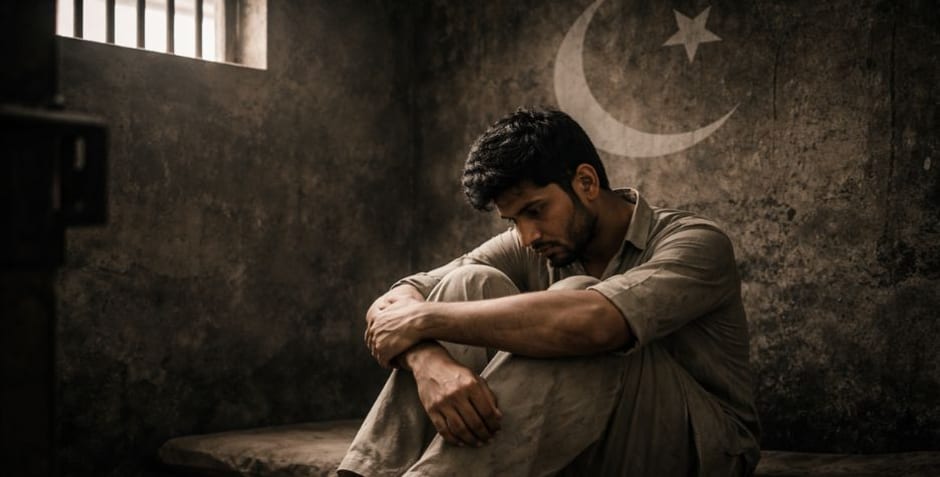
The mandatory and automatic nature of the death penalty for blasphemy against Islam in Pakistan is contrary to human dignity. Beyond this inherently unacceptable legislation, Pakistani Christians are arbitrarily placed on death row for blasphemy they did not commit. On February 27, 2026, the ECLJ referred the matter to the United Nations Special Rapporteur on summary, extrajudicial or arbitrary executions, urging him to address these violations with the Pakistani authorities.
On February 27, 2026, the European Centre for Law and Justice (ECLJ) submitted an official contribution to the U.N. Special Rapporteur on summary, extrajudicial or arbitrary executions. In it, we denounce the mandatory and automatic imposition of the death penalty for blasphemy against Islam in Pakistan, which is incompatible with the prohibition of torture and cruel, inhuman or degrading treatment or punishment, as well as with the protection of human dignity, both guaranteed under Articles 7 and 10 of the International Covenant on Civil and Political Rights (ICCPR).
Section 295-C of the Pakistan Penal Code provides the death penalty for anyone accused of insulting the Prophet of Islam. Although the text mentions life imprisonment, the Federal Shariat Court ruled in 1991 that only the death penalty is consistent with Islamic law, effectively making it mandatory. Several cases followed by our partner organization in Pakistan illustrate the serious procedural deficiencies accompanying the enforcement of this provision.
A Minor Tried as an Adult
Shahzad Masih was 16 years old when he was accused in July 2017 following a religious discussion with a coworker. The report of the senior police officer overseeing the investigation concluded that his remarks were not insulting to Islam. Despite this finding, charges were brought. The court refused to recognize him as a minor and sentenced him to death in November 2022. His appeal remains pending before the Lahore High Court after multiple postponements.
A Conviction Without Technical Evidence
Brothers Qaisar and Amoon Ayub were arrested in 2014 after their names and contact information were found on a website publishing content deemed blasphemous. However, the investigation failed to establish that they were the authors of the site. Pakistani authorities even contacted WordPress to identify the creator but received no response. Despite the absence of direct evidence, the brothers were sentenced to death in 2018. Their appeal before the Supreme Court has been repeatedly delayed.
Accusations Linked to Social Media
In another case, Ahsan Masih was arrested in August 2023 for allegedly sharing an image considered blasphemous on TikTok. The image was not found on his phone, yet he was nevertheless sentenced to death.
Intizar Masih, for his part, has been prosecuted since March 2023 alongside approximately twenty others for alleged blasphemous exchanges in a WhatsApp group. His trial is ongoing, and he also faces the death penalty.
These cases demonstrate that, beyond the inherently problematic nature of the law itself, many Christians are accused of blasphemy for acts they did not commit and are convicted following proceedings marred by serious irregularities. Even under a flawed legal framework, such convictions should not occur.
Death Row as Treatment Incompatible with Human Dignity
Although Pakistan has not carried out executions for blasphemy in recent years, those sentenced remain under the constant threat of execution while their appeals are repeatedly delayed. Prolonged confinement on death row, marked by uncertainty and often harsh detention conditions, produces profound psychological and physical consequences.
This is compounded by considerable social pressure. Fundamentalist groups frequently attend court hearings to intimidate judges, and threats of mob violence against the accused and their families are common, sometimes carried out. In the ECLJ’s view, these cumulative factors amount to treatment incompatible with human dignity.
From Rational Critique of Islam to the Crime of Blasphemy
The ECLJ calls on the United Nations to urge Pakistan to amend its legislation so that individuals accused of blasphemy can no longer be sentenced to death, in order to uphold human dignity as well as freedom of expression, freedom of religion, and the guarantees of a fair trial. While Pakistan is a particularly emblematic case due to the automatic nature of the death penalty, the issue of blasphemy laws extends beyond this country.
In Algeria, for example, Article 144 bis 2 of the Penal Code provides for a prison sentence of three to five years for “whoever offends the Prophet and the messengers of God or denigrates the dogma or precepts of Islam.” In April 2021, Algerian Islamic scholar Saïd Djabelkhir was sentenced in first instance to three years in prison for publications in which he argued that certain rites and practices associated with Islam — notably the sacrifice of Eid al-Adha — derived more from pre-Islamic cultural traditions than from strict religious obligations. The conviction was later annulled on appeal following international mobilization in which the ECLJ participated.
Blasphemy Against Islam and Extrajudicial Violence in Europe
The debate has also resurfaced in Europe. In 2023, following public burnings of the Qur’an in Denmark and Sweden and the diplomatic tensions that ensued, the Danish Parliament adopted a law prohibiting the “improper treatment” of writings or objects of essential religious significance, commonly referred to as the “Koran Law,” as it was widely understood to primarily aim at protecting the Qur’an.
In Sweden, authorities continued to authorize such demonstrations in the name of freedom of expression, while occasionally invoking public order considerations to restrict some of them. Iraqi national Salwan Momika, whose Qur’an burnings were protected and supervised by Swedish police, was shot dead at his home in the suburbs of Stockholm on January 29, 2025. He had previously reported threats against his life but did not receive permanent protection. His assassination underscores that criticism of Islam, whether real or perceived, can expose individuals to violence, including extrajudicial killings, even in Europe.







 The Control Over Freedom of ExpressionBy ECLJ
.jpg) Pakistan: ECLJ Raises Alarm at the UN Over the Death Penalty for Blasphemy Against IslamBy Constance Avenel
Pakistan: ECLJ Raises Alarm at the UN Over the Death Penalty for Blasphemy Against IslamBy Constance Avenel
 Sweden Abandons the Term “Islamophobia”By Youssef Ayed