
Turkey: ECHR Upholds Planned Expropriation of Armenian Foundation
Turkey: ECHR Upholds Planned Expropriation of Armenian Foundation
Turkey continues to weaken Christian foundations through a well-established mechanism of gradual expropriation carried out under the guise of urban planning policies. By rejecting the application of an Armenian foundation in Istanbul challenging the reclassification of its land as “green spaces,” the European Court of Human Rights has implicitly endorsed a delayed yet clearly foreseeable dispossession. For many years, the ECLJ has documented and challenged this structural infringement on the historical Christian presence in Turkey.
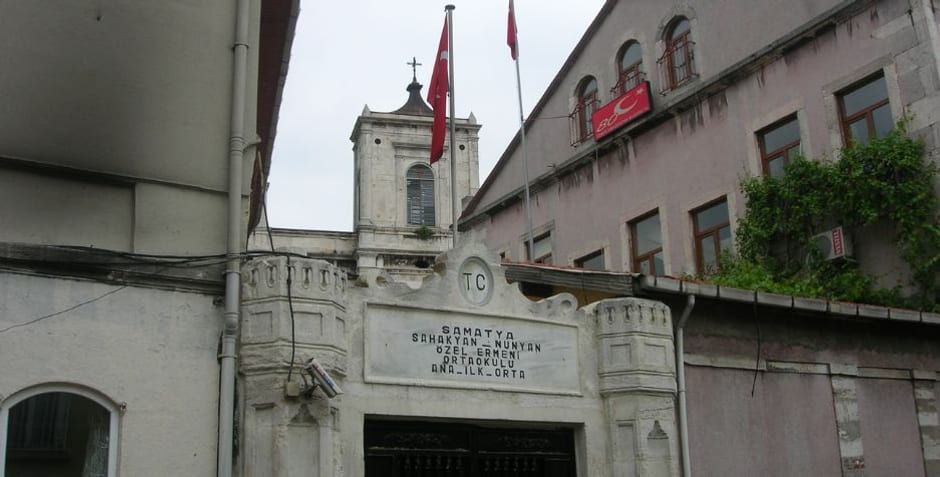
On 22 January 2026, the European Court of Human Rights (ECtHR) declared inadmissible the application lodged by the Foundation of the Sulumanastır Surp Kevork Armenian Church in Samatya and the Sahakyan Nunyan Armenian Cemetery and School against Turkey (application no. 13768/18).
The foundation, which belongs to the Armenian Christian minority, had challenged the reclassification of several of its plots of land located in the historic Fatih district of Istanbul as “green spaces,” under an urban development plan adopted by the metropolitan municipality. These plots constituted an essential economic resource for the foundation. On one of them, the foundation operates a café, the revenue from which finances its religious, educational, and social activities.
A Future Expropriation Explicitly Acknowledged by the Turkish Courts
A judicial expert report acknowledged that, given the religious and minority status of the applicant foundation—protected under the 1923 Treaty of Lausanne—the authorities could have envisaged an alternative solution reconciling urban planning objectives with the preservation of this economic activity. Nevertheless, the domestic courts chose instead to validate a programmed expropriation in the name of the public interest, namely the protection of Istanbul’s historical heritage, the enhancement of its visibility for tourism purposes, and the reduction of overpopulation.
In its decision, the Turkish Constitutional Court acknowledged that the 1:5,000-scale urban development plan did not produce immediate effects. However, it specified that following the adoption of a more detailed 1:1,000-scale plan, the authorities would be entitled to expropriate the plots concerned within a maximum period of five years, subject to compensation. The interference with the right to property therefore cannot be regarded as purely hypothetical. The expropriation was acknowledged in principle, with only its implementation being deferred. The classification of the land as “green space” thus constitutes a preparatory phase of dispossession.
An Urban Planning Policy Embedded in a Structural Anti-Christian Context
This case cannot be examined in isolation. It forms part of a structural context of land insecurity affecting Christian foundations in Turkey, enabling the gradual erosion of their property rights without resorting to overt confiscation. Legal and administrative restrictions include urban development plans, cadastral operations, usage restrictions, and deferred expropriations. It is telling that the domestic courts emphasized that the applicant foundation was not a mazbut vakıf (a foundation placed under state administration), which, in their view, justified the absence of any specific protection. This distinction highlights a deeply problematic logic: Christian foundations that have remained autonomous (mülhak) would only be protected at the cost of their nationalization.
This flawed mechanism had already been used against the Foundation of the Syriac Orthodox Monastery of Mor Gabriel in Midyat (application no. 13176/13). In that case, in which the ECLJ intervened, the administration had registered three cemeteries historically belonging to the monastery in the name of the State Treasury as early as 1986. Part of the “large cemetery” was subsequently cut off during the construction of a road and municipal shops in 2006. During cadastral works in 2007, the Treasury capitalized on this fait accompli by dividing the “large cemetery” and registering part of it as “shops.” Although the Turkish courts ultimately recognized the foundation’s ownership of the three “cemetery” plots, the European Court limited itself to finding a procedural violation in respect of the “shops” plot, thereby opening the way to a lengthy and uncertain return to domestic proceedings, without ordering the restitution of the disputed property.
The ECLJ has recently been granted leave to intervene in several pending cases before the ECtHR concerning the recognition of property rights of Christian foundations in Turkey, notably Balat Rum Balino Kilisesi Vakfı v. Turkey (no. 3984/21) in January 2025 and Yedikule Surp Pırgiç Armenian Hospital Foundation v. Turkey (no. 23343/24) in October 2025. These interventions highlight not isolated violations, but a cumulative administrative and judicial practice that progressively weakens the historical Christian presence in Turkey.
The Strictly Procedural Approach of the European Court of Human Rights
The inadmissibility decision rendered in the present Sulumanastır Surp Kevork case does not, in itself, establish an explicit anti-Christian policy. It does, however, illustrate the limits of the scrutiny exercised by the European Court of Human Rights when interferences with property rights take the form of gradual, technically justified measures devoid of immediate effects. Examining the case under Article 1 of Protocol No. 1, the Court held that the contested plan was a framework plan with no immediate impact on the concrete use of the land, that no expropriation had yet been ordered, that the café continued to operate without restriction, and that any future expropriation would be accompanied by procedural safeguards and compensation.
On this basis, the Court concluded that the interference was neither excessive nor disproportionate and that a fair balance had been struck between the general interest and the rights of the applicant foundation. This reasoning, however, rests on a strictly instantaneous and procedural reading of the right to property, which refuses to take into account the foreseeability of dispossession. Yet the right to the peaceful enjoyment of possessions protects not only against immediate deprivation, but also against enduring legal insecurity where the loss of property is established in principle. By validating a certain but deferred interference, the European Court de facto accepts a method of progressive expropriation that disproportionately affects Christian foundations in Turkey, while rendering such violations difficult to capture through European judicial review.







 Baptism and the Right to Erasure of Personal Data - Key ArticleBy Alicja Słowik
 ECHR: Three Christian Foundations WinBy Thibault van den Bossche
 Autonomy of religious institutions under threat?By Alicja Słowik