
Armenia’s Foreign Minister Denies the Persecution of the Armenian Church During PACE Session
Armenian Minister Denies the Persecution of the Armenian Church
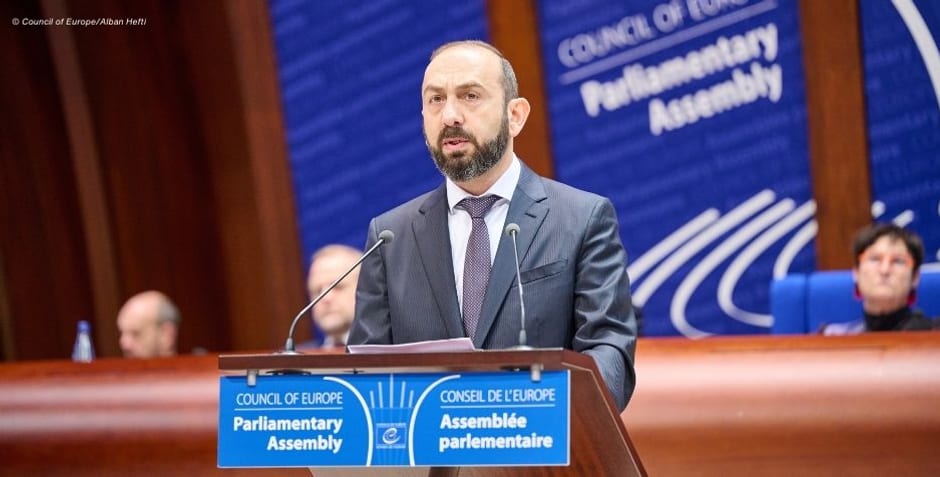
Since 2024, around fifteen members of the clergy of the Armenian Apostolic Church, including four serving bishops, have been arrested in Armenia, while six other bishops have been banned from leaving the country, in a context of unprecedented confrontation between the State and the Church. Yet, according to Armenia’s Minister of Foreign Affairs, Ararat Mirzoyan, persecution is nothing more than a rumor—an assertion he defended before the Parliamentary Assembly of the Council of Europe (PACE) on 28 January 2026.
In its Resolution 2635 of 26 January 2026, the Parliamentary Assembly of the Council of Europe (PACE) regretted “the excessive polarisation and stigmatisation of political opponents by all sides in Armenia.” It also expressed that it was “deeply concerned by the tensions between the Prime Minister and the head of the Armenian Church, and by the reports of plots to usurp power by several clergymen belonging to the Armenian Apostolic Church.”
In the same text, the Assembly exhorted the Azerbaijani authorities “to end retaliatory prosecutions and to release immediately all those detained on politically motivated charges, including 23 Armenian detainees.” Moreover, Azerbaijan’s delegation remains suspended from PACE, as its credentials have not been ratified since January 2024 due to persistent failures to comply with the obligations arising from membership in the Council of Europe.
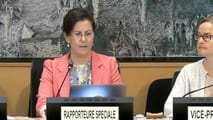
It was against this tense backdrop that, on 28 January 2026, Armenia’s Minister of Foreign Affairs, Ararat Mirzoyan, emphasized before PACE Armenia’s determination to pursue peace and normalize its relations with Azerbaijan and Turkey. In his speech, he also referred to the government’s efforts to align with Council of Europe standards, while calling for continued attention and cooperation from the European Union, which Armenia seeks to join. Although his intervention primarily addressed international and regional issues, it also echoed the current internal tensions.
No Bishop or Priest Is Calling for an Armed Coup
In response to a question from Sir Edward Leigh (ECPA), Mirzoyan portrayed the alleged persecution of the Church in Armenia as a mere rumor, justifying the arrest of around fifteen members of the clergy as a legitimate measure consistent with the rule of law. According to the minister, “some Armenian citizens are publicly calling to overthrow, by force and through an armed coup, a democratically elected government. They go so far as to call for the murder of representatives of the Armenian authorities, including myself.”
In reality, no bishop or priest is calling for an armed coup, armed violence, or the assassination of officials. Some clergy members have merely called for the resignation of Prime Minister Nikol Pashinyan, supported or taken part in mass demonstrations, delivered very harsh—sometimes apocalyptic—speeches about the survival of Armenia, and denounced what they consider a national betrayal: the abandonment of Tavush and Nagorno-Karabakh. In response, Pashinyan has repeatedly called on Catholicos Karekin II to resign in order to “purify the Church,” accusing him of having violated his vow of celibacy and of having a child. These opposing positions are explained by the institutional importance of the Armenian Apostolic Church, regarded as a guarantor of the continuity of the Armenian nation.
The “Exceptional Mission” of the Armenian Apostolic Church in the Spiritual Life of the Armenian People
The Armenian Apostolic Church long predates the modern Armenian State. While the current Republic was founded only in 1991, the Church has constituted the backbone of the nation since the year 301, when Armenia became the first country to adopt Christianity as a State religion. After the fall of the Armenian kingdom in 428, the Armenian people endured more than fifteen centuries without a sovereign State. During this long period of foreign domination, the Church exercised a de facto national authority. It is precisely for this reason that Article 18 of the Armenian Constitution recognizes its “exceptional mission as the national Church in the spiritual life of the Armenian people, its role in the development of national culture, and the preservation of national identity.”
Tensions between the Church and the Prime Minister emerged after the 2018 Velvet Revolution. The new government initially emphasized anti-corruption and democratic reforms. Relations with the Church, however, deteriorated when political leaders began to evoke the need for internal reforms, particularly concerning the institution’s governance, financial management, and the place of the clergy in public life. These statements were perceived as a challenge to the Church’s authority and autonomy. The partial Armenian defeat in Nagorno-Karabakh in November 2020 marked a turning point, triggering a major political crisis. In this context, Catholicos Karekin II publicly called for the Prime Minister’s resignation and reiterated this call after the total collapse of Nagorno-Karabakh in September 2023, permanently placing the Church at the heart of national opposition.
Pashinyan’s Escalation Against the Church: the “True Armenia” Versus the “Sacred Struggle”
In reaction to the territorial concessions made by the Pashinyan government in the Tavush region in favor of Azerbaijan, the “Sacred Struggle” movement emerged in May 2024. It took on a national dimension in May 2025, when Archbishop Bagrat Galstanyan led a historic march toward Yerevan. This march resulted in violent clashes and the arrest of around fifteen members of the clergy, including Archbishop Mkrtich Proshyan, Archbishop Mikael Ajapahyan, and Archbishop Bagrat Galstanyan. To justify these prosecutions, the Armenian government invokes peace, democracy, and institutional stability. However, this penal response undermines a role that is nonetheless protected by the Constitution. It weakens the Church’s autonomy, its moral authority, and its ability to defend the rights of Armenians—particularly those displaced following the ethnic cleansing of Nagorno-Karabakh by Azerbaijan—as well as the preservation of their religious and cultural heritage.
At a later stage, on 4 December 2025, the Armenian authorities arrested a fourth high-ranking clergyman, Archbishop Arshak Khachatryan. He is accused of having orchestrated the planting of drugs in the backpack of a protester during a 2018 demonstration against Catholicos Karekin II. Then, on 31 January 2026, with a speed deemed exceptional, the authorities imposed a travel ban on six bishops—Makarios, Hovnan, Natan, Haykazun, Mushegh, and Vahan—as well as on Father Movses, Secretary of the Supreme Spiritual Council. Officially justified by a criminal investigation, this measure was imposed on the eve of an international episcopal assembly scheduled to take place in Austria from 16 to 19 February 2026. Those concerned are accused of having obstructed the execution of a civil court decision ordering the provisional reinstatement of Bishop Arman (Gevorg) Saroyan, former head of the Masis Diocese, who had been dismissed and defrocked on 27 January by Catholicos Karekin II.
Constitutional Reforms of the State and the Church at the Heart of the Conflict
Following several statements made by Pashinyan in early 2025, the government began promoting the ideology of “True Armenia” in order to redefine national identity. This concept contrasts “True Armenia,” limited to the internationally recognized borders of the current Republic, with “Historical Armenia,” which refers to ancestral lands and the spiritual references of the Armenian people. Through this repositioning, Pashinyan seeks to prioritize a pragmatic State and regional peace, renouncing the political and strategic risks associated with historical claims. The Church and the Armenian diaspora strongly criticize this ideology. By reducing national identity to a strictly administrative framework, the government abandons Nagorno-Karabakh (with plans to remove references to it from the preamble of the Constitution) and weakens ties with the 5 to 8 million Armenians of the diaspora, compared to 3 million living in Armenia.
In line with the “True Armenia” ideology, Nikol Pashinyan has stated his intention to undertake a far-reaching constitutional overhaul. He has evoked the creation of a “Fourth Republic,” to be approved by referendum following a possible victory in the parliamentary elections scheduled for 7 June 2026. In parallel, on 8 December 2025, the government opened a new front by launching a “roadmap” for internal Church reform and announcing the creation of a coordination council to oversee its implementation. Supported by ten bishops, Pashinyan called on 5 January 2026 for the removal of the current Catholicos, the adoption of a new Church constitution, and the election of a new Catholicos. In response, the Church maintains that reform of its internal organization falls not within the competence of the State but within its own canonical and ecclesiastical structures. Moreover, the proposed measures would violate the current Armenian Constitution, which guarantees the Church’s autonomy.
Peace with Azerbaijan and a Western Pivot for Armenia’s Survival
This internal conflict unfolds against the backdrop of a major strategic repositioning by Armenia. On the regional stage, Armenia now considers the conclusion of a lasting peace with Azerbaijan a strategic priority—also a condition required by Turkey for opening its shared border with Armenia. Following discussions held in Washington, D.C., in August 2025, the two Caucasus countries initialed a 17-article peace agreement and signed a joint declaration on their future relations. This framework is based on mutual recognition of territorial integrity and the continuation of border delimitation, particularly in the Tavush region, in order to reduce the risk of renewed military escalation. These negotiations also address the issue of Armenian detainees in Azerbaijan. On 13 January 2026, four of them were released in exchange for two Syrian jihadist mercenaries detained by the Armenian authorities.
At the same time, Armenia is openly acknowledging the decline of its alliance with Russia. Disappointed by Moscow’s inaction during the fall of Nagorno-Karabakh in September 2023, the Pashinyan administration ratified the Rome Statute of the International Criminal Court (ICC) in October 2023 and froze its participation in the Collective Security Treaty Organization (CSTO) in January 2024. Armenia is now seeking to integrate into a Western security and economic architecture. U.S. Vice President JD Vance is expected to visit Armenia and Azerbaijan in February, as part of efforts to advance a peace agreement. The Trump Route for International Peace and Prosperity (TRIPP), promoted by U.S. President Donald Trump, envisages a link between Azerbaijan and its autonomous province of Nakhchivan through Armenian territory. Meanwhile, relations with the European Union are progressing, with dialogue on visa liberalization and the granting, on 29 January 2026, of €20 million in defense assistance through the European Peace Facility (EPF).
The ECLJ Reaffirms the Indispensable Autonomy of the Church
In this particularly tense national and regional context, the ECLJ reiterates its long-standing commitment to the protection of Armenian heritage in Nagorno-Karabakh, the release of Armenian detainees held in Baku, and the right of Armenians to a free, safe, and dignified return. With regard to the internal situation in Armenia, the ECLJ recalls that freedom of religion implies the protection of religious institutions from any disproportionate pressure by the State, and that democratic pluralism requires respect for counter-powers, including moral and religious ones. Maintaining close cooperation with ecclesiastical leaders therefore remains essential to building a solid and lasting peace, both within Armenia’s borders and with its diaspora and neighboring States.
SIGNATURES





 Baptism and the Right to Erasure of Personal Data - Key ArticleBy Alicja Słowik
 ECHR: Three Christian Foundations WinBy Thibault van den Bossche
 Autonomy of religious institutions under threat?By Alicja Słowik