
Euthanasia: France Will Have the Most Permissive, Expeditious, and Repressive Procedure in the World
Euthanasia: France Will Have the Most Permissive, Expeditious, and Repressive Law in the World
The bill as submitted to the National Assembly for a vote opens widely the door to euthanasia and assisted suicide. It is not limited to terminally ill patients. On the contrary, it applies to anyone suffering from a “serious and incurable” illness who declares that their suffering is unbearable. They alone are the judge of their own suffering. The law would allow the deaths of hundreds of thousands of people in France, following the example of Quebec, where 10% of deaths are already “voluntary.” In Switzerland, people who are “tired of living” are granted death without even being ill. Euthanasia and assisted suicide are becoming commonplace there, as abortion once was.
In France, more than 450,000 people have metastatic cancer, 150,000 suffer from Parkinson's disease, 120,000 have multiple sclerosis, 100,000 have severe respiratory failure, etc. All these people, and many others, could benefit from an "expedited" death. It is therefore not an exceptional law, which application would be reserved for a few extreme cases. This law would cause the death of thousands of vulnerable people. This law would make death one of the parameters of the individual and social management of our existence, i.e.: The early death of sick people will become a topic for public policy.
It is also a law whose scope will expand. Because by making death an individual right, any condition imposed on its exercise becomes an infringement of freedom and equality. Thus, the Social Affairs Committee has just extended the “right to die” to people suffering from psychological distress, so as not to discriminate between patients. This paves the way for euthanasia for the three million people suffering from severe mental disorders in France. This egalitarian logic has led Belgium to extend euthanasia to minors.
The most expeditious euthanasia procedure in the world
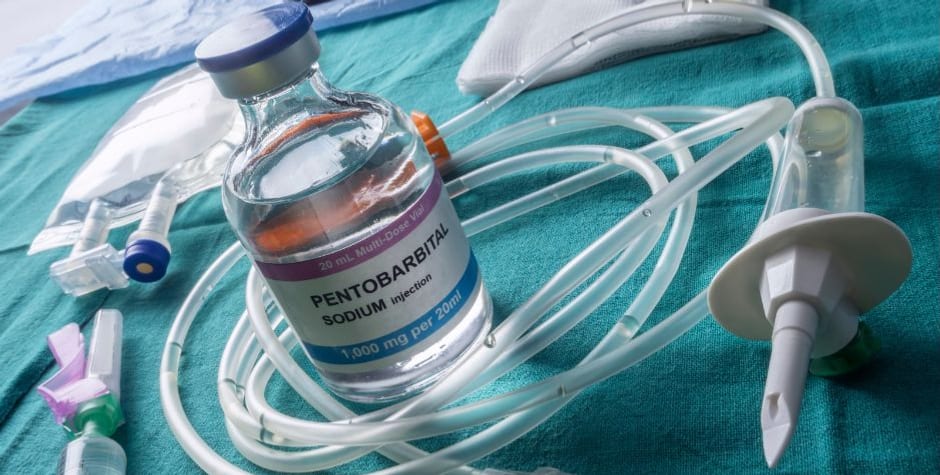
The suicide and euthanasia procedure can be completed in three days. To initiate it, there is no need for a written request from the suicidal person; a doctor's certificate is sufficient. The doctor consults—for advice only—another doctor of his or her choice and a member of the healthcare team. Then the doctor decides alone whether the suicidal person is eligible for voluntary death. No one can challenge his or her decision in court, not even the relatives of the person concerned.
The family does not even have the right to be informed of their loved one's request to die. The suicidal person alone decides (when they are capable of doing so) who, if anyone, should be informed of their death. The suicidal person alone can challenge in court the doctor's refusal to exercise their right to die. Within 48 hours of the doctor's decision, death can be induced by lethal injection. In Belgium, the reflection period is one month; in Canada, it is a minimum of 90 days. In France, it would be the same doctor who initiates the procedure, decides on death, and supervises or performs the lethal act. Then, it is also the doctor who shall inform the control commission.
The procedure is the most repressive in the world
Not only does no one have the right to challenge the doctor's decision to grant death, but anyone who attempts to dissuade or prevent a loved one from committing suicide or being euthanized is liable to criminal prosecution. They would face two years in prison and a €30,000 fine under a new “obstruction offense,” which establishes a crime of assisting a person in danger.
To reinforce the crackdown, the law empowers euthanasia advocacy groups, such as the French Exit group, the "Association for the Right to Die with Dignity," to initiate criminal proceedings. These groups are ready to enforce the law, with its activist doctors and lawyers. This text is also the only one in the world to oblige pharmacists to produce poison, forcing them in the future to perform an act that is currently a crime, in violation of the Hippocratic Oath.
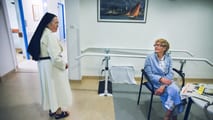
Finally, it is also the only one to oblige all public and private health and medico-social establishments to accept the practice of euthanasia and assisted suicide within their walls, under the threat of prosecution for obstruction. This applies notably to numerous religious establishments, such as Catholic clinics and retirement homes run by the Little Sisters of the Poor. These institutions have already announced that they will refuse to comply with this obligation.
Finally, control is only planned after death, when it is already too late. These checks are formal; they consist of verifying compliance with the procedure, based on information provided by the doctor who supervised or performed the act. This check is carried out by an eight-member “commission” appointed by the government, only two of whom are magistrates. Thus, with this proposed law, everything is in place to institutionalize death and allow the state to “manage” it, just as it already largely manages the rest of our existence. This is a decisive step in the dehumanization of our society.
Op-Ed first published in French in Le JDD on February 16, 2026.



 Noelia's Case: the ECHR to Rule Again?By Nicolas Bauer
 Are American Religious Institutions Required to Refer Patients Who Request Euthanasia?By Alicja Słowik
 France: Aid in Dying & the Rights of People with DisabilitiesBy Nicolas Bauer
 Euthanasie: liberté des établissementsBy Grégor Puppinck