
Venezuela: A Country Turning Against Its Own People
Venezuela: A Country Turning Against Its Own People
Venezuela is one of the most Christian countries in Latin America with 88.5% of its population identifying as Christian. Yet, under a regime that has held power for more than twenty-five years, this religious majority has become a target. On the occasion of the Universal Periodic Review, the ECLJ officially presented a report denouncing Venezuela’s failure to protect fundamental human rights.
By Catalina Henríquez Cajales
The Bolivarian Republic of Venezuela
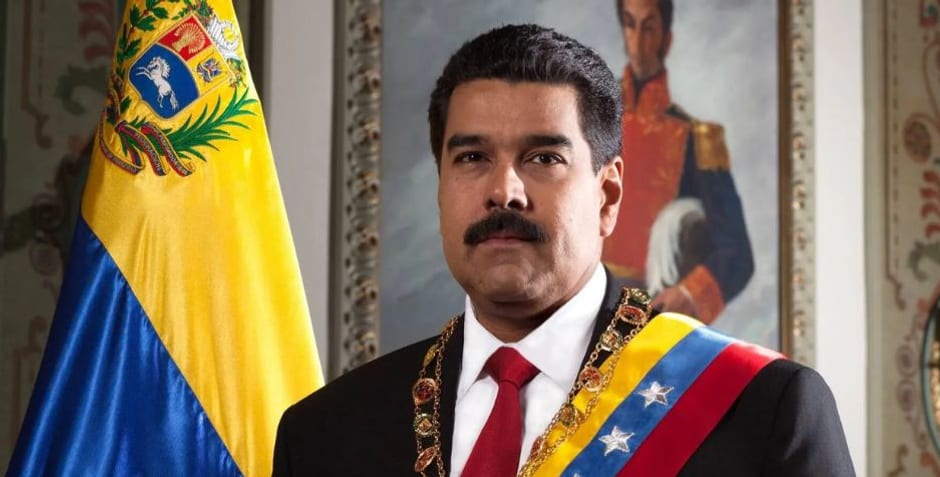
Venezuela has been under the rule of the same political movement for more than a quarter-century, first led by Hugo Chávez and then by Nicolás Maduro. His government has been widely criticized for its authoritarian control, the erosion of judicial independence, and the suppression of dissent, including among religious leaders and civil society. Years of mismanaging their natural resources, combined with sanctions, and the decline of the state oil industry, have driven the country to an economic collapse and triggered one of the largest displacement crises in the Western Hemisphere. Millions of Venezuelans have fled the country in search of stability abroad. Although Maduro was removed from office by the United States, his regime’s political party remains firmly entrenched, controlling the vast majority of state governments and leaving the country’s underlying political structure largely unchanged.
This fragile situation was further exacerbated last June, when two powerful earthquakes (Magnitude 7.2 and 7.5) struck less than a minute apart near the coastal town of Morón, devastating northern Venezuela in one of the deadliest seismic events the country has experienced in over a century. The earthquakes killed more than 5,000 people, injured tens of thousands more, and left entire neighborhoods in Caracas and the state of La Guaira in ruins, with some areas losing the majority of their buildings. The disaster further strained public health systems and humanitarian aid in a country already weakened by economic crisis, mass emigration, and a government with limited institutional capacity. Displaced communities are now dependent on foreign aid and the same NGOs that are already struggling to fill the gaps left by the State in other areas, such as the response to human trafficking.
Christian Persecution and Fundamental Freedoms
Article 59 of Venezuela’s Constitution guarantees every citizen the right to freely profess and express a religious faith, in private or in public, and protects the autonomy of churches from state interference[1]. Internationally, Venezuela is also bound by its status as a state party to the International Covenant on Civil and Political Rights. Under Article 18, it is obligated to protect freedom of thought, conscience, and religion, including the right to manifest belief without coercion.
Despite these provisions, the government treats religious expression as a threat whenever it strays into criticism of the regime. Clergy who speaks out against human rights abuses are singled out for harassment, intimidation, and arbitrary detention. In one documented case from May 2026, a pastor summoned as a supposed witness was instead held for eight days in degrading conditions and subjected to psychological abuse. Catholic priests have had their residence permits withheld, and one was even arrested by the National Guard while praying in a chapel during a protest against the regime[2]. Churches have also been targeted: the government is the only entity permitted to distribute aid to those in need; therefore, the authorities have closed churches for this violation, effectively criminalizing humanitarian work[3].
The regime’s approach is definitely discriminatory: churches and pastors who publicly support the government receive funding and favorable treatment, while those who criticize it face surveillance, threats, and violence against their staff and property. This creates a climate of self-censorship, which is reflected in Open Doors’ 2026 World Watch List captures by ranking Venezuela among the world’s worst countries to practice Christianity[4]. The removal of Nicolás Maduro from office in January 2026 did not change this dynamic, as the same party still governs, and clergy who might expose past abuses now face an even greater sense of uncertainty.
In our contribution, we emphasized that Venezuela can no longer pretend to guarantee religious liberty in its constitution while punishing believers for exercising it.
Human trafficking on the rise
Venezuelan law prohibits human trafficking in Article 54 of the Constitution and Article 174 of the Penal Code. The country is also a party to the Palermo Protocol, which obliges states to establish comprehensive prevention and victim protection systems, rather than merely outlawing the practice.
The scale of the problem has outgrown the state’s response entirely. The collapse of Venezuela’s economy has led to millions to fleeing the country. Criminal networks, including gangs such as Tren de Aragua, target desperate migrants with promises of jobs or safe passage, only to force them into labor, sexual exploitation, or forced marriage. In 2024, human trafficking tied to Venezuela was generating $2.6 billion in revenue, with hundreds of thousands of Venezuelans estimated to be living in conditions of modern slavery[5]. Roughly a third of Venezuelan migrants heading towards the United States are believed to have suffered sexual abuse along the route.
This crisis is particularly damning not just because of its size, but also because of the state’s failure to combat human trafficking in any meaningful way. In the most recent reporting year, the authorities recorded no trafficking investigations or convictions, and the government continues to provide no shelter for victims. It is worth noting that, in its previous review cycle, Venezuela did accept a recommendation to establish specialized mechanisms for identifying trafficking victims, but these have never been implemented. In the meantime, it is NGOs that provide what little psychological, legal, and shelter support exists, often working under restrictions imposed by the same government.
Venezuela’s undue interference with fundamental freedoms and failure to confront trafficking is not just a domestic problem. Anyone who leaves the country in search of safety becomes a potential target, and trafficking and sexual exploitation networks now exploit the routes out of Venezuela to expand their operations abroad. Criminal networks exploit the country’s migration crisis to expand their operations, exacerbating the humanitarian crisis across the region.
___________
[1] Constitution of the Bolivarian Republic of Venezuela (30 dec. 1999), https://www.oas.org/dil/esp/constitucion_venezuela.pdf
[2] General Briefing: Venezuela, CHRISTIAN SOLIDARITY WORLDWIDE (May 29, 2025), https://www.csw.org.uk/2025/05/29/report/6520/article.htm [hereinafter CSW].
[3] GNB Assault on Monsignor Zárate Condemned for Bringing Humanitarian Aid to Victims of Cumanacoa, NTN24 (July 16, 2024), https://www.ntn24.com/noticias-actualidad/condenan-agresion-de-la-gnb-a-monsenor-zarate-por-llevar-ayuda-humanitaria-a-damnificados-de-cumanacoa-502285
[4] OPEN DOORS, WWL 2026 Compilation of all Main Documents (Jan. 2026), https://www.opendoors.org/research-reports/wwl-documentation/WWL2026-Compilation-of-main-documents.pdf
[5] Antonio Mariá Delgado, Human Trafficking of Venezuelans Explodes into $2.6 Billion Industry, Report Says, MIAMI HERALD (Sep. 11, 2025), https://www.miamiherald.com/news/nation-world/world/americas/venezuela/article312055509.html.

 Christians in Syria, Algeria, and Morocco: ECLJ takes action in BrusselsBy ECLJ
 EU 2025 Human Rights Report: 7 Key Countries for the ECLJBy Thibault van den Bossche
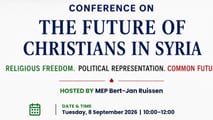 Brussels: Conference for Christians in SyriaBy ECLJ