
2025 Human Rights Report of the European Union: Seven Key Countries for the ECLJ
EU 2025 Human Rights Report: 7 Key Countries for the ECLJ
In its 2025 Annual Report on Human Rights and Democracy, the EU denounces violence against Christians in six countries at the core of the ECLJ's advocacy: Turkey, Algeria, Armenia (Nagorno-Karabakh), Syria, India, and Pakistan. Conversely, its silence regarding the persecution of Christians in a seventh country, Nigeria, raises serious questions.
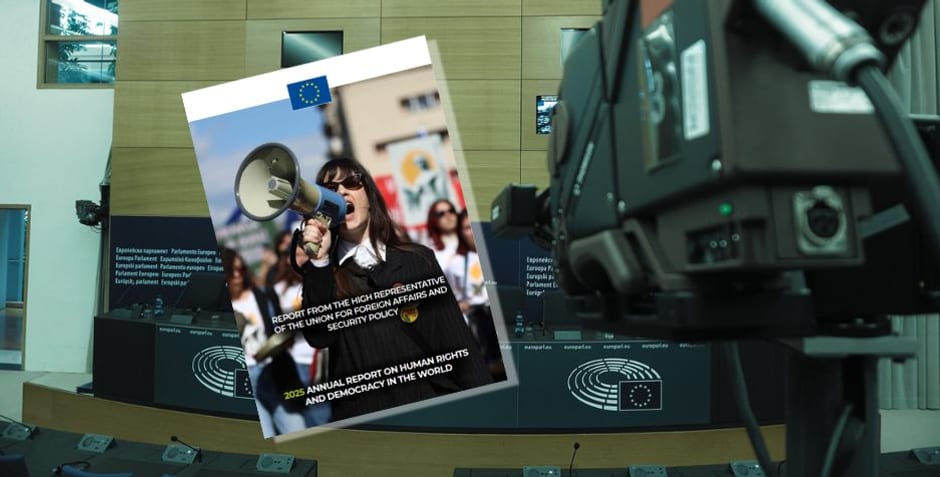
On 11 August 2026, the European Union published its 2025 Annual Report on Human Rights and Democracy in the World. Its findings sound the alarm over the rise of autocracies and the multiplication of conflicts, fuelled by disinformation and censorship. In the face of this erosion of freedoms, Brussels reaffirms its commitment, highlighting support for human rights defenders, the retreat of the death penalty, and youth-led democratic transitions.
The report categorises its interventions based on the geographical and political proximity of the states:
- Enlargement process: These candidate states, such as Turkey, aim for accession and are subject to the highest level of scrutiny. They must align their legislation with European standards, with respect for fundamental rights conditioning the progress of negotiations.
- European Neighbourhood Policy: This framework applies to direct neighbours to the East and South—such as Algeria, Armenia, or Syria—without any prospect of accession. The EU aims for regional stability here by conditioning its financial aid on rule-of-law reforms.
- Bilateral and regional relations: These partnerships cover the rest of the world, notably India, Pakistan, or Nigeria. Engagements are based on trade agreements and strategic dialogues, where geopolitical imperatives render diplomatic pressure more complex.
1. Enlargement Process
1.1.Turkey
As a candidate country for accession, Turkey maintains a close yet tense institutional relationship with the European Union. The EU funds civil society through the Instrument for Pre-accession Assistance (IPA III), but notes a continuous deterioration of the rule of law. Brussels highlights executive interference in the judiciary and non-compliance with rulings of the European Court of Human Rights (ECtHR), particularly in the Kavala and Demirtaş cases. On religious freedom, the European report remains general: it mentions prejudice and hate speech against non-Muslim minorities without detailing the daily discrimination targeting Christians.
In response, the European Centre for Law and Justice (ECLJ) focuses its actions precisely on the legal front. Before the ECtHR, we denounce the systematic expulsion of foreign Christians engaged in peaceful, fully legal religious activities. The Association of Protestant Churches of Turkey (TEK) recorded at least 178 foreign Protestants targeted between 2019 and 2025, impacting 380 individuals alongside their families. Having exhausted domestic remedies, dozens of victims lodged applications with the ECtHR. We were granted leave to intervene in the pending Wiest and Wilson cases, and have requested to intervene in the Platt case.
In May 2026, the ECtHR delivered a landmark judgment in the Mavrakis case. The Court found Turkey in violation for preventing two Greek Orthodox priests from sitting on the board of directors of their religious foundations in Istanbul. This decision gives concrete effect to the ECLJ's work against suffocating state control over Christian communities in Turkey. However, on 26 August 2026, Turkey requested the referral of the case to the Grand Chamber, potentially creating a new judicial hurdle.
The ECLJ has also requested leave to intervene in the case of Yedikule Surp Pirgiç Ermeni Hastanesi Vakfi. This file concerns the property spoliation of an Armenian hospital foundation, wrongly classified as defunct to place it under public guardianship. In November 2025, we had already intervened in a still-pending property spoliation case concerning this same Armenian foundation.
2. European Neighbourhood Policy
2.1. Algeria
The relationship between the EU and Algeria falls under their Association Agreement, within which Brussels favours cautious diplomatic dialogue. The European report remains measured: while it mentions infringements on freedom of religion targeting Christians and Ahmadis, it limits itself to noting the closure of places of worship and prosecutions for proselytism, without calling the broader partnership into question.
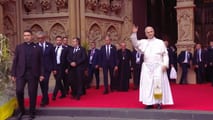
On the occasion of the papal visit in April 2026, the ECLJ published a report entitled "The Oppression of Christians in Algeria". Since our media and institutional advocacy campaign, we have continued mobilizing Western embassies, the European Commission, and UN Special Rapporteurs to maintain international pressure on Algiers.
2.2. Armenia
The EU and Armenia strengthened their ties by signing a Strategic Partnership Agenda at the end of 2025 and launching a visa liberalisation process. Brussels is funding the integration of over 100,000 Armenians expelled from Nagorno-Karabakh in 2023. The EU’s 2025 report addresses the situation through a humanitarian and institutional lens, without denouncing the ethnic cleansing or the destruction of Christian religious heritage.
Nikol Pashinyan’s victory in the June 2026 parliamentary elections confirms the country’s European trajectory. However, this policy has been accompanied by an authoritarian drift and the imprisonment of political opponents. The government has also intensified criminal prosecutions against the Armenian Apostolic Church, a national cultural and spiritual pillar. As the third anniversary of the fall of Nagorno-Karabakh approaches, the ECLJ is preparing a dedicated report and co-organising an event at the UN Human Rights Council on 29 September 2026.
2.3. Syria
Following the fall of the Assad regime in December 2024, the EU lifted its general economic sanctions to support the transition, while conditioning its aid on respect for freedoms. The European report notes an improvement in press freedom, but underscores the emergence of sectarian violence, the slow pace of transitional justice, and the attack on the Mar Elias Church in Damascus in June 2025. It also highlights the marginalisation of non-Sunni minorities in the new institutions.
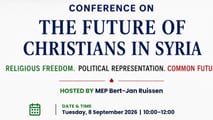
The ECLJ is actively working to preserve the place of Middle Eastern Christians in this transition. We urge European institutions and Member States to ensure, as they normalise relations with the new Syrian authorities, that explicit guarantees regarding the rights and safety of Christian communities are respected. To this end, the ECLJ contributed to the Universal Periodic Review (UPR) at the UN in June 2026 and is co-organising a conference at the European Parliament in Brussels on 8 September 2026.
3. Asia and Africa
3.1.India
As a major economic and strategic partner for the EU, India is subject to measured diplomatic oversight. Brussels monitors discrimination and violence targeting religious minorities, both Muslim and Christian. At the same time, the EU expresses concern over the shrinking civic space caused by the rigid enforcement of the Foreign Contribution Regulation Act (FCRA).
The forced closure and non-renewal of licences for numerous NGOs, under this regulation governing foreign funding, are suffocating Christian organisations. The ECLJ has denounced these effects to UN Special Rapporteurs and various embassies to defend the right of Indian Christian associations to pursue their social work without state interference.
3.2.Pakistan
Pakistan benefits from the EU’s GSP+ preferential trade scheme, an economic lever conditioned on compliance with 27 international human rights conventions. In its report, the EU notes that religious minorities—Christians, Ahmadis, and Hindus—face severe threats, including hate speech, blasphemy allegations, and mob violence. The document also highlights the disproportionate impact on Christians of forced labour, the misuse of blasphemy laws, and the forced marriages and conversions to Islam targeting Christian women and young girls.
On 9 July 2026, the European Parliament adopted a resolution on the abduction, forced conversion, and child marriage of Maria Shahbaz, a twelve-year-old Christian girl. MEPs condemned the persecution targeting minorities, called for the repeal of blasphemy laws, and reiterated that Pakistan’s trade preferences depend on respect for fundamental rights.
In a written statement submitted to the Human Rights Council on 23 May 2026, the ECLJ raised the alarm regarding death sentences and violations of due process guarantees. Through its partner legal office in Lahore, the ECLJ provides defense for five Christians prosecuted for blasphemy, four of whom are currently on death row.
3.3. Nigeria
This represents the most striking discrepancy in the European report. While Nigeria suffers regular, bloody attacks against Christian villages and churches, the EU document remains completely silent on this violence. Brussels presents the country as Africa’s largest multi-ethnic and multi-religious democracy, with a population of approximately 237.5 million. The EU limits itself to denouncing persistent insecurity, corruption, and unequal access to justice, relegating religious freedom to a generic mention.
In contrast, on 9 July 2026, the European Parliament adopted a resolution dedicated to the persecution of Christians in Nigeria. MEPs condemned impunity, demanded independent investigations, and highlighted that Christians constitute the most persecuted religious group in the world. While maintaining a multi-factorial analysis of the conflicts, Parliament called for enhanced protection of Christian communities.
In Nigeria, the NGO Open Doors estimates that a Christian is killed for their faith every two hours. To secure recognition of this reality, the ECLJ engages directly with the Special Rapporteur on freedom of religion and regularly submits statements before the Human Rights Council.





 Christians in Syria, Algeria, and Morocco: ECLJ takes action in BrusselsBy ECLJ
 Brussels: Conference for Christians in SyriaBy ECLJ
 Venezuela: A Country Turning Against Its Own PeopleBy ECLJ