
Secularism, Catholic Schools, Protection of Life: Leo XIV Has Spoken Out
Secularism, Catholic Schools, Protection of Life: Leo XIV Has Spoken Out
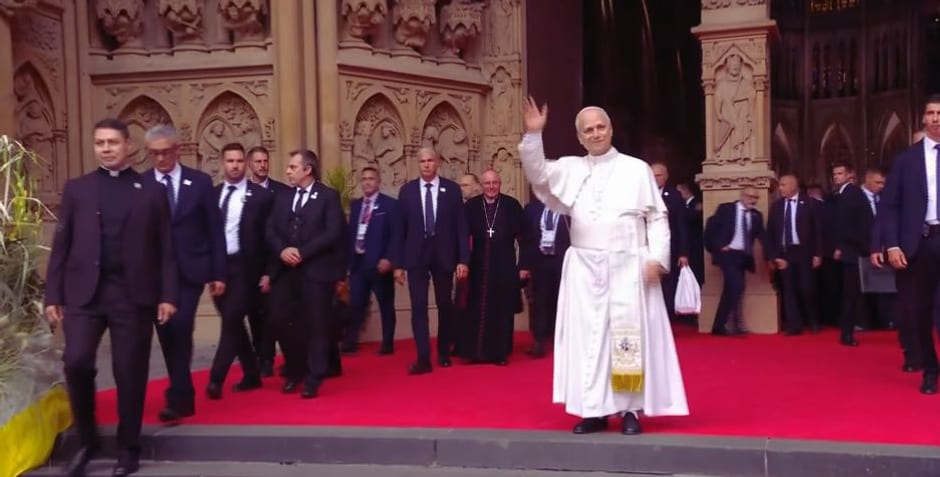
The Holy Father has just concluded a visit to France that will remain etched in the memory. Watched by the millions, the visit took place from 25 to 28 September, with stops in Paris, Lourdes and Metz. Just days earlier, the ECLJ had published its report The Church’s Suffering and Hope in France, providing a legal and sociological assessment of the state of Catholicism in the country. On each of the major issues addressed in the report — secularism, the protection of life, the freedom of Catholic schools, the revival of faith among younger generations, and France’s Christian identity — the Pope had something to say.
Visiting a France That Has Drifted from Its Christian Roots
Pope Leo visited a France increasingly detached from its Christian roots, a country marked by such a decline in faith that it can be described as a collapse, or even, in Benedict XVI’s words, an “eclipse of the sense of God”. Churches are emptying, the transmission of the faith is faltering and priestly vocations are in free fall. The Church in France is also grappling with a form of secularism that has hardened into secularist ideology, expressed in efforts to remove Christianity from public life. Several French bishops were already warning in 2015 of a shift from “state secularism” towards the “secularization of society”.
Added to this is the continuing rise in anti-Christian acts, with both their violence and their scope increasing: from a priest in Beaucaire being assaulted during the Way of the Cross to a growing number of arson attacks on churches. Catholic schools and healthcare institutions, meanwhile, are facing mounting administrative, financial and ideological pressure, with their Christian identity increasingly at risk of being stifled.
The Pope did not ignore these threats. He addressed them.
On secularism: “Not Excluding Religion from Public Life”
On 25 September, at the Élysée Palace, during his first speech before Emmanuel Macron and 500 guests, Leo XIV spoke of a “true secularism” — one that “does not therefore consist in excluding religion from the public sphere or from education”, but instead means “committing ourselves so that the State and religious institutions dialogue with each other and unite their forces in the service of the common good”. He invoked St Augustine’s vision of the “earthly city”, encouraging Christians to take part in public life and to act “guided by the light of his or her conscience illumined by faith”, stressing that such engagement should not be regarded as proselytism or a threat to the unity of the nation.
Leo XIV is thus continuing in the tradition of his predecessors. As early as Pius XII, popes advocated a “healthy secularism”, calling on the State and religious institutions to join forces in the service of the common good. John Paul II formalised and widely promoted the concept in opposition to militant atheism. Benedict XVI developed it further through the notion of “positive secularism”, suggesting that the proper distinction between the spheres of authority itself has roots in the Christian tradition. Francis, and now Leo XIV, have continued to defend a dynamic rather than rigid understanding of secularism, maintaining that State neutrality should not mean excluding religion from society.
Leo XIV also reminded France of its Christian roots, describing it as a country that “shines as a spiritual beacon” and urging it to remain an actor for peace in the face of international crises.
On Catholic Schools: “Their rightful place in the educational landscape”
Continuing his remarks on secularism, the Pope recalled that “true secularism” should recognise religion as an educational resource. Addressing the French authorities, he firmly defended Catholic education, stating that Catholic schools have “a rightful place in the educational landscape of a country like France”. He stressed the legitimacy of these institutions retaining and living out their “distinctive character”, which contributes to the pluralism of society.
These remarks come as pressure on the freedom of Catholic schools grows year after year: the imposition of the broad and ill-defined concept of the “values of the Republic”; school curricula at odds with Christian morality, such as the programme for emotional, relational and sexual education (EVARS); and the prohibition of prayer in the classroom, even when it is optional. Independent schools, meanwhile, are bearing the brunt of efforts to combat so-called “separatism”.
On the Protection of Life: “What Is Legal Is Not Necessarily Moral”
“That the world may have life”, taken from the Gospel according to St John, was the official theme of Leo XIV’s visit, with the defence of life at the heart of his pontificate. Just weeks after Emmanuel Macron promulgated the law on euthanasia and assisted suicide, and just over two years after the constitutionalisation of abortion rights, Leo XIV forcefully recalled that the right to life is the “indispensable foundation of every other human right”. He warned against turning science and technology into profit-making enterprises, encouraging genetic manipulation, surrogacy and the trade in human organs, and cautioned against “the possibility of arranging one's own death”. Above all, he recalled that “what is legal is not necessarily moral”.
His words come against a backdrop of growing financial dependence among Catholic healthcare institutions, which are facing increasing demands for neutrality in the care they provide to patients. They also come at a time when the traditional understanding of healthcare is undergoing a profound shift: care, traditionally rooted in compassionate accompaniment and the alleviation of suffering, is gradually giving way to the technical control of death, now being treated as a medical act.
The Parallel Revival of Catholicism in France
The institutional crisis affecting the Church in France is nevertheless accompanied by a clear revival of the desire for God, driven above all by the younger generation. At the Stade de France, 80,000 young people were captivated by tableaux vivants depicting the great French saints, gave a standing ovation to St Joan of Arc and sang the Salve Regina in unison, inspired by a Pope who told them: “You are the saints of France!”
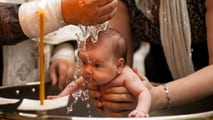
This is precisely the paradox that the papal visit brought to light: a thirst for transcendence and a determination among a generation to reconnect with the country’s Christian roots. The title of the ECLJ report, Suffering and Hope, anticipated this dual movement of decline and renewal. The figures bear this out: more than 21,000 adolescents and adults were baptised in France this year, continuing a steady upward trend over recent years. During his meeting with newly baptised Catholics at the Institut Catholique de Paris, Leo XIV expressed his amazement at the growing number of people seeking to enter the catechumenate, calling on Catholics to welcome and integrate them.
This Christian youth is not content simply to believe: it is getting involved. Preserving religious heritage, re-evangelising rural communities, caring for the elderly and people with disabilities: initiatives are multiplying. And what of the 26,000 young people who, every year at Pentecost, set out on the road between Paris and Chartres?
Let This Visit Be More Than a Passing Moment
“In the night, the light shines more brightly.” With these words, inspired by St Paul, Leo XIV opened his address at the youth vigil. Christian France has not had its last word: this visit proved it, and with it, that Catholicism remains firmly relevant today. On each of the major challenges facing the Church in France, the Pope offered a clear and firm response.
What remains now is to draw the appropriate conclusions, both in law and in public policy. This is precisely the purpose of the ECLJ’s advocacy work, which continues to engage with French public authorities as well as European and international institutions.
 Baptism and the “right to be forgotten”By Alicja Słowik
 France: The Church's Suffering & HopeBy Grégor Puppinck
 China: Pastor Cao Must Come HomeBy CeCe Heil
 Tunisia: Christians Facing Kais Saied’s Identity-Driven ShiftBy Constance Avenel