
UN recognises “coerced” abortion as a form of violence against mothers
UN recognises “coerced” abortion as a form of violence against mothers
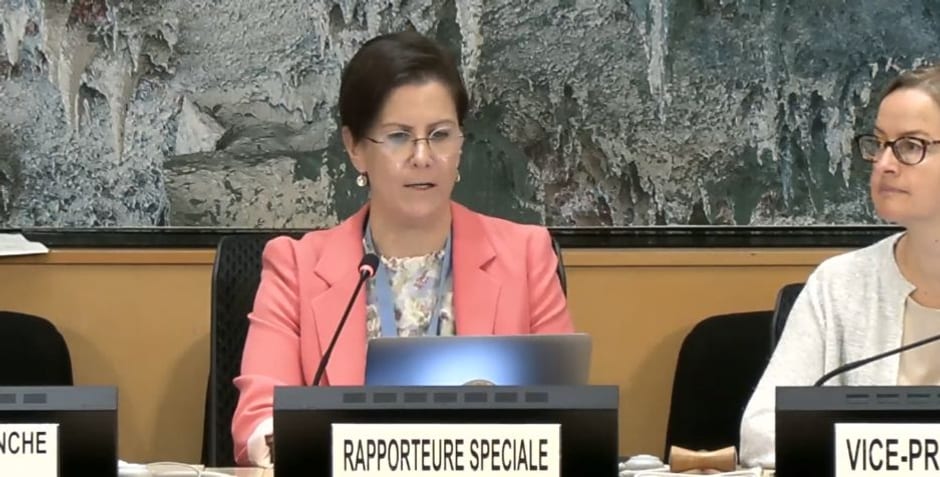
On June 22, 2026, Reem Alsalem, the UN Special Rapporteur on Violence Against Women and Girls, presented her report on violence against mothers to the United Nations Human Rights Council. In it, she provides a comprehensive overview of the violence and discrimination experienced by women and girls around the world because of their status as mothers and offers recommendations to address these issues. This document is unprecedented in two respects. First, as the Special Rapporteur noted, “Despite the fundamental role and contributions of mothers, no UN organization or mechanism, at least none that I am aware of, has produced a global stand alone report on mothers as a distinct category of persons whose lives and experiences including experiences of violence are profoundly shaped by this intersection of being both female and mothers.” Furthermore, the European Centre for Law and Justice (ECLJ) notes with satisfaction that this is certainly also the first time that coerced abortion has been condemned under international law. This is the result of the ECLJ’s work, which contributed to the drafting of this report by submitting written comments to the Special Rapporteur—in response to her call for contributions—regarding the situation of poor and isolated women facing motherhood, particularly during pregnancy. The ECLJ also participated in an expert consultation at the invitation of Ms. Alsalem.
“Coerced” abortion and forced abortion: a welcome distinction
In this document on “violence against mothers,” the Special Rapporteur defines “mother” as any woman who has given birth to or adopted a child, as well as any pregnant woman (§94.a), as the ECLJ had urged her to do.
Ms. Alsalem starts with a simple observation: “Motherhood and mothers have been devalued in society,” which is one of the root causes of the violence they may face. The report notes that "Motherhood remains largely undervalued and mischaracterized as a private choice rather than a public good requiring recognition and support from society and institutions” (§7). It also regrets that “In culture and media, women who openly prioritize motherhood are often portrayed as less ambitious or “choosing less”. Child-rearing is framed as a source of inequality, an inherent limitation or disadvantage. Women who focus on or aspire to motherhood are seen as “unproductive”, despite care work accounting for approximately 9% of global gross domestic product” (§8).
With regard to violence against pregnant women, the Special Rapporteur makes an explicit distinction between “forced” abortion and “coerced” abortion (§41), as recommended to her by the ECLJ. Indeed, even without being physically forced to do so, many women resort to abortion due to various forms of pressure and because they are not presented with any alternatives. According to an American study published in 2023, 61% of women who had an abortion felt a high level of pressure, either from those around them or due to various circumstances.[1]
Explicitly citing the ECLJ—whose contribution was based on numerous testimonies from women sharing their painful experiences with abortion—the Special Rapporteur condemns these pressures, which compel so many women to terminate their pregnancies, as acts of violence. She notes that “Poverty and marginalization may also force mothers to resort to abortion” and backs up her argument with data on France provided to her by the ECLJ: “women in the poorest 10% are 40% more likely to undergo abortion than women in the richest 10% of comparable age and marital status”[2] (§25). More specifically, she condemns various situations that facilitate forced or coerced abortion: “Mothers may also be coerced or forced into abortion, including as a result of abortion by-mail or telemedicine abortion regimes that do not require the medically supervised administration of abortifacient drugs. They may be subjected to abortion without their knowledge or informed consent, including in contexts of intimate partner violence, trafficking and sexual exploitation. A lack of minimum financial means or conditions considered necessary to raise a child may also compel women to undergo abortion. Refusal to undergo an abortion, including in cases involving disability, has led to stigmatization, denial of assistance, attacks and killings” (§41). The Special Rapporteur also emphasizes affective vulnerability, which constitutes a source of pressure in this area: “Mothers subjected to intimate partner violence are more likely to sustain miscarriage and to undergo abortion” (§43). Thus, whether it is forced or coerced due to economic, material, or affective pressures, abortion is indeed an act of violence against mothers: it interferes with the decision to give birth or not—and thus strikes at the very heart of motherhood—and has the effect of ending the pregnancy, that is, of taking the life of the unborn child of whom the pregnant woman is the mother.
Given its commitment to combating pornography, the ECLJ also welcomes the reference to the view of mothers conveyed in this context. This view is contrary to human dignity and contributes to their devaluation in society: “Pornography, which is widely consumed globally, has also catered to the increasing fetishization of pregnant and post-partum women, with a dedicated genre for such content, degrading and exploiting mothers and grandmothers” (§69). The Rapporteur also addresses the situation of surrogate mothers in the context of surrogacy: she notes that they are often victims of economic, psychological, physical, and reproductive violence, and “subjected to practices amounting to trafficking, torture, servitude or slavery-like conditions” (§68).
Supporting motherhood: toward the eradication of coerced abortions
The message is clear: “make mothers matter again.” In presenting her report, Ms. Alsalem drew on a proverb by the Egyptian poet Hafiz Ibrahim to highlight the importance of their role in society: “A mother is a school. When society invests in it and supports mothers, it builds a nation of noble character.” Among the many recommendations in her report, she calls on society to change its perspective on mothers by urging States to “promote the social significance of motherhood and the shared responsibility to support mothers within sex, family, civic and other relevant education curricula and through public awareness-raising campaigns” (§100).
Various recommendations—including several issued by the ECLJ—can also help protect pregnant women from coerced or forced abortion. In general, the Special Rapporteur recommends that States “take appropriate measures to ensure that women who wish to become mothers can do so in conditions of dignity and safety” (§99.f). In particular, they are asked outright to “criminalize coerced or forced abortion, including sex- or disability selective abortion” (§98.e). In this context, additional measures regarding the abortion procedure should be taken to identify situations in which a woman’s consent to an abortion is not fully voluntary and informed, and thereby prevent coerced or forced abortions. This involves “[Ensuring] that mothers considering abortion receive accurate and comprehensive information on available alternatives, including access to support services” and also “In the case of medical abortion, [requiring] in-person or online screening by a trained health professional to identify indicators of coercion, violence or exploitation before dispensing the medication” (§98.e). In addition, it is necessary to “Support adolescent mothers with educational re-entry, promoting their financial autonomy, and tailored assistance enabling access to essential services for themselves and their children” (§98.a).
A realistic view of the situation of pregnant women regarding abortion
The Special Rapporteur therefore takes a realistic approach to the issue of abortion by considering the experiences of many pregnant women: faced with a pregnancy that is sometimes unplanned while they are in a vulnerable situation, abortion is often the only option available to them. The ECLJ is therefore pleased that a nuanced and realistic perspective is now included in a UN document. This demonstrates that the view promoted by so many so-called “feminists”—which presents abortion solely as synonymous with women’s right to autonomy and control over their own bodies—is ideological. This amounts to nothing less than denying the suffering of all those women who would like to give birth to the child they are carrying but are pushed into having an abortion due to the pressures of the circumstances surrounding their pregnancy. For them, this act is not synonymous with freedom, choice, rights, or autonomy: it is an act of violence perpetrated against them—a fact that this report finally and explicitly acknowledges.
_________________
[1] Reardon D C, Longbons T (January 31, 2023) Effects of Pressure to Abort on Women’s Emotional Responses and Mental Health. Cureus 15(1): e34456. doi:10.7759/cureus.34456
[2] Annick Vilain and Others, “Interruptions volontaires de grossesse : une hausse confirmée en 2019”, Études et Résultats, No. 1163 (September 2020).



 Massachusetts Allows Abortion Up Until BirthBy Constance Avenel
 The Protection of Maternity in the EUBy ECLJ
 Our letter to Ursula von der LeyenBy ECLJ
 The European Parliament Opens a Debate on AbortionBy Nicolas Bauer