
Homeschooling: Lawmakers Propose a Return to a More Liberal Policy
Homeschooling: Lawmakers Propose a Return to a More Liberal Policy
The 2021 Law Reinforcing Respect for the Principles of the Republic effectively banned homeschooling as a matter of principle, even though it had previously been a freedom. Given the futility of this reform and its numerous harmful effects, the rapporteurs propose returning to a strengthened declaratory system that is simpler, more functional, and likely more effective.
The Fact-Finding Mission on Homeschooling of the National Assembly’s Committee on Cultural Affairs and Education released its report on Wednesday, October 7, 2026. In just over 250 pages, this report finally reveals the truth in a well-reasoned and irrefutable manner: the de facto ban on homeschooling was enacted to enforce compulsory schooling, not to combat separatism.
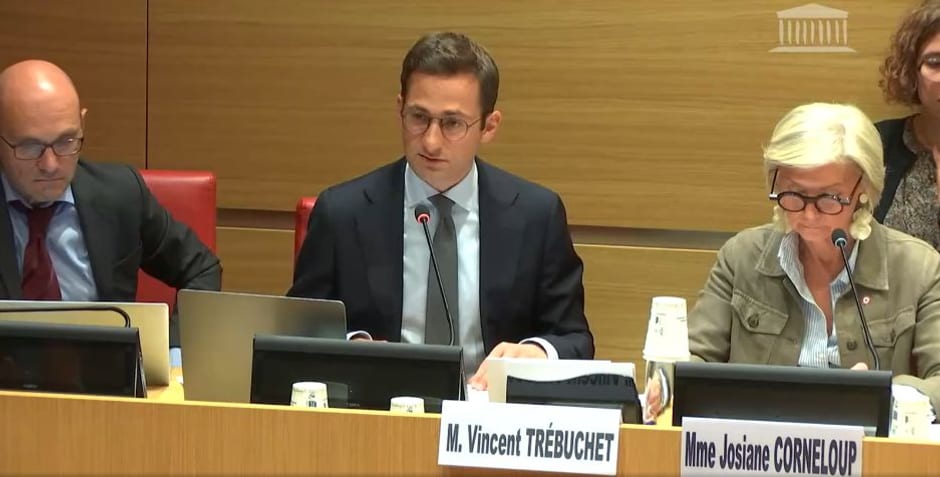
The European Center for Law and Justice was officially heard by the rapporteurs, Ms. Josiane Corneloup and Mr. Vincent Trébuchet, on June 17. Our association is pleased to see that several points we had raised were taken up by the rapporteurs.
In particular, we had demonstrated that the legislature had curtailed a fundamental freedom—one guaranteed under international law and peacefully exercised—without this measure being necessary or proportionate to the objective pursued.
As the rapporteurs explained in their presentation of the report, the reform has caused numerous difficulties, significant additional costs, and a substantial amount of litigation, without resulting in any real benefit for students, parents, or the administration.
A 60% decline between 2021 and 2026
This is the scale of the collapse caused by the change in the system: by shifting from a simple declaration to a cumbersome authorization process for parents, the administration has been able to gradually reduce the number of children receiving home education. Thus, from 72,000 children in home education in 2021—the year preceding the reform—there are now only 28,000, representing a decline of more than 60%.
According to the rapporteurs, the authorization system implemented by the 2021 reform is incomprehensible. The administration has suddenly become the ultimate arbiter of the child’s best interests and grants or denies authorization for homeschooling without it being truly possible to understand why, and without authorization rates being standardized across school districts.
This report highlights the absence of a genuine problem with Islamist separatism underlying this reform and shows how the Ministry of National Education has trapped itself in its own justification. In fact, the entire justification for this more restrictive regime was based on the desire to combat Islamist separatism, fundamentalism, and the misuse of homeschooling. It was as if thousands of young girls were locked away in the basements of parents claiming to homeschool their children. Yet, despite requests, no alarming figures were produced by government agencies. Not only were the allegations never substantiated, but worse still: the Ministry of Education ultimately acknowledged that it did not have a good understanding of these children and their parents because it lacked sufficient statistical tools.
In reality, home schooling was booming until the COVID-19 pandemic for various reasons, and the Ministry of Education was beginning to encounter difficulties in ensuring the effectiveness of its oversight. It therefore needed to drastically reduce the number of children in home education, and the fight against Islamism was merely a pretext. As a result, thousands of families have suffered prejudice and been singled out as separatists, even though this is absolutely not the case.
This report highlights the diversity of home education, which cannot be reduced to a few clichés: many do so out of necessity due to their children’s disabilities; more than half engage in home education for only a year or two, for family convenience or to help the child regain confidence following bullying or school phobia. Some do it because it’s more practical; others because they want to “offer something different” to their children or are disappointed with public schools. There are members of the traveling community, there are environmentalists, and there are ordinary people—rich and poor alike.
This report clearly demonstrates that the authorization system does not improve the quality of education; on the contrary, it brings a host of constraints and problems, without yielding any real savings or benefits.
The ECLJ is therefore pleased to note that the Committee on Cultural Affairs and Education has authorized the publication of this report and its submission to the Minister of National Education. The ECLJ hopes that the legislative changes it recommends will be implemented, as the fundamental rights of families, parents, and children are at stake.




 The Right to Educate our Children Should be the Rule, not the ExceptionBy ECLJ
 Christian Education vs Secular OneBy ECLJ
 UK Supreme Court Imposes Secularism in Christian SchoolsBy ECLJ
 Sex-Ed Program in France: Recourse at the UNBy Christophe Foltzenlogel