
The Right to Educate our Children Should be the Rule, not the Exception
The Right to Educate our Children Should be the Rule, not the Exception
Homeschooling has become the subject of fierce debate across Europe. Some countries are working to restrict parents’ preferential rights to educate their children while others have moved towards liberal measures. Society needs to reconcile parental duties with the best interests of the child in receiving an education and with the State’s role as guarantor of that right.
Catalina Henriquez
Parents’ preferential right: what it is and what it entails
Parents’ preferential right to direct the moral and religious education of their children is a principle widely recognized across international human rights law. There are three main reasons backing this principle:
- family is the fundamental unit of society and must be preserved and protected as such.
- Parents are the primary caretakers and authority over the child, bearing first responsibility for their upbringing and development.
- The principle of subsidiarity, which requires that the State is to intervene only when the structure below is unable to fulfill its duties.
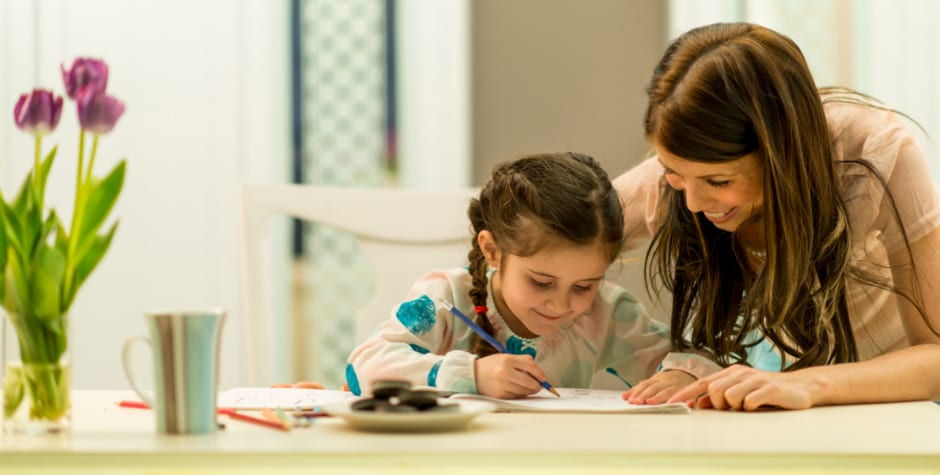
This is not a matter of opinion; it is enshrined across international human rights law, and most Western States have written it into their own domestic systems. Article 13(3) of the International Covenant on Economic, Social and Cultural Rights, Article 14(3) of the EU Charter of Fundamental Rights, and Article 2 of Protocol No. 1 to the European Convention on Human Rights all recognize it. The right has two dimensions: to direct a child’s moral and religious upbringing; and to freely choose the type and form of education provided, whether in a private or state institution, or at home, whether taught by the parents themselves or through tutors. This last option is what is known as homeschooling.
Homeschooling does not require parents to teach every subject themselves. It requires only that they remain the primary directors of their child’s education, free to shape it around the child’s needs and the parents’ own convictions. As the Home School Legal Defense Association puts it, “primary education occurs in the context of the home”, even where families draw on homeschool groups, tutors, or online courses to supplement it[1].
A comparative overview across Europe
In several European countries, homeschooling barely survives. Restrictions are severe enough to render the practice unworkable in real life, amounting to de facto ban. Germany enforces compulsory school attendance (Schulpflicht) so strictly that homeschooling on religious, philosophical, or pedagogical grounds is simply not permitted. Parents may choose between state schools and approved private or religious ones, but education must take place within the formal system. The rare exceptions concern medical necessity, and even such cases, they usually mean state-approved distance learning rather than parent-led instruction[2].
Hungary has moved in the same direction with Viktor Orbán. Parents could once educate their children outside school by registering them as “private students”. But a 2019 legislative amendment effectively ended that option, replacing it with a ministerial approval process. What was once a straightforward declaration has become an “individual learning schedule” exemption granted only for serious health conditions, special needs, high-level sporting or artistic commitments[3].
Portugal and Austria show that a different balance is possible. Under Portugal’s Decree-Law No. 70/2021, qualified parents may teach their children at home, subject to annual reapplication, oversight by the Ministry of Education, and national exams at the end of each school cycle[4]. It is a genuine right, even if it is a closely supervised one. Austria is even more liberal. Parents need only notify the authorities each year that their child will be taught at home; no prior permission is required, and homeschooling has been lawful there for decades. The State’s involvement is limited to verifying, through annual exams, that the child's learning is equivalent to that of state-schooled peers. It does not prescribe curricula, and it does not inspect homes[5]. In Austria, the State checks outcomes, while in Germany and Hungary, it controls the process.
The tide turning
Other countries have made progress. Some are more modest than others, but each worth noting. Lithuania is a case in point: having banned homeschooling outright in 2012, it reversed course in 2020 after years of advocacy from the Lithuanian Homeschool Association, restoring families’ right to educate their children at home across every stage of school. The right remains narrowly conditioned: it is available chiefly to children who cannot attend school for medical reasons, and the national curriculum still applies[6]. It is a step forward, but a limited one.
Poland has gone further. Homeschooling there is now fully legal and, since 2021, considerably easier to access: parents no longer need permission from a school in their own province, but may apply to any school in the country[7]. A once localized, discretionary process has become a genuinely national right. Even Croatia, historically among the most restrictive States on this question, has felt the shift. Since 2022, the “Homeschooling Croatia Association” has campaigned for a bill to give homeschooling a proper legal foundation for the first time, inspired by the Slovenian model, under which pupils remain formally enrolled at a local school with annual exams to validate their progress but are educated at home[8]. The outcome is not yet certain, but the fact that the debate is happening marks a real change in a country where home education has long been treated as an anomaly rather than a right.
But momentum is not destiny, and France is the clearest proof that liberalization can run sharply backwards. Law No. 2021-1109 of 24 August 2021, “Confortant le respect des principes de la République”, replaced a simple declaratory regime with a strictly framed system of prior authorization. Families that had exercised this right for years, without incident, suddenly found themselves needing the State’s permission to continue. The consequences were immediate and severe: in the 2021–2022 school year, 72,400 children and teenagers were home-educated in France. Last year, 2025–2026, only 28,810 children were authorized to be homeschooled[9]. A right exercised by tens of thousands of families was reduced to a fraction of itself within a few years, by the deliberate design of the law itself.
That is the lesson Europe cannot afford to ignore. A right recognized in principle, protected by international instruments, and even expanding in a country, can still be quickly and lawfully dismantled, wherever a government decides to treat parents as a problem to be managed rather than a right to be respected.
That is why the ECLJ is committed to defending parental rights in front of national and international jurisdictions. We have introduced cases requiring international jurisdictions to apply the very principles they are meant to defend. You can stand with us today: support our work or contact us if your parental rights have been violated.
_________________
[1] Home School Legal Defense Association, https://hslda.org/
[2] Basic Law for the Federal Republic of Germany. https://www.gesetze-im-internet.de/englisch_gg/englisch_gg.html#p0033
[3] HSLA, Homeschoolers in Hungary Look at Launch National Organization, November 23, 2021. https://hslda.org/post/homeschoolers-in-hungary-look-to-launch-national-organization#:~:text=regular%20school%20attendance%2C%20including%20students,for%20activities%20such%20as%20sports
[4] Ensino Individual e Ensino Doméstico https://www.dge.mec.pt/ensino-individual-e-ensino-domestico
[5] Schulfplfichtgesetz, Paragraph §11 https://www.homeschoolers.at/gesetzliche-vorgaben/#:~:text=Die%20allgemeine%20Schulpflicht%20kann%20%E2%80%93,ohne%20%C3%96ffentlichkeitsrecht%20erf%C3%BCllt%20werden%2C
[6] HSLA, Lithuanian Government Finally Implements Home Education, October 13, 2021. https://hslda.org/post/lithuanian-government-finally-implements-home-education
[7] The Act of 25 February 2021 amending the Education Act and certain other Acts https://isap.sejm.gov.pl/isap.nsf/DocDetails.xsp?id=WDU20210000619
[8] Homeschooling Hrvatska https://homeschooling.hr/zakonski-prijedlog/#
[9] Question écrite n° 13422 : Régime d'autorisation préalable de l'instruction en famille, https://www.assemblee-nationale.fr/dyn/17/questions/QANR5L17QE13422




 Homeschooling: Lawmakers Propose a Return to a More Liberal PolicyBy Christophe Foltzenlogel
 Christian Education vs Secular OneBy ECLJ
 UK Supreme Court Imposes Secularism in Christian SchoolsBy ECLJ
 Sex-Ed Program in France: Recourse at the UNBy Christophe Foltzenlogel