About
The
ECLJ
About
the ECLJ
Since its founding, the European Centre for Law and Justice (ECLJ) has been playing an active role in shaping legal precedents and discussions related to human rights across Europe and beyond. This timeline highlights significant moments in which the ECLJ has made decisive contributions within courts, international institutions, and parliaments or critical contributions to the cultural debate—marking milestones that reflect its ongoing commitment to the defense of fundamental freedoms and the rule of law.

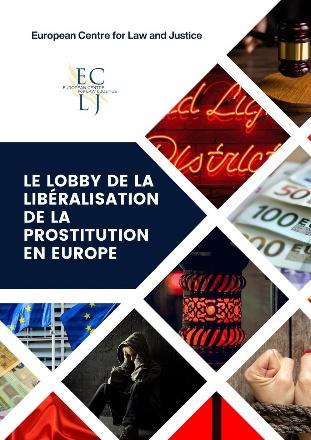
On October 3, the Parliamentary Assembly of the Council of Europe rejected the report and proposed resolution entitled “Protecting human rights and improving the lives of sex workers and victims of sexual exploitation.” This initiative by members of parliament aims to make prostitution a job like any other and is part of a concerted and comprehensive advocacy effort to liberalize this sector and allow its economic expansion, with disregard for the dignity of women.
The ECLJ has been working on pornography and prostitution for many years, has published several reports on these subjects, and has been able to provide members of the Parliamentary Assembly with comprehensive, sourced information on the scale of the problems raised by the promotion of such practices.
On this occasion, the ECLJ is publishing a report on the prostitution lobby.
On June 13, the European Court handed down a ruling on euthanasia, confirming that there is no right to euthanasia under the Convention, but rather a right to palliative care, which states parties are obliged to implement.
The ECLJ intervened in this case to explain that there was obviously no right to euthanasia in the European Convention on Human Rights, but that, more importantly, the Convention firmly condemns the act of giving death to others and makes no exception for people on account of their state of health. The ECLJ's action in these euthanasia cases is critical, as the Court seems to be waiting for a majority of States to legalize euthanasia, without taking any decisions to prevent such a development.
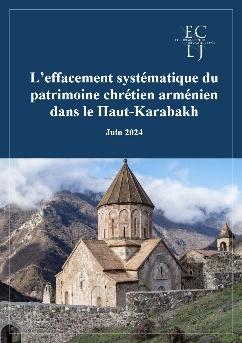
Nagorno-Karabakh, located in what is now southwestern Azerbaijan, hosts a rich treasure trove of Armenian Christian heritage that tells of the faith and culture of the Armenian people. These cherished pieces of Armenian history, however, are being systematically erased from the region. This report seeks to bring attention to the malicious destruction and revisionism of Armenian Christian heritage, evaluate the international response to date, and provide recommendations to combat the cultural erasure occurring in Nagorno-Karabakh.
Following a report on the private funding of certain United Nations bodies in 2020, the ECLJ continued its research into the funding of abortion around the world. We discovered and brought to light a little-known program set up and funded under the auspices of the World Health Organization: the Human Reproduction Program. This very discreet program brought together numerous scientists to develop the best scientific techniques to combat “the risk of global overpopulation” with the financial support of several Western states and powerful private foundations.
This book traces the history of this program and shows that, while it has always been driven by a Malthusian spirit, the original scientific research has given way to ideological activism that no longer produces scientific results but rather a standardized political discourse.
The book was quickly translated and published in English the same year by Ethic Press.
In January 2024, the ECLJ led a delegation of family members of the October 7 hostages to Madrid, to meet members of parliament and the media.
From December 4 to 12, 2023, ECLJ organized a series of high-level meetings for three brothers and a sister of the Hamas hostages with European and French political figures in Brussels, Paris and Strasbourg with officials and diplomats from different countries, as well as European and national deputies from the right and left.
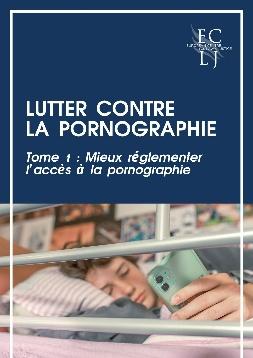
At a time when the production and consumption of pornographic content have exploded, this report exposes the harmful consequences of pornography on adult and child consumers, and proposes legal measures to regulate access.
ECLJ has intervened in a series of cases before the European Court in support of freedom of religion, and in particular of worship, violated by abusive restrictions implemented during the Covid period.
See summary article Violations of religious freedom during the Covid crisis in Europe
ECLJ also defended freedom of conscience in relation to vaccination
In a judgment handed down on November 22, 2022, the ECHR condemned Moldova for failing to convict doctors who had raped and then forced to abort disabled women in their care. Despite their living conditions and the circumstances in which the fetuses were conceived, the applicants wished to carry their pregnancies to term. ECLJ intervened in this case.
The ECLJ successfully defended conscientious objection to abortion. The applicant complained that she had suffered from the birth and death of her disabled son. She believed that the Polish health system was responsible for this, as a result of a doctor's refusal to perform an abortion after 24 weeks of pregnancy.
The ECLJ, supported by a number of prominent figures, successfully intervened at the ECHR to turn down applications asking the ECHR to condemn Poland for its ban on eugenic abortion.
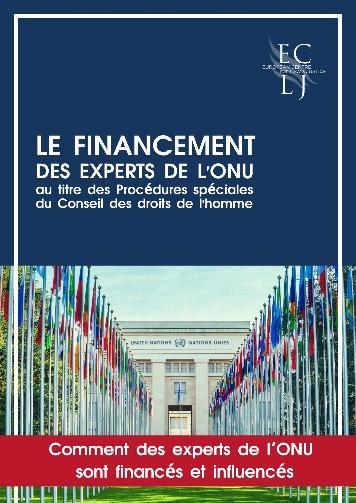
This report analyzes the operation and funding of the UN Human Rights Council's Special Procedures. It reveals the inadequacy and opacity of their funding, and exposes the methods used by certain private foundations to influence these experts. ECLJ was able to conduct over 25 interviews with these UN Special Procedures experts. What emerges is edifying.
The main conclusion of this report is that private foundations directly finance UN experts to write reports in line with the wishes of these private foundations. These reports are then promoted as independent recommendations emanating from the UN, and taken up by governments and international courts to support or justify their decisions. This is in flagrant contradiction with the experts' code of conduct and the resolutions of the Human Rights Council. Experts should be independent, not only of States but also of private foundations that want to align the experts' agenda with their own.
Finally, the report presents recommendations for restoring the conditions of their independence.
ECLJ publishes a video and a report lifting the veil on a little-known reality: the religious persecution of those who leave Islam in Europe. We often focus on foreign countries where Islam dominates, but Europe, due to its large Muslim immigration, now has cities where Muslims are sufficiently numerous and in the majority to impose Sharia law, to a greater or lesser extent.
The authentic testimonies we have collected show that Muslims who leave Islam for Christianity or agnosticism very often live in fear, have to hide and do not reveal their conversion to their families.
On July 29, 2021, ECLJ intervened as amicus curiae before the U.S. Supreme Court in this major case, which will see the Court's jurisprudential reversal 50 years after Roe v. Wade. The Supreme Court found that the U.S. Constitution did not contain a right to abortion, and that no such right could be inferred from any article, not even the one guaranteeing the right to privacy.
In its contribution, the ECLJ endeavored to show the Supreme Court that European countries authorized abortion much more restrictively than the United States, and that the European Court of Human Rights had rightly refrained from recognizing a right to abortion as a matter of privacy.
The US Supreme Court has aligned itself with the position of the ECHR.
CLJ intervened before the Polish Constitutional Court in the case of Case K 1/20, submitting a brief in favor of a ban on eugenic abortion.
In its judgment of October 22, the Polish Constitutional Court ruled that the law of January 7, 1993, which authorizes abortion when "prenatal examinations or other medical data indicate a strong probability of serious and irreversible foetal handicap or incurable illness threatening the foetus's life", was contrary to the Constitution of the Republic of Poland. This guarantees the legal protection of the life of every person, and recognizes the innate and inalienable nature of human dignity. Up to now, more than a third of abortions carried out in Poland have involved children with Down's syndrome (see here).
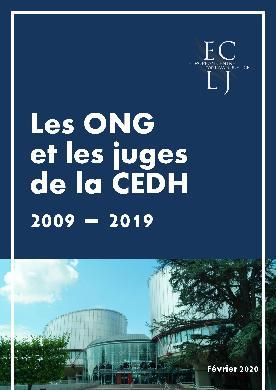
This report sheds light on the relationship between several judges of the European Court of Human Rights and NGOs active before the Court. It analyzes the various problems generated by such links, and seeks to remedy them. This report had a major institutional impact on the European Court, which has since amended its rules several times in response to several of the challenges outlined in this report, as well as in the subsequent report published by the ECLJ in 2023: "The impartiality of the ECHR, problems and recommendations."
The crux of the problem raised in these reports is that some judges, before being elected, acted in court with NGOs regularly intervening at the ECHR and then participated in the judgments of cases in which their former NGO was a party. These are objective conflicts of interest of which many judges were unaware.
The Council of Europe and the European Court have acted accordingly. The Court adopted a resolution on judicial ethics, a procedure for recusal, and clarified its rules on several points, following the ECLJ's recommendations.
This American pastor, unjustly arrested and detained by Turkey, was released in October 2018. ECLJ took an active part in lobbying for his release at the United Nations and the European Union. ECLJ represents Pastor at the United Nations and the Committee on Enforced Disappearances, which condemned Turkey for his imprisonment.
The right to conscientious objection is increasingly asserted in a wide variety of situations. That's why the concept needed to be clarified, not to extend its scope to the point of making it indefensible, but on the contrary to better define it so that it can be guaranteed in a fair measure.
This book by Grégor Puppinck was initially written in English and published by Brill in 2017, before being revised and translated into German, Spanish, Hungarian, Polish and Portuguese.
ECLJ took the case to the Committee on the Rights of Persons with Disabilities and enabled Viviane Lambert and her lawyers to intervene on the sidelines and during the 41st session of the Human Rights Council.
After several months of investigation and calls for testimony, ECLJ was able to gather evidence of the existence of a cruel but real practice in French hospitals where IMGs are performed, and even in birthing centers: neonatal infanticide in hospitals.
In the event of a "medical termination of pregnancy" after 22 weeks' amenorrhea, infanticide is carried out in utero on the fetus, before delivery is induced. However, infanticide is a delicate procedure, and the fetus may survive it and be born alive. This is when it can be abandoned or killed by the doctor. However, the taboo on this subject remains complete in France and Europe.
This report follows on from the report and petition previously initiated by ECLJ on this subject.
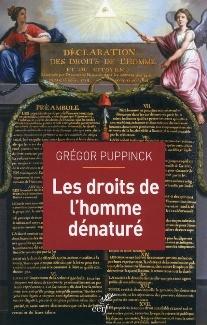
November 2018 saw the publication of Grégor Puppinck's third book, published by Editions du Cerf. In it, he traces the evolution of human rights, which are gradually moving away from the 1948 Universal Declaration. While this post-war declaration was still inspired by natural rights, the affirmation of individualism has generated new anti-natural rights, leading today to the emergence of transnatural rights that promise the power to transform nature. At the heart of this transformation is the reduction of human dignity to the will of the individual, with no regard for the body. Beyond this, human rights discreetly accompany transhumanism, working to overcome representative democracy.
This book has been translated into German, Spanish, Hungarian, Polish and Portuguese.
The applicant couple, Mrs Paradiso and Mr Campanelli, Italian nationals, had travelled to Russia to have recourse to surrogate motherhood, prohibited in Italy. In Russia, they had obtained a birth certificate stating that they were the legal parents of a child born to a surrogate mother, using genetic material belonging to neither of them (the man nor the woman). On their return to Italy, the authorities refused to recognize the filiation, and after a few months with the couple, the child was placed in a home, then adopted by another family. The couple appealed to the ECHR, claiming a violation of their right to respect for private and family life.
The ECLJ was heavily involved in this case.
After initially finding in favor of the couple, the ECHR agreed to refer the case back to the Grand Chamber. In the end, the Court followed the ECLJ's arguments, finding that the child had been purchased in fraud of the law, and that the emotional bond with the child built up over 6 months could not be recognized as an established family life. The Italian authorities acted with the aim of preserving public order and protecting the child, in particular against the risks of "objectification" or international child trafficking.
In this case, the ECLJ successfully intervened to defend the autonomy of the Catholic Church in determining the qualifications required to teach catechism. The case before the European Court concerned the non-renewal of a Catholic religion teacher's appointment due to his divorce and remarriage before the civil authorities.
On September 8, 2016, PACE rejected the draft recommendation Rights of the child linked to surrogacy.
In its judgment published on March 23, 2016, the ECHR strengthened the protection of the rights of asylum seekers of Muslim origin who have converted to Christianity. In this case, it concerns an Iranian refugee who converted after arriving in Sweden. ECLJ intervened in this case.
During a conference entitled "elementary knowledge of Islam", the lecturer was condemned for talking about Mohammed's sexuality with a 9-year-old girl. In particular, she wanted to draw attention to the practice of under-age marriage in Islam, following the example of Muhammad. Although she challenged this conviction before the European Court of Human Rights in 2012, the latter upheld the decision of the Austrian judges in a ruling made public on Thursday October 25. The Court refused to refer the case to the Grand Chamber.
Cite our article on freedom of expression in religious matters.
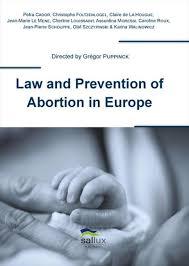
November 2016 saw the publication of ECLJ's first collective work, Droit et prévention de l'avortement en Europe, published by LEH, which aims to address abortion-related legislation and case law as comprehensively as possible. The book also aims to provide the conceptual and legal foundations for implementing a policy of prevention.
The book was translated and published in English the following year by the European think-tank Sallux.
ECLJ has published a survey and a report on child survivors of abortion in Europe, and tried to bring this phenomenon to the attention of the Council of Europe, notably by means of a petition gathering over 230,000 signatories.
Every year in Europe, many children are born alive during elective abortions, particularly when they are carried out after the 20th week, but this can happen as early as 16 weeks. Since survival is contrary to the purpose of abortion, the goal is achieved by other means: asphyxiation, lethal injection or leaving the child naked in a basin until it dies. Given the legal framework that allows late-term abortions in many countries, such cases are not exceptional. In the context of late-term abortions (medical termination of pregnancy), late-term miscarriages or the birth of babies with severe disabilities, children are sometimes born alive and euthanized by doctors, or left to die in agony in a room. These practices are unacceptable, and constitute a flagrant violation of every person's fundamental right to life
In its third intervention in this case, the ECLJ defended the freedom of expression of a pro-life activist, who had carried out awareness-raising campaigns on abortion and made strong statements against this widespread practice. The Court unanimously concluded that the German courts had violated his freedom of expression on a sensitive subject of public interest. Mr. Annen, in his outspoken criticism of mass abortion in Germany, was expressing a moral and political opinion, which is his absolute right.
It was a victory for the ECLJ to have worked to ensure that the Court stuck to its liberal interpretation on abortion, and to have reminded us that even disturbing or shocking opinions must be protected in a democratic society, especially when it comes to social issues such as abortion.
Case concerning the status of supernumerary human embryos conceived in vitro and cryogenically frozen. The Court finds in favor of Italy and rules that human embryos are not things and their destruction can be prohibited.
In June 2015, ECLJ assists the lawyers of Vincent Lambert's parents before the Grand Chamber of the ECHR. The case will continue before the ECHR until 2020 and, according to several judges, will cause the ECHR to lose the right to call itself the "conscience of Europe".
At the same time, the ECLJ introduced Vincent Lambert's parents to the inner workings of the United Nations, in particular the Human Rights Council and the UN Committee on the Rights of Persons with Disabilities. As an interim measure, the Committee ordered France to suspend the euthanasia procedure.
Vincent Lambert was a young father severely disabled following a road accident in 2008. He was in what is known as a pauci-relational state: unable to speak or move, but only able to swallow, yet receiving no care other than comfort care related to his condition. Faced with no reasonable hope of recovery, Dr. Kariger attempted to euthanize him in 2013, with the approval of Vincent's wife, albeit illegally...

On September 15, 2015, ECLJ director Grégor Puppinck's first book is published by Éditions de l'Homme Nouveau. In it, he explains how the individualist revolution has turned Western society upside down, undermining families and marriage, and transformed human rights. These rights, proclaimed after the Second World War as a reaffirmation of natural rights, now promote anti-natural rights (abortion, eugenics, euthanasia...). How is this transformation taking place, and how can the Church respond? This book, which was awarded the "Humanisme chrétien" prize in 2016, provides some answers.
In this case, the ECLJ once again successfully defended the autonomy of the Church, which had wished not to renew an employment contract with a teacher who had made comments and behaved in a way contrary to the magisterium of the Catholic Church. The Court concluded, as the ECLJ had urged, that in the event of disagreement between a religious community and one of its members, the individual's freedom of religion is exercised by his or her ability to freely leave the community. Moreover, the principle of religious autonomy prohibits the State from obliging a religious community to admit or exclude an individual or to entrust him or her with any religious responsibility.
The ECLJ intervened in this case challenging restrictions on access to euthanasia in Switzerland. The Section judgment, handed down on May 14, 2013, was particularly critical as the Court went even further than in previous cases, to elaborate a right to assisted suicide. While Switzerland already authorized assisted suicide, the Court criticized Switzerland for the medical conditions of access to this assisted suicide, which did not allow people in good health but tired of living, to obtain death.
Fortunately, the case was referred back to the Grand Chamber, which finally ruled that the application was abusive, and with good reason: the applicant had been dead for a long time, having obtained the poison to commit suicide, and had specifically ensured that the Court was not informed of her death. This outcome of the case shows how the European Court was almost manipulated by a disloyal but well-thought-out advocacy action to obtain new rights, against the letter of the Convention and the will of the States.
- Link to "The right to assisted suicide in the case law of the European Court of Human Rights", The International Journal of Human Rights, July 18, 2014.
- Available here in French
ECLJ successfully represented the Eglise Évangélique Missionnaire de Besançon before the ECHR, after the French Republic had wrongfully imposed a tax reassessment. The ECHR annulled the tax on manual donations, awarded the Church 387,722 euros in compensation for material damage and condemned France for violating freedom of thought, conscience and religion.
Grégor Puppinck publishes an important synthesis study on abortion in the case law of the European Court demonstrating the absence of a right to abortion under the European Convention, and the obligation, for states that legalize this practice, to respect the Convention in this framework. The study will be translated into several languages and regularly updated.
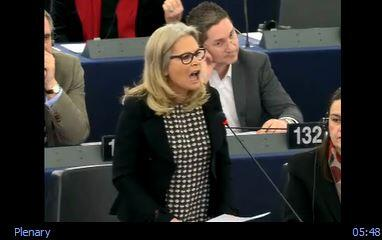
Portuguese MEP Edith Estrela tried to get the European Parliament to adopt a "Report on sexual and reproductive health and rights", which enshrined a European right to abortion and promoted immoral sex education, even though this health issue does not fall within the European Union's remit.
Thanks to ECLJ's watchdog and early-warning activities, and its coordinated action with other associations, we prevented the adoption of this report, and obtained the adoption of an alternative resolution which reiterated the principle of subsidiarity, and thus returned freedom and competence in this area to the Member States. This narrow majority victory surprised all observers.
Publication of "Abortion and the European Convention on Human Rights", Irish Journal of Legal Studies, Vol. 3(2), July 2013.
Grégor Puppinck publishes an important synthesis study on abortion in the case law of the European Court demonstrating the absence of a right to abortion under the European Convention, and the obligation, for states that legalize this practice, to respect the Convention in this framework. The study will be translated into several languages and regularly updated.
ECLJ intervened in this case in conjunction with the Orthodox Patriarchate of Bucharest and the Romanian government to defend the freedom of the Church: the religious autonomy of a community against undue state interference. In line with our argumentation, the ECHR considered, in the name of respect for the autonomy of religious organizations, that the refusal to register a priests' union did not violate their freedom of association. The ECLJ worked for the referral of this case to the Grand Chamber and the ultimate rejection of the application. This case set an important precedent in favor of respecting the autonomy of the Church.
Launched on May 11, 2021, this citizens' initiative has collected over two million signatures from citizens to call on the European Union to ban and stop all research funding that involves the destruction of human embryos. Grégor Puppinck, president of the collective, presented the legal merits of this initiative to the European Commission and then to the European Parliament.
Commissioner Barroso took care to wait until the last day of his mandate to tell the petitioners that the European Commission would do nothing to correct the European regulation. This was absurd, given that certain European countries contribute to this research through their general contribution, even though they prohibit it in their own countries under national legislation.
Proceedings were brought before the Court of Justice of the European Union, but the latter refused to accept that the European Commission could share its power of initiative with European citizens. In a blatant denial of democracy, it recognized the European Commission's power to garbage can over 1.7 million signatures, and demonstrated that the European Citizens' Initiative mechanism only entitles the European Commission to a reasoned response, nothing more. See here the Grand Chamber judgment Puppinck v. European Commission.
In this case, the ECLJ successfully recalled that the Convention does not impose a positive obligation on States to provide access to heterologous medically assisted reproduction techniques. By limiting access to these techniques, Austria did not infringe the applicants' right to privacy, as the limits pursued a doubly legitimate aim: to protect the health and rights of donors and unborn children, and to provide an ethical framework for techniques that lead to the destruction of human embryos. This ruling set an important precedent by recognizing the possibility for States to restrict the use of artificial reproduction techniques on ethical grounds.
Adoption of the recommendation "on violence against Christians in the Near and Middle East" by the Parliamentary Assembly of the Council of Europe 1957 (2011)
ECLJ organized a major conference on the persecution of Christians in the Middle East during a session of the Parliamentary Assembly of the Council of Europe on the occasion of the vote on the recommendation "on violence against Christians in the Near and Middle East".
.png)
In conjunction with the Italian government and the Holy See, the ECLJ intervened decisively in this famous "crucifix case". An atheist mother complained about the mere presence of a crucifix in the classroom of the public school her child attended. The ECLJ upheld the legitimacy of the presence of the symbol of Christ in Italian public schools for historical and cultural reasons, and pointed out that this mere presence could not be perceived as indoctrination or an attack on freedom of conscience.
The European Court, in a Section judgment, initially found a violation of the European Convention. Thanks to the mobilization of ECLJ and its partners, twenty-one States parties to the European Convention on Human Rights joined Italy in reaffirming the specific place of Christianity in Europe, and requested and obtained a re-examination of the case by the Grand Chamber. In a historic reversal, the Grand Chamber accepted ECLJ's arguments and Italy's right to keep crucifixes in Italian public school classrooms. Grégor Puppinck was made a Knight of the Order of Merit of the Italian Republic in recognition of his service. Read an analysis here.

At the Parliamentary Assembly of the Council of Europe, pro-abortion deputies, supported by the Centre for Reproductive Rights, wanted to abolish the right of conscientious objection for medical staff in order to facilitate access to abortion and increase the number of abortions. Thanks to the mobilization of the ECLJ, the majority of deputies took exactly the opposite position and adopted a Resolution guaranteeing the right of conscientious objection to abortion. The following amendment was adopted at the head of this resolution
"no hospital, institution or person may be pressured, held responsible or discriminated against in any way for refusing to perform, accommodate, assist or submit to abortion, induced miscarriage or euthanasia, or for refusing to perform any procedure intended to cause the death of a human fetus or embryo, for whatever reason".
ECLJ mobilized opposition to the draft resolution and drafted numerous proposed amendments, including this paragraph and the new title of the resolution, which were adopted.
The applicants in this case complained that they did not enjoy a right to abortion in Ireland, and asked the Court to guarantee such a right on grounds of privacy. The Court highlighted the general consensus in Europe in favor of abortion, but was mindful of two major arguments put forward by the ECLJ. Firstly, the extreme sensitivity of the subject and the moral problem the Court would face if it recognized a right to end human life. On the other hand, such a right simply does not exist in the Convention. On the contrary, the right to life is protected, and the Court has refused to make the same mistake as the US Supreme Court did in 1973, by creating ex nihilo a right to abortion on the basis of privacy. Read an analysis here.
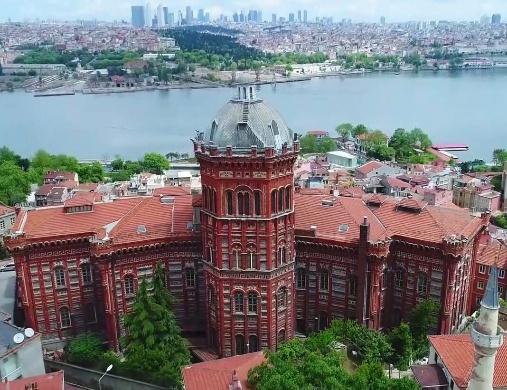
The ECLJ acted in support of the Ecumenical Patriarchate, whose right to property had been violated in relation to an orphanage. Turkey did not recognize the orphanage as a legal entity, which meant that it had no property rights and could not perform legal acts in the name of the church. ECLJ argued that such a lack of recognition of this religious community was neither just nor proportionate to ensure Turkey's security. The European Court of Human Rights ruled in favor of the Ecumenical Patriarchate of Constantinople, and ordered Turkey to return the orphanage it had appropriated, which belonged to the Orthodox Church.

In January 2008, ECLJ took an active part in an official visit by the UN Special Rapporteur on Freedom of Religion or Belief, Asma Jahangir, to Israel and the Palestinian territories. Thanks to ECLJ's contacts, the Rapporteur was able to meet many Christians from the region, who told her about their difficulties in the conflict.
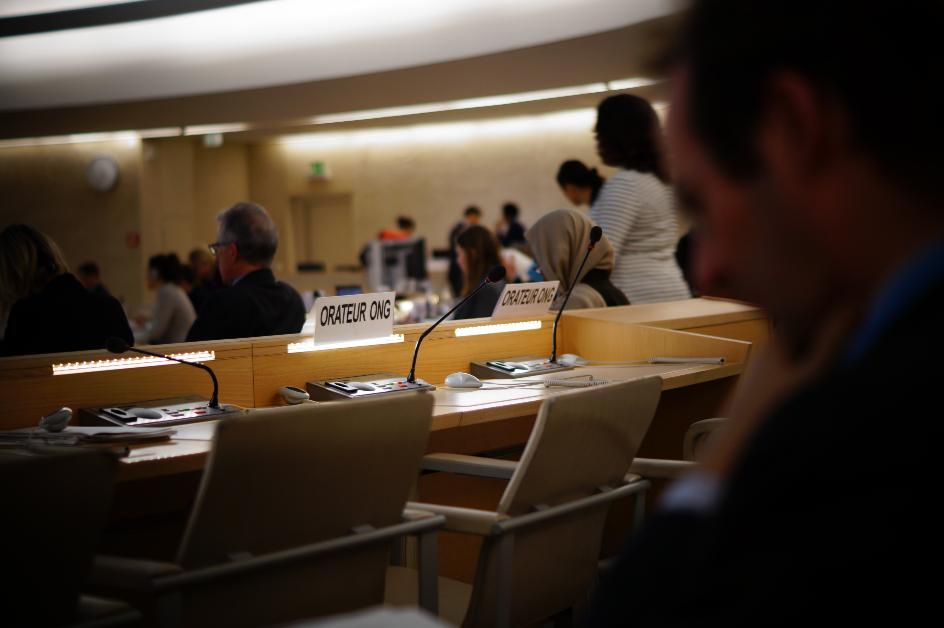
ECLJ obtains Special Consultative Status with the United Nations Economic and Social Council. This status enables it to act officially as a representative of civil society in the UN's institutional mechanisms, notably before the Human Rights Council, the Special Procedures and the Universal Periodic Review.
Since then, ECLJ has submitted dozens of contributions to these various mechanisms, and made numerous high-profile oral interventions to denounce the rights violations and arbitrary imprisonments of many pastors and Christians around the world.
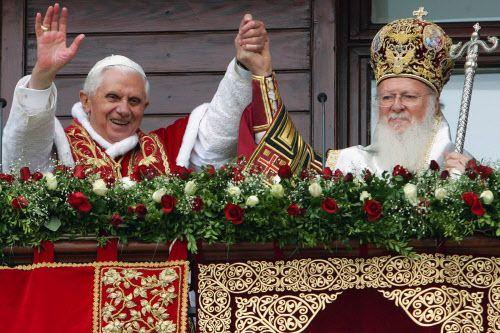
In this case, the ECLJ successfully intervened in partnership with the Slavic Center for Law and Justice, to defend the right of the Moscow Branch of the Salvation Army to have a recognized legal existence. This Christian religious organization, active in Russia since the 1910s, applied for registration as a local religious organization, but the Russian authorities refused to register the organization, on the grounds that it would be a militarized organization due to its internal structure and titles, and that it would be dependent on a foreign central body.
The Court held that the refusal to register constituted an interference with freedom of religion and association. It recalled that these freedoms include the right to manifest one's religion collectively and to exist in a legal form. Finally, the ECHR found that the grounds put forward by the Russian authorities were neither relevant nor sufficient.
In this case, John W. Montgomery represented an independent Orthodox church, the Metropolitan Church of Bessarabia, which in 1992 applied for registration as an independent religious organization in Moldova. The Moldovan authorities refused registration, considering that it was part of the Russian Orthodox Church and therefore under the jurisdiction of the Moscow Patriarchate, the only officially recognized Orthodox Church in the country.
The applicants obtained a ruling from the Court that this refusal violated their rights under the European Convention on Human Rights, notably freedom of religion (article 9) and freedom of association (article 11).
ECLJ's John W. Montgomery represents the applicants in Larissis v. Greece before the European Court of Human Rights. This was also a first victory, as the European Court found that the applicant's religious freedom had been violated, as he had been convicted in Greece of proselytizing.
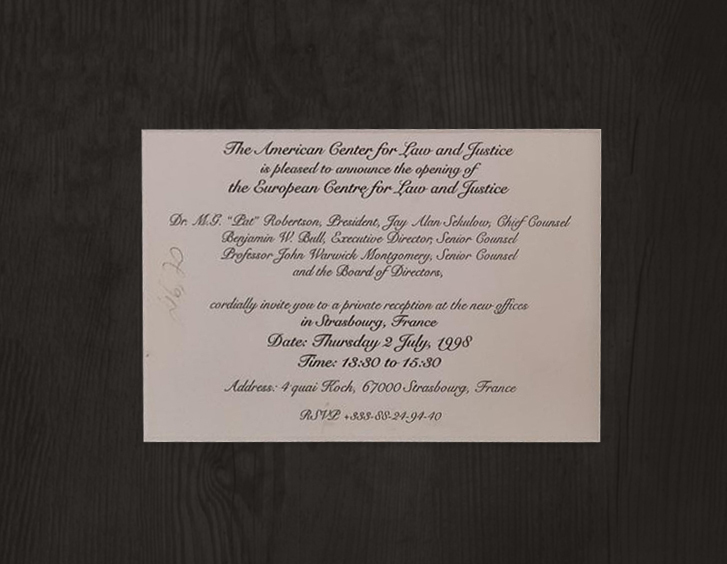
On July 2, 1998, the European Centre for Law and Justice (ECLJ) opened its doors in Strasbourg, on the initiative of Jay Sekulow and Thomas Patrick Monaghan, lawyers; and with the support of Pat Robertson, Benjamin Bull, and John Montgomery, to defend life and religious freedom before the European institutions.