
Jordan in Mourning Following Attack on St George’s Greek Orthodox Church
Jordan: Attack on St George’s Greek Orthodox Church
Long regarded as a haven of stability in the Middle East, the Hashemite Kingdom of Jordan was struck on Friday 23 October by an unprecedented terrorist attack targeting the Greek Orthodox community. The provisional death toll stands at nine, with more than thirty injured. This unprecedented attack shatters the image of a country spared from sectarian violence and plunges the entire nation into mourning.
“This is our country and we will not abandon it, we will never abandon it,” a wounded Christian told Jordan’s King Abdullah II during his visit to Karak Hospital.
Unprecedented Attack on Jordan’s Christians: The Kingdom’s Religious and Political Unity Faces the Terrorist Threat
On the afternoon of Friday 23 October 2026, as the Greek Orthodox community of the village of Hamoud, in Jordan’s Karak Governorate, gathered at St George’s Church for the funeral of a deceased member of the Al-Halsa family, three masked and armed men opened fire on the worshippers assembled outside the church.
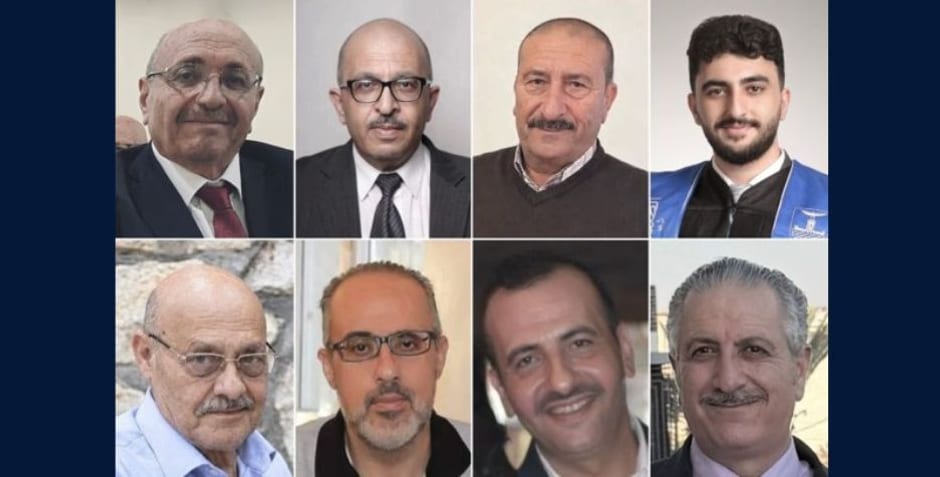
The 15-minute attack, described as a terrorist act by King Abdullah II and the authorities in Amman, left nine dead and more than thirty injured. The village of Hamoud was known as a Christian stronghold, home to long-established and influential families such as the Halsa family. Three of its members, Dr Fadi Al-Halsa, Dr Khaled Al-Halsa and Ihab Nayeh Al-Halsa, were killed in the attack. The Al-Qusus family also lost two members: Dr Mohamed Al-Qusus and Mazen Rasmi Al-Qusus.
The attack is all the more chocking for a country such as Jordan, which presents itself as “an oasis of security and stability” and has long been regarded as a refuge for Christians from neighbouring countries. Thousands of Iraqi Christians fled there following the fall of Saddam Hussein’s regime, later joined by Syrian Christians after the rise of the Islamic State (ISIS). Many of them have since chosen to seek refuge in the West. Jordan’s Christian community, meanwhile, accounted for between 2 and 3% of the population in 2021. According to a 2011 Pew Research report, Christians numbered 140,000, representing 2.2% of the population. Greek Orthodox Christians formed the largest group (90,000), followed by Catholics (30,000) and Protestants (20,000).
Christianity has deep historical roots in Jordan, with holy sites such as Al-Maghtas, the site of Christ’s baptism, and Mount Nebo, from where Moses is said to have glimpsed the Promised Land. This historical presence is also reflected in the local Christian Bedouin tribes, whose heritage dates back to the Byzantine Empire. Jordanian Christians also enjoy considerable economic and political influence, who are said to control roughly 30% of the economy. They hold nine of the 138 seats in the House of Representatives and two of the 69 seats in the Senate, and hold several ministerial posts. Christians, particularly Catholics, play an important role in Jordan’s education and healthcare sectors. The Catholic Church runs 42 schools and kindergartens, as well as Madaba University. Institutions such as the Our Lady of Peace Centre also provide care for children with disabilities, most of whom are Muslim.
The Churches responded to the attack immediately, with unity and determination, while expressions of solidarity brought Christians and Muslims together throughout Jordan. The Patriarchs and Heads of the Churches in Jerusalem jointly condemned what they described as a “brutal and inhuman terrorist attack” and a “grave offence against God and humanity”. Describing the attack as an assault on the entire Christian community and on Jordan’s social fabric, the religious leaders called on all parishes in the region to ring their bells at noon on Saturday 24 October as a sign of solidarity. The Greek Orthodox Patriarch of Jerusalem, Theophilos III, strongly reaffirmed his community’s deep-rooted attachment to its homeland, declaring that Greek Orthodox Christians would never abandon their native land and would continue to contribute to the country’s history. The Latin Patriarchate of Jerusalem praised King Abdullah II’s role in defending tolerance, emphasising that unity between Muslims and Christians remained the strongest bulwark against extremism. Ecumenical Patriarch Bartholomew also telephoned Theophilos III to express his profound sorrow and unequivocally condemn the attack.
Reactions across the region were unanimous. Iraq, Kuwait, Syria, Lebanon, Israel, Saudi Arabia, Bahrain, the United Arab Emirates, Oman and Yemen all condemned the attack. The same was true of North African countries (Morocco, Algeria, Tunisia, Libya and Egypt), as well as organisations such as the Arab League and the Muslim World League.
Pursuit of the Attackers and Military Operations Against ISIS: Amman’s Fight Against Islamist Terrorism Amid Tensions with Damascus
King Abdullah II visited the injured in hospital on the day of the attack, in military uniform, and pledged that the “harshest” penalties would be imposed. In a post on X, the King also declared that “whoever imagined that treacherous bullets could divide Jordanians will see their efforts defeated by our resilience and unity”. Prime Minister Jafar Hassan declared three days of national mourning. On Sunday 25 October, Queen Rania, accompanied by Princesses Salma and Rajwa, travelled to Hamoud to meet the victims’ families. Deeply moved and visibly tearful, Queen Rania was seen embracing and comforting them.
The manhunt for the terrorists continued until Monday 26 October, when the Minister of the Interior announced the arrest of the three attackers and the discovery of a substantial weapons cache, following a three-hour gun battle in which all three suspects were wounded. According to Amman, no group had yet claimed responsibility for the attack on the church. It emerged that two of the assailants were brothers: Hazza Mohamed (39) and Mishal Zidan Mohamed (31). Ahmed Sami Hussein (25) was also related to them. All three are reportedly members of the Al-Dhunaybat clan.
Details about the presumed mastermind of the attack, Hazza Mohamed, have emerged in the press. Hazza served in the Jordanian army for eight years. He is described as having sought to distance himself from traditional family and clan circles. Following his discharge from the army in 2014, he reportedly developed an interest in jihadist Salafism and Takfirism. He is said to have self-radicalised between 2014 and 2018. In 2019, he allegedly began building a network dedicated to promoting and disseminating ISIS-related content. Hazza is also reported to have been in contact with foreign ISIS members and to have planned attacks in 2020 against Israeli tourists, Israeli military patrols in the West Bank and Jordanian border guards. He was arrested before he could carry out these plans and sentenced to seven years in prison, ultimately serving five years.
On the evening of Monday 26 October 2026, the operation known as “Jordanian Deterrence – Hamoud” was launched by the Royal Jordanian Air Force as part of the country's counter-terrorism efforts and its defence against potential attacks. More than twenty ISIS members were reportedly killed and weapons depots destroyed in the Daraa region of southern Syria, in the Daraa region. According to Jordanian intelligence sources, the cell responsible for the attack on St George’s Church had been in contact with remnants of ISIS. Amman claimed that its operations had been conducted in cooperation with Syria.
Damascus denied these claims on Tuesday 27 October 2026, denouncing a violation of its territorial sovereignty and reporting the deaths of seven civilians, including a woman and three children. Three other civilians were reportedly injured. Syria subsequently closed its border with Jordan and called for the preservation of “brotherly relations” through greater cooperation between the two states. Amman, which had not mentioned civilian casualties in its initial announcement, eventually stated through the Jordanian Government spokesperson that it regretted the loss of civilian lives and that the country had “run out of patience with the actions of terrorist groups”.
Although Amman responded firmly to the attack, this tragedy once again highlights the precarious and alarming situation facing Christians in the Middle East, particularly in view of the continued threat posed by ISIS. The ECLJ is alerting institutions and the public about the plight of Christians persecuted because of their faith in the Middle East, particularly in Syria, Iraq and now Jordan.
By Giulio Spampinato, Student in work-study program at the ECLJ and Sciences Po Strasbourg.
 Ethiopia: The Massacre of Christians Behind Closed DoorsBy Thibault van den Bossche
 Christians in Iraq at Risk: The ECLJ Raises the Alarm AgainBy Constance Avenel
 Secularism, Catholic Schools, Protection of Life: Leo XIV Has Spoken OutBy Constance Avenel
 Baptism and the “right to be forgotten”By Alicja Słowik