

Pope Leo’s Visit To Turkey: New Report Reveals The Harsh Reality Christians Are Facing
Pope Leo’s Visit To Turkey: The Harsh Reality Christians Are Facing
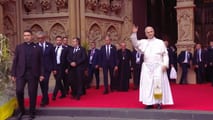
Pope Leo XIV’s visit to Turkey from 27 to 30 November 2025 marks the 1700th anniversary of the Council of Nicaea, the first “ecumenical” council in Christian history. For the Vatican, this trip aims to strengthen ties between Christian Churches, encourage dialogue, and convey a message of peace, while recalling the importance of the Eastern roots of Christianity.
Yet Anatolia, the cradle of the early Church, has seen its Christian population plummet from 20% in 1915 to just 0.3% today. This dramatic decline is the result of genocides, pogroms, forced deportations, and long-term identity-engineering policies designed to forge a Sunni Turkish nation that is both ethnically and religiously homogeneous. Neither diplomacy, nor ecumenical gestures, nor decades of Christian-Muslim dialogue have brought any concrete improvement to the condition of Turkey’s Christians.
For the European Centre for Law and Justice, the Pope’s visit offers a rare opportunity to draw attention to the alarming situation in which Turkey’s Christians live, as documented in our new report The Persecution of Christians in Turkey. Local communities, who fear retaliation if they speak out, cannot freely describe what they endure. This is why a strong voice from outside the country is so essential. Today, for the roughly 257,000 Christians who remain, restrictions and violence continue to shape everyday life.
A Structural Persecution
Violence targeting Christians—armed attacks, assaults, threats—remains frequent. The 2024 attack on the Catholic Santa Maria Church, the repeated assaults against the Protestant church of Çekmeköy, and the killing of members of the Syriac community illustrate a climate of insecurity that the authorities are reluctant to acknowledge as hate-motivated. This hostility is reinforced by public and educational discourse that links Turkish identity to Sunni Islam, leaving converts particularly vulnerable within their own families.
At the same time, the State interferes in the patriarchal elections of the Greek Orthodox and Armenian Churches, refuses to grant legal personality to any Church—including the Catholic Church—and keeps close watch over Protestant communities and foreign Christians. Christian foundations, denied autonomy in their governance, have lost thousands of properties through expropriation or State trusteeship, despite their essential role in running churches, schools, and hospitals. Clergy formation is almost impossible: the Halki seminary has remained closed since 1971, and Protestant places of worship still lack official recognition.
Since 2016, hundreds of foreign Christians—pastors, missionaries, or converts—have been expelled or denied entry on vague “national security” grounds, through the use of codes such as G-87 and N-82, often without evidence or effective remedy. The ECLJ knows these cases well: we helped secure the release of Pastor Andrew Brunson in 2018 after two years of arbitrary detention, and we intervene regularly, including in Wiest v. Turkey, to challenge these systemic violations.
A Report Sent to Governments, the Media, and the Diplomatic Corps
The ECLJ’s new report is among the most comprehensive analyses available today on the situation of Christians in Turkey. It has been shared with journalists, Members of the European Parliament, embassies, diplomats, and the institutions of the Council of Europe. Our message is clear: political relations with Turkey cannot overlook the fate of its Christian minorities. In September, President Trump secured a commitment from President Erdoğan to work toward reopening the Halki seminary; it is now time for this commitment to be translated into action.
Why Your Support Matters
Our work in exposing what is happening in Turkey is essential, because its Christians cannot speak freely. We must speak on their behalf, and your support enables us to do so. Through our petition, we are asking the Parliamentary Assembly of the Council of Europe to take up this issue formally. Under Article 71, the Assembly must examine our initiative and decide whether to open a report and issue recommendations to Turkey.



 Secularism, Catholic Schools, Protection of Life: Leo XIV Has Spoken OutBy Constance Avenel
 Baptism and the “right to be forgotten”By Alicja Słowik
 France: The Church's Suffering & HopeBy Grégor Puppinck
 China: Pastor Cao Must Come HomeBy CeCe Heil