
Sweden Abandons the Term “Islamophobia”: A Revealing Debate on European Drift
Sweden Abandons the Term “Islamophobia”
By officially abandoning the term “Islamophobia,” the Swedish government has relaunched a sensitive debate: how can discrimination against Muslims be combated without restricting the freedom to criticize a religion? But behind this terminological debate lies a deeper evolution. While European and international institutions are multiplying mechanisms dedicated to combating “anti-Muslim racism” or “anti-Muslim hatred,” no comparable instrument currently exists to combat anti-Christian hatred.
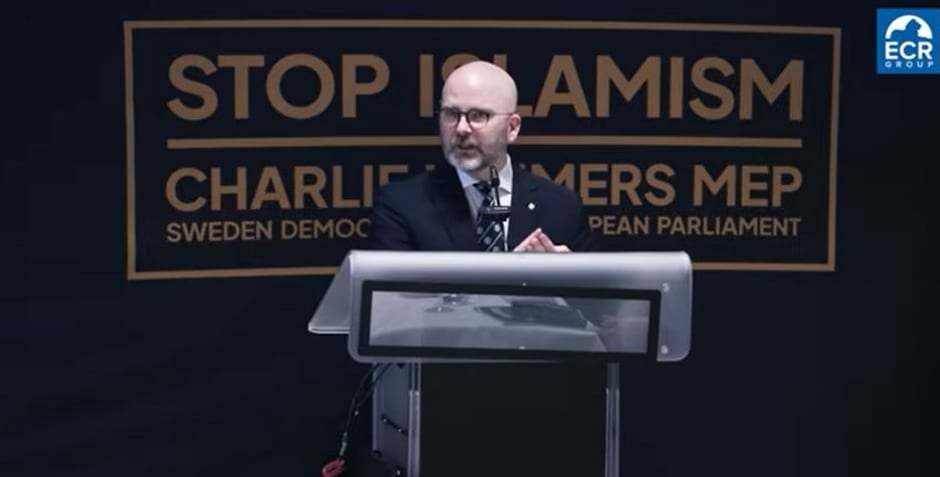
On May 1, 2026, the Swedish government announced its intention to abandon the term “Islamophobia” and is now seeking to gradually eliminate this notion within the European Union and the United Nations. “The concept of Islamophobia is problematic,” declared Foreign Minister Maria Malmer Stenergard. According to her, the word “phobia” refers to irrational individual fears rather than concrete acts of discrimination or violence. Above all, this notion risks being confused with the legitimate criticism of the Islamic religion.
The Swedish government now favors the expressions “anti-Muslim racism” or “anti-Muslim hatred.” This evolution partly aligns with the position long defended by the European Centre for Law and Justice (ECLJ): human rights protect persons, not religions themselves. Everyone must be able to practice their religion freely without suffering violence or discrimination. But everyone must also be able to debate, criticize, caricature, or challenge a religion, including Islam, without risking prosecution for disguised blasphemy.
The term “anti-Muslim racism” itself, however, also rests on a major ambiguity, for how does one define a “Muslim”? Does it refer to a believer practicing Islam, or to a person perceived as such because of their name, origin, or appearance? This term thus tends to merge religious affiliation, cultural origin, and ethnic perception, with the same risk of maintaining confusion between the protection of individuals and that of a religion. As for “anti-Muslim hatred,” it is not the feeling itself that can be condemned in a society attached to freedom of conscience and opinion, but rather its expression through acts or speech involving discrimination, hostility, or violence.
Behind the Words, the Return of the Crime of Blasphemy
But fundamentally, Stockholm must go beyond this terminological battle. Changing the words will not alter the underlying dynamic consisting in making Islam legally and politically untouchable, something observable in several European countries and within international institutions. This dynamic is particularly visible in the United Kingdom. During “Islamophobia Awareness Month,” Labour MP Tahir Ali called in November 2024 on Prime Minister Keir Starmer to prohibit the “profanation” of religious texts and the prophets of the Abrahamic religions. Denmark has already taken this step with its “Quran law,” adopted in December 2023, which prohibits certain treatments deemed inappropriate toward sacred religious writings.
These developments are part of the direct continuation of the resolution adopted in July 2023 by the United Nations Human Rights Council explicitly condemning the “desecration of the Holy Quran.” Presented as a measure to combat religious hatred in the context of Quran burnings in Sweden and Denmark, this logic in reality leads to the direct reintroduction of forms of blasphemy laws.
The danger is not theoretical. In several Muslim countries, particularly Pakistan, blasphemy laws are regularly used to persecute religious minorities, especially Christians. Mere accusations lead to lynchings, arbitrary imprisonment, or death sentences. The ECLJ has long warned about the risk of introducing this logic into international institutions under the guise of combating “Islamophobia.”
An International and European Institutional Architecture Dedicated to Combating “Islamophobia”
The terminological debate is therefore far from insignificant. Behind these words, a genuine European and international institutional architecture dedicated to combating “Islamophobia” is gradually being built with the aim of shielding Islam from criticism. States such as Turkey and Pakistan, as well as politico-religious movements such as the Muslim Brotherhood, have understood this well.
In 2021, the Special Rapporteur on freedom of religion or belief published a report entitled “Countering Islamophobia/anti-Muslim hatred to eliminate discrimination and intolerance based on religion or belief.” Since 2022, the United Nations has had an International Day to Combat Islamophobia. In 2024, the UN adopted a specific resolution on measures to combat Islamophobia. In May 2025, it even appointed a special envoy dedicated to this issue.
In Europe, the European Commission has a coordinator on combating anti-Muslim hatred. On May 18 and 19, 2026, the Commission organized in Brussels the third annual coordination meeting on combating anti-Muslim hatred and racism, gathering representatives from 28 countries. In 2024, the European Union Agency for Fundamental Rights (FRA) published the report “Being Muslim in the EU,” devoted to discrimination and perceptions of Muslims within the Member States.
The Council of Europe has a Special Representative on antisemitism, anti-Muslim hatred, and all forms of religious intolerance. The Organization for Security and Co-operation in Europe (OSCE) also has a representative responsible for combating intolerance and discrimination against Muslims.
380 Million Persecuted Christians, Yet No Comparable Protection
By contrast, no comparable mechanism exists for Christians, who nevertheless remain the most persecuted religious group in the world, with more than 380 million persecuted Christians in 2025. There exists:
- no international day dedicated to combating anti-Christian hatred;
- no United Nations special envoy;
- no European coordinator specifically responsible for this issue;
- no dedicated UN or European report.
Even within the OSCE, Christians appear relegated to second place in the very title of the mandate of the representative responsible for “combating racism, xenophobia, and discrimination, including intolerance and discrimination against Christians and members of other religions.”
Yet even in Europe, anti-Christian acts are multiplying: church burnings, desecrations, assaults against priests, discrimination against converts, or the growing marginalization of Christian convictions in the public sphere. OIDAC recorded 2,211 anti-Christian hate crimes in Europe in 2024. In its 2025 report “Christianophobia and Anti-Christian Hatred in Europe,” the ECLJ documents this largely invisible reality and calls for a response from European institutions.
The fight against violence and discrimination targeting Muslims must not lead either to placing a religion beyond criticism or to creating an institutional imbalance between different faiths. At a time when anti-Christian attacks are increasing across Europe, it is becoming urgent for European institutions to recognize this reality as well and to establish specific mechanisms to combat attacks and discrimination targeting Christians.





 The Control Over Freedom of ExpressionBy ECLJ
.jpg) Pakistan: ECLJ Raises Alarm at the UN Over the Death Penalty for Blasphemy Against IslamBy Constance Avenel
Pakistan: ECLJ Raises Alarm at the UN Over the Death Penalty for Blasphemy Against IslamBy Constance Avenel
 Is Wokism One of the EU's Values?By Nicolas Bauer