Suicide Attack on All Saints Church in Pakistan
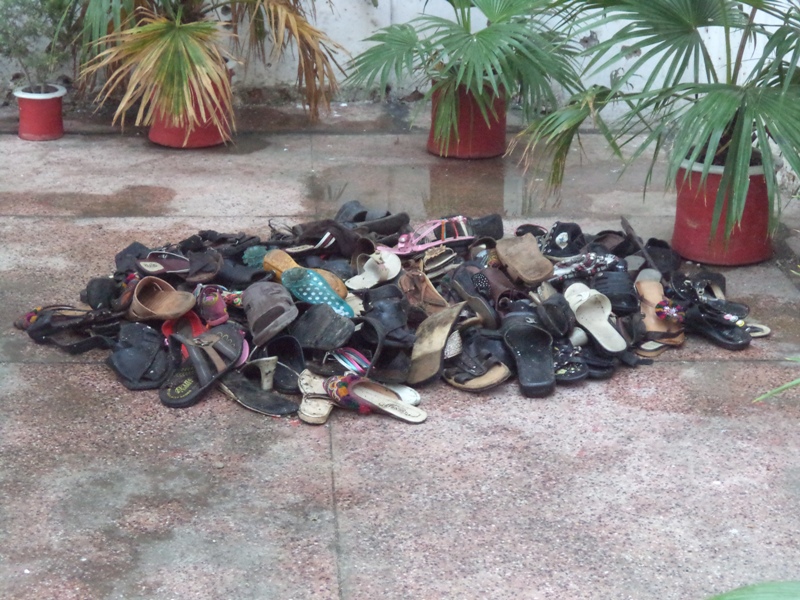
On September 22, 2013, two suicide bombers attacked the All Saints Church, a parish of the Church of Pakistan, located inside the Kohati Gate of Peshawar, killing 139 church attendees. The worshippers were present in the building, which bears a striking resemblance to an Islamic mosque, when two detonations took place, leaving the church yard scattered with body parts.
An Islamist group called Jundallah claimed responsibility for the attack. It said that attacks on Christians and non-Muslims will continue because they are the enemies of Islam and that the attacks will not stop until U.S. drone attacks in Pakistan cease.
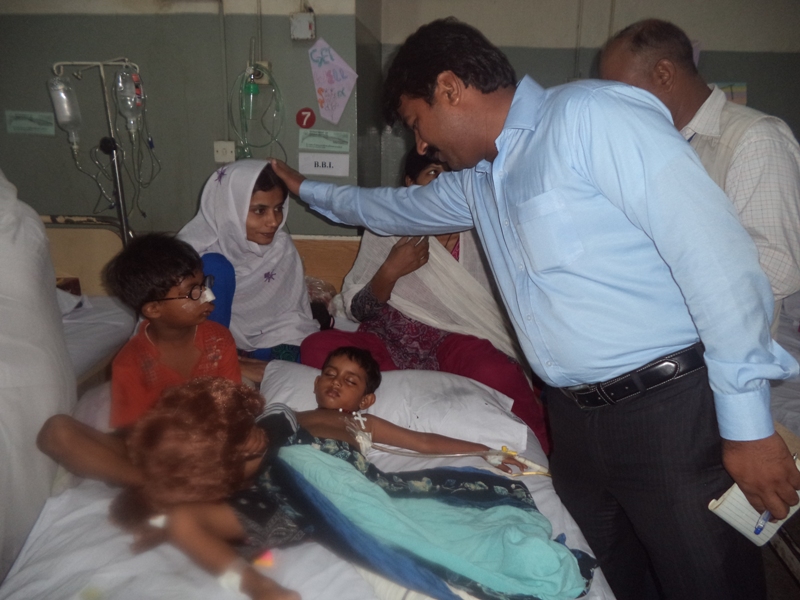
On September 25, 2013, legal team from the Organization for Legal Aid (O.L.A.), affiliate of the European Centre for Law and Justice (ECLJ), arrived in Peshawar and headed straight to the Lady Reading Hospital where the Christian victims of the blast were admitted for treatment. After meeting with Shah Saeed, a male nurse in the emergency ward, the team learned that the hospital had received 59 deceased bodies immediately following the blast. The team then visited the surgical ward where most of the injured were admitted. The president of the Nursing Association Khyber Pakhtunkhwa, Farrukh Jalil, along with many Christians from other cities, was present and guided the team to see the injured victims. In visiting these injured men, women, and children, the team realized that each person experienced the incident differently. Many families suffered the loss of parents or children, and many people received multiple injuries. According to a report issued by Lady Reading Hospital’s media and protocol department, the hospital had received 218 people out of which 82 were dead.
After visiting the hospital, the O.L.A. team visited the All Saints Church and met Bishop Humphrey Sarfraz and Pastor Ejaz. While there, the team learned from the Bishop that 139 people died in the blast.
Pastor Ejaz shared his perspective of the attack with the team:
The Sunday service at All Saints Church begins at 9:00 a.m. and lasts until 11:30 a.m. There were two gates to enter in the church; one open towards Anarkali Market and the other one opens to Church Road Kuchi Bazaar. The gate of Church Road remains closed and only opens when someone needs to bring something inside the church because the other gate is small. On the day of incident someone had given thanksgiving meal and the Church Road gate remained open. The distribution of thanksgiving meal was taking place in the church compound and most of the people, after the service was ended, were gathered there for the meal. The suicide bombers entered from the Church Road gate. He saw that many of the people were down on the ground to save themselves. It was 11:43 when the clock on the church’s wall stopped with the blast.
The residents of the area immediately reached there and provided every possible help. The injured and the dead were taken to nearby hospitals by ambulances. The shopkeepers of a nearby cloth market covered the bodies of injured and dead women. Sixty-eight people died on the spot.
Both the provincial governments of Khyber Pakhtunkhwa and Sindh announced the compensation amount of 500,000 rupees (roughly $4762), for the victims of the blast. In addition, a Pakistani business tycoon, Malik Riaz, announced a compensation amount of Pakistani 200,000 rupees (roughly $1905).
On October 2, 2013, the O.L.A. team took a second trip to Peshawar. Bishop Humphrey informed the team that the funds promised by the government were only enough for 85 of the 122 families that were affected by the attack. The team offered legal assistance in transferring the funds to the victims.
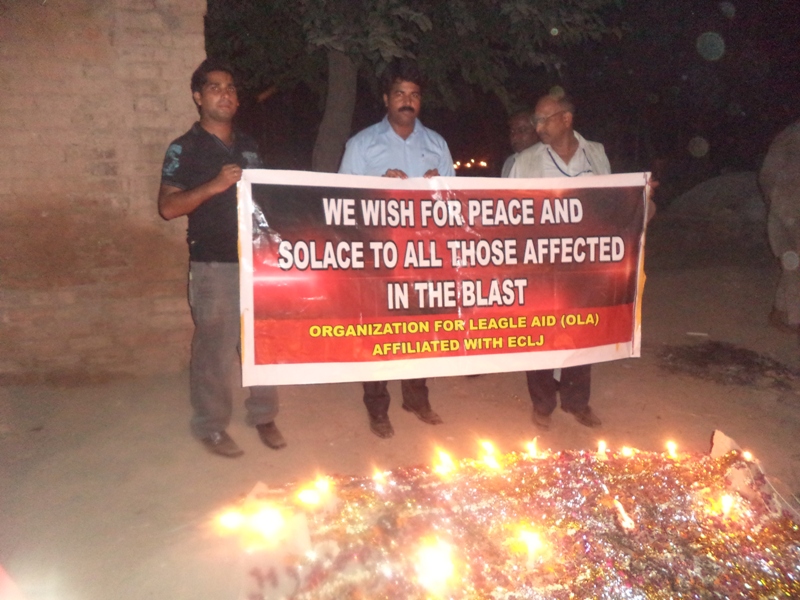
The team then visited victims in their homes and in the hospital. In doing so, the team discovered that most victims are receiving medical care through the assistance of several Christian organizations. Later, the team visited the police station, but the investigation officer was not present. He informed the team over the phone that he could not give any information regarding the investigation at that time.
While the funds disbursements promised by the government had not begun during the team’s visit to Peshawar, O.L.A. learned on October 8, 2013, that the disbursements had started.
The team met with many of the victims of the attack in order to identify how to meet their needs. Zafar Gull sustained a chest injury and is unable to work until he recovers from his injuries. One of his daughters is in school and the other one is getting married in two months. Musa and Smith (ages five and eight) were left orphans by the blast and are currently being taken care of by their uncle. Kashmala Munawar, a 16-year-old college student, had a severe injury on her right leg that required an above-knee amputation. Her two sisters and mother were also injured in the attack. William Ghullam and two of his children were killed in the attack. His remaining three children are currently being taken care of by their uncle. Christina Imtiaz lost her husband in the blast, leaving her with the responsibility to care and provide for their three children, one of whom was also injured in the blast. Angel Nasir, a three-year-old girl, was injured in the blast, and her father was killed, leaving Angel’s mother solely responsible for her care. Azeeqa Sadiq, a Masters student at University of Peshawar, lost her father in the attack. In addition, Azeeqa’s mother received multiple injuries. Farah Arshad, age 23, received severe spinal injuries in the blast, leaving her paralyzed from the waist down. One of her brothers was also injured in the attack. These injuries have significantly impacted Farah’s family, as her father, who is also paralyzed, is unable to work to provide for the family. Farah’s mother is the sole provider for the family. Natasha, Suneha, Shehroz, and Shahab Nazir lost both their mother and father in the attack, leaving them in the care of their cousin, Azhar Masih.