
The Pope in Algeria: A Turning Point for Christians Under Pressure
The Pope in Algeria: A Turning Point for Christians Under Pressure
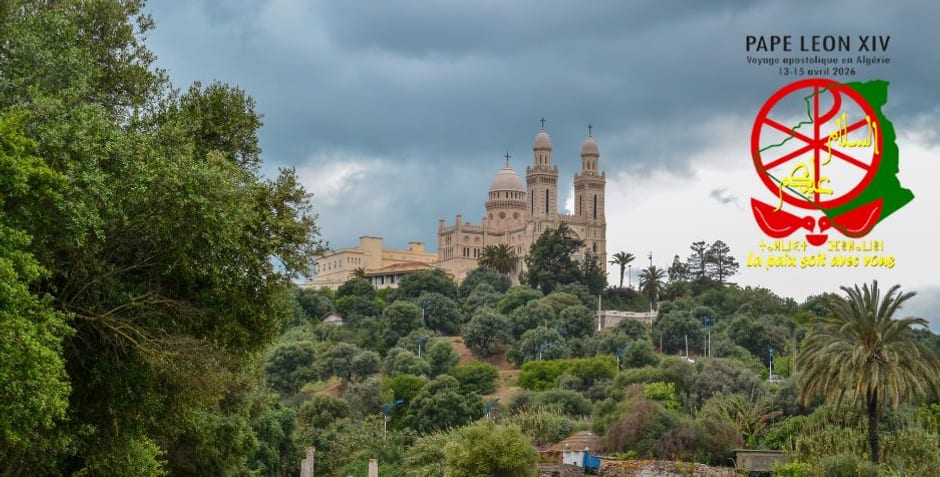
Pope Leo XIV’s upcoming trip to Algeria, scheduled for April 13–15, marks a historic event. It comes at a time when religious freedom in the country has steadily narrowed in recent years, to the point that it now survives only in a tightly framed constitutional provision. By placing his visit under the patronage of Saint Augustine, whom he calls his “spiritual father,” the Pope could transform this journey into a bridge between present-day Algeria and its Christian heritage. For the ECLJ, the visit represents above all an opportunity to encourage concrete measures in favor of Algeria’s approximately 144,000 Christians.
Last December, Leo XIV expressed his desire to travel to Algeria “to visit the sites of Saint Augustine.” The dates are now confirmed: April 13–15. The first papal visit to the country, this trip fits squarely within a pontificate marked by a constant reference to the Bishop of Hippo. Member of the Augustinian Order, which he led as a Prior General from 2001 to 2013, Leo XIV maintains a particular spiritual bond with this major figure of Christianity. His election on May 8, 2025, coincided with the commemoration of the Blessed Martyrs of Algeria. Among them are the seven Trappist monks of Tibhirine, murdered in 1996, thirty years ago, giving this journey a specific resonance.
For the Pope, the visit follows his previous trips to Turkey and Lebanon, undertaken “to continue dialogue and weave bonds between the Christian and Muslim worlds.” On the ground, he will encounter a country where religious freedom has significantly deteriorated in recent years, particularly for Algeria’s roughly 144,000 Christians.
In Algeria, Religious Freedom Gradually Eroded
The 2020 constitutional reform marked a turning point. Freedom of conscience was simply removed from the text, as was the explicit reference to “human rights.” The Constitution now merely guarantees freedom of worship “in accordance with the law” (Article 51). This restrictive wording appears to be the last vestige of a more open period some twenty years ago, when religious diversity had briefly found its place.
In practice, even this minimal guarantee has been undermined by an increasingly restrictive legislative and regulatory framework. For the Protestant Church of Algeria (EPA), it has become virtually meaningless: all 47 of its churches have been closed by the authorities. Criminal provisions penalize “proselytism” and “blasphemy,” allowing Christians to be prosecuted simply for wearing a cross or sharing a religious message on social media. Arbitrary arrests have multiplied, a situation the ECLJ denounced before the UN Human Rights Council on September 29, 2025.
The climate is equally difficult for associations. In October 2022, Caritas Algeria was forced to shut down “completely and definitively,” amid growing restrictions targeting foreign organizations. A reform currently under discussion could further tighten this framework. “The only international NGO still authorized is Amnesty International… for now,” a journalist in Algiers told us.
Saint Augustine: A Diplomatic Lever Between History and Politics
For Leo XIV, the reference to Saint Augustine is not merely spiritual: it is also diplomatic. Known in Christian tradition as “Augustine the African,” Bishop of Hippo for thirty-five years, Saint Augustine embodies a Christianity both rooted in Roman Africa and foundational to the Latin Church, of which he is one of the Fathers and Doctors. Algerian by birthplace and universal by theological influence, he serves as a natural bridge between national memory and Christian heritage. By invoking this unifying figure, the Pope implicitly recalls the ancient and legitimate historical presence of Christianity in Algeria, a reminder that could encourage authorities to more fully acknowledge this reality.
The precedent set by President Abdelaziz Bouteflika shows that the Augustinian reference can carry real political weight. In the aftermath of the civil war, he sought to rehabilitate Saint Augustine as a “child of the nation,” symbolizing a reconciled and open Algeria. This effort included restoring and promoting the site of Hippo in Annaba, as well as organizing, in 2001, an international conference through the High Islamic Council on the theme “Saint Augustine: Africanity and Universality.” On that occasion, The Confessions were even available in some bookstores across the country.
This brief period of openness, however, remained limited. In 2006, Algeria adopted an ordinance strictly regulating non-Muslim worship. Long applied unevenly, it has gradually hardened, especially since 2017, with the systematic closure of Protestant churches and a growing number of prosecutions. The beatification of the Martyrs of Tibhirine, publicly celebrated in Oran on December 8, 2018, with official authorization, was certainly a symbolic gesture of recognition, but it did not reverse the broader trend.
An Opportunity for the Pope to Raise the Voice of Algeria’s Christians
In this tense context, many Christians hope for a “strong message of fraternity and love” from the Holy Father. The diplomatic climate may allow for it: relations between Algerian authorities and the Catholic Church currently appear relatively calm. The Archbishop of Algiers, Archbishop Jean-Paul Vesco, was received at the El Mouradia Palace on September 22, 2025, while President Abdelmadjid Tebboune visited the Vatican on July 24, 2025. “Algiers is seeking to improve its diplomatic image,” historian Charlotte Touati observes. These elements could open space for dialogue, and provide the Pope an opportunity to raise, among other issues, the reopening of Caritas.
The visit could also allow the Holy Father to highlight the situation of evangelical Christians. The ECLJ urges him to call for the legal recognition of the Protestant Church of Algeria and for effective freedom of worship for its members, which would notably require the reopening of its 47 closed churches. Meanwhile, the Kabyle League for Human Rights, in an open letter to Cardinal Bustillo, warns of the “extremely concerning situation” of Christians in Kabylia, who are often overlooked.
Expectations remain mixed. “Any statement from the Pope on the situation can help, even if made privately during a meeting with the President,” a representative of the EPA told us. Others are more cautious, believing authorities may primarily seek to polish their international image without making concrete commitments. Some even fear that increased visibility could lead to further pressure. In response to these developments, the ECLJ continues its advocacy work, including a conference on March 18 at the Human Rights Council, in hopes that this spiritual and diplomatic moment will translate into real and lasting progress for religious freedom in Algeria.
Op-ed by Constance Avenel originally published in Le JDD on March 3, 2026.




 China: Pastor Cao Must Come HomeBy ECLJ
 Tunisia: Christians Facing Kais Saied’s Identity-Driven ShiftBy Constance Avenel
 Syria: Christians left Behind?By Thibault van den Bossche
 The EU Condemns the Systematic Persecution of Christians in PakistanBy Thibault van den Bossche