
Qaiser Ayub, a Pakistani Christian convicted of blasphemy, is awaiting execution
Q. Ayub: A Pakistani Christian Convicted of Blasphemy Awaiting Execution
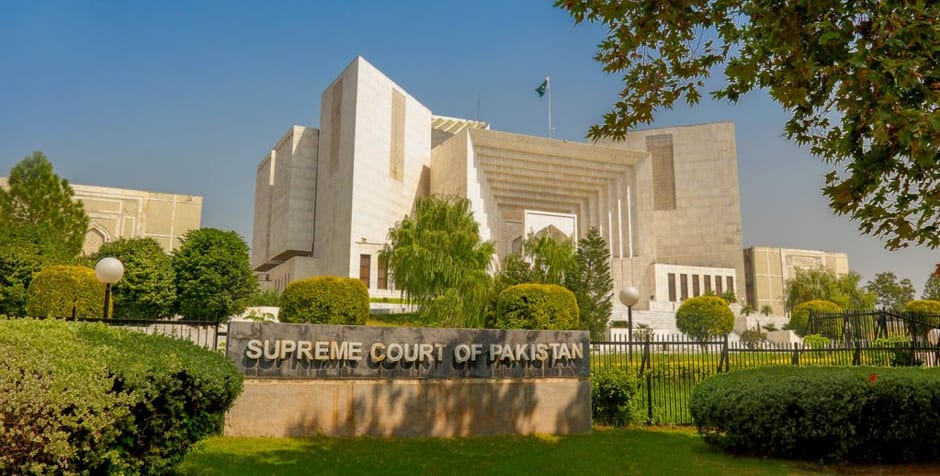
For the first time, Pakistan’s Supreme Court has upheld a death sentence for blasphemy. On October 7, 2026, the court upheld the death sentence handed down to Qaiser Ayub, a Christian, after more than twelve years in detention, despite serious doubts about the reliability of the evidence against him. The risk of execution is real. Meanwhile, dozens of people accused of blasphemy have been killed by extremist mobs. The ECLJ, whose lawyers represent Qaiser Ayub, is calling for urgent international action to secure his pardon and save his life.
On October 7, 2026, the Supreme Court of Pakistan upheld the death sentence against the Christian Qaiser Ayub, who was found guilty under Section 295-C of the Pakistani Penal Code, which criminalizes statements or depictions deemed blasphemous toward the Islamic prophet Muhammad[1]. This marks a major legal turning point: it is the first time the Supreme Court has upheld a death sentence handed down under this provision, which was introduced in 1986.
During the first trial, local judges are often subjected to intense pressure and direct death threats from extremist mobs, in a climate of intimidation that may lead them to impose the death penalty. Until now, the Supreme Court had overturned all death sentences in such blasphemy cases, such as those of Asia Bibi, acquitted in 2018 after 9 years in prison; Wajih ul Hassan, acquitted in 2019 after 18 years in prison; and Anwar Kenneth, acquitted in 2025 after more than 23 years in prison.
For Qaiser Ayub, a husband and father of three, the risk is very real and the death penalty irreversible. While it is true that the last execution in Pakistan took place in December 2019, the death penalty remains legally enforceable. As of July 2025, more than 3,300 people were on death row in the country.
Even assuming that the charges against him are proven—which we dispute—the death penalty would be manifestly disproportionate. Blasphemy is not a crime and does not fall under the category of “the most serious crimes” for which international law permits the application of the death penalty.
The October 7, 2026, ruling, however, is mixed: Amoon Ayub, Qaiser’s brother, who was also sentenced to death in this case, was acquitted by the Supreme Court, which found that the evidence against him was insufficient to establish his guilt. The European Center for Law and Justice (ECLJ) is supporting the two brothers through its local partner in Lahore, the Organization for Legal Aid (OLA), which represents them. We call on the President of the Islamic Republic of Pakistan to grant Qaiser Ayub a presidential pardon without delay, pursuant to Article 45 of the Constitution.
Sixteen years of legal proceedings and two conflicting rulings
The case began in August 2010 in the province of Punjab, when a resident filed a complaint after discovering texts deemed blasphemous on a WordPress blog. However, the official report documenting the offense was not drawn up until June 9, 2011—nearly ten months after the posts were discovered. This delay, which was contested by the defense, was deemed justified by the Supreme Court in light of the initial difficulties related to the jurisdiction of the authorities responsible for the investigation.
The investigation targeted two Christian brothers associated with the charity UCOPAK: Qaiser Ayub, a computer science graduate, and Amoon Ayub, a music teacher. Arrested in November 2014 and April 2015, respectively, they were sentenced to death at the trial court in December 2018. This sentence was upheld by the Lahore High Court in June 2022. The Supreme Court’s differing treatment of the two brothers raises serious questions, as Qaiser’s conviction is also based on digital evidence whose reliability and attribution to him are seriously disputed.
Qaiser’s conviction is based, in particular, on a questionable link between the official website of the charity he managed, ucopak.org, and the WordPress blog ucopak.wordpress.com, which hosted the incriminating posts. However, the cyber investigators did not verify the servers or the email address used to create this blog. Thus, there is no independent technical evidence to establish with certainty that Qaiser was in fact the administrator. A third party could have used the charity’s contact information without Qaiser being the author or the person responsible for the posts.
Even more seriously, the digital data reveal significant irregularities in the chain of custody. System logins, file modifications, and the connection of an external USB drive were recorded on Qaiser’s computer after it was seized by the authorities in November 2014. These post-seizure interventions compromise the integrity of the digital evidence used against him and raise serious questions about its reliability. Such uncertainties are particularly troubling when they serve as the basis for a death sentence.
An international campaign is already underway
As early as September 10, 2025, six mandate holders under the United Nations special procedures sent a joint urgent communication to the Pakistani authorities[2]. They included the Special Rapporteur on extrajudicial, summary, or arbitrary executions; the Working Group on Arbitrary Detention; the Working Group on Enforced or Involuntary Disappearances, the Special Rapporteur on freedom of opinion and expression, the Special Rapporteur on the independence of judges and lawyers, and the Special Rapporteur on freedom of religion or belief. In this communication, they expressed concerns, in particular, regarding the lack of evidence in this case. They also noted that blasphemy-related offenses do not meet the criterion of “the most serious crimes” that could justify the application of the death penalty under international law.
The European Union Ambassador to Pakistan, Raimundas Karoblis, has repeatedly expressed—notably on November 19, 2025[3] and August 31, 2026[4]—the EU’s deep concern over the increasing number of blasphemy charges targeting young people and religious minorities. He strongly condemned the exploitation of these laws by organized criminal networks for the purposes of harassment and persecution. While the ambassador welcomed the release on bail of about 100 people in Islamabad and Sindh, he warned that nearly 500 people remained subject to legal proceedings in the province of Punjab alone. According to the Center for Social Justice (CSJ), the number of people accused of blasphemy rose from 329 in 2023 to a record 344 in 2024, confirming the urgent need for credible assurances from Pakistani authorities[5].
The most famous case is that of Asia Bibi, a Christian woman sentenced to death in 2010. For publicly defending her and denouncing the abuse of blasphemy laws, Salmaan Taseer, then governor of Punjab province, was assassinated by his own bodyguard in January 2011, and Shahbaz Bhatti, then Pakistan’s federal minister for minority affairs, was assassinated by three Pakistani Taliban in March 2011. Despite these tragedies and the upholding of his sentence on appeal in 2014, a massive international campaign was launched. Although his lawyer, Saif-ul-Malook, was forced to flee Pakistan temporarily in 2018 after receiving death threats, international efforts provided the political shield necessary for the Pakistani justice system to take action. Thus, on October 31, 2018, after eight years on death row, the Supreme Court finally overturned her conviction and acquitted her due to contradictions and insufficient evidence, reiterating that the benefit of the doubt must be given to the accused. Having been successfully exfiltrated, Asia Bibi now lives in Canada, where she has been granted asylum.
The ECLJ’s Calls for Action
The ECLJ continues to advocate on behalf of the Ayub brothers and all Christians in Pakistan. We call on the Pakistani authorities and the international community to act without delay:
- Presidential Pardon: The ECLJ calls on the President of Pakistan to exercise the authority granted to him under Article 45 of the Constitution to grant Qaiser Ayub a presidential pardon. The doubts raised regarding the attribution of the incriminating publications to Qaiser Ayub personally, the reliability of the technical evidence, and compliance with fair trial guarantees make a measure of clemency all the more necessary.
- Review of the Supreme Court’s ruling: The ECLJ calls on the Supreme Court of Pakistan to favorably consider the petition for review filed by Qaiser Ayub under Article 188 of the Constitution and to reconsider its ruling of October 7, 2026, in light of the serious errors in the assessment of the evidence.
- Protection of Amoon Ayub and his family: The ECLJ calls on the Pakistani authorities to guarantee the physical safety of Amoon Ayub, his brother, and their relatives. Blasphemy charges frequently expose those accused to violence and extrajudicial reprisals. According to data from the Center for Research and Security Studies (CRSS), 104 people were extrajudicially killed in cases related to blasphemy charges between 1948 and May 2024[6].
- Engagement of United Nations Special Procedures: The ECLJ calls on the six mandate holders who intervened in September 2025 to renew their efforts with the Pakistani authorities and asks the Special Rapporteur on minority issues to join them.
- Engaging the European Union: The ECLJ calls on the European Union to use the diplomatic tools at its disposal, particularly within the framework of the GSP+ preferential trade regime, to demand that Pakistani authorities respect their international human rights commitments, especially the right to life and the right to a fair trial. The ECLJ also calls on the European Parliament to address the death sentence against Qaiser Ayub and to adopt an emergency resolution on this case. This initiative would follow on from the resolution adopted on July 9, 2026, concerning the abduction, forced conversion, and early marriage of Maria Shahbaz, as well as the protection of girls in Pakistan (2026/2801(RSP))[7].
Qaiser Ayub’s life now depends on a firm political and international response. The right to a fair trial, the safety of his brother Amoon and their loved ones, and respect for Pakistan’s Christian communities can no longer be sacrificed.
_______________
[1] https://shahbazshahlaw.com/judgments/section-295-c-digital-evidence-qaiser-amoon-ayub-supreme-court
[2] https://spcommreports.ohchr.org/TMResultsBase/DownLoadPublicCommunicationFile?gId=30238
[3] https://www.thenews.com.pk/latest/1358908-eu-envoy-backs-pakistan-s-concerns-over-afghan-militants-but-presses-islamabad-on-human-rights
[4] https://www.christiandaily.com/news/rights-record-in-pakistan-jeopardizes-trade-status-eu-official-says
[5] https://csjpak.org/human-rights-observer-newsletter/Human-Rights-Observer-2025.pdf
[6] https://crss.pk/wp-content/uploads/2024/09/Blasphemyreport-12-9-24-1.pdf
[7] https://www.europarl.europa.eu/doceo/document/TA-10-2026-0269_FR.html




 Save Qaiser Ayub from the Death Penalty in PakistanBy ECLJ
 Jordan: Attack on St George’s Greek Orthodox ChurchBy ECLJ
 Ethiopia: The Massacre of Christians Behind Closed DoorsBy Thibault van den Bossche