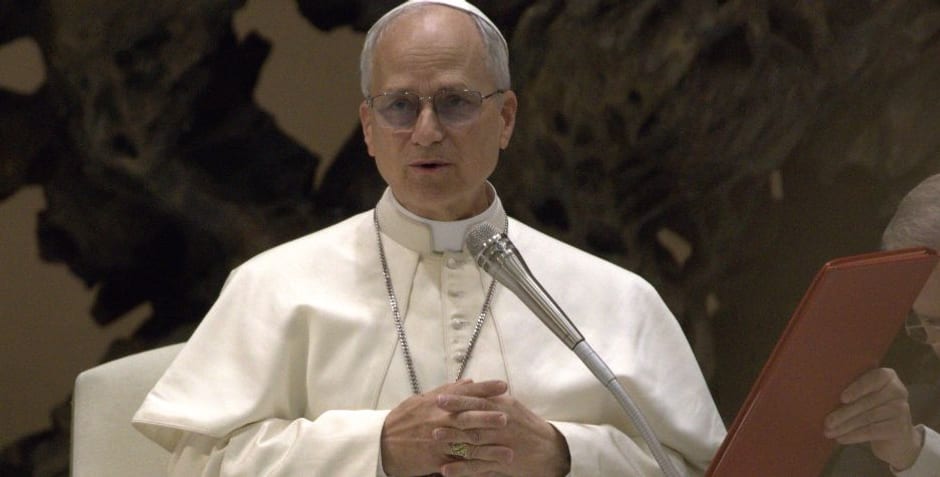

The day after Easter, Pope Leo XIV set foot on Algerian soil. These were forty-eight intense, historic hours that turned the spotlight on a little-known reality, just a few hours’ flight from Paris: that of the some 150,000 Christians in Algeria, facing increasing repression in a country that is 99% Muslim.
Upon his election on 8 May, Leo XIV had announced that he would travel to Africa, and more specifically to Algeria, following in the footsteps of Saint Augustine, of whom he proclaims himself the “spiritual son” as a true Augustinian. This pilgrimage to the roots of Christian thought, in a country with an overwhelming Muslim majority, was by no means insignificant. It was a powerful, carefully considered gesture, imbued with a dual ambition: to reconnect with a buried Christian heritage and to encourage Islamic-Christian dialogue.
A Difficult Situation: Christians Under Pressure
It was against a particularly tense backdrop that Pope Leo XIV travelled to Algeria. The situation facing Christians in that country is part of a wider trend of the erosion of fundamental freedoms. The removal of freedom of conscience from the Constitution in 2022 is a particularly clear indication of this. In a report published on 8 April, the ECLJ details various forms of oppression faced by Christians.
The phenomenon is primarily institutional and social: Christians face discrimination at the administrative and civil levels, as well as in their professional lives. Furthermore, a 2006 decree prevents the opening of any new place of worship — with the result that almost all Protestant churches are now closed. The oppression is also criminal in nature: anyone who conducts an unauthorized service, seeks to ‘undermine a Muslim’s faith’ or is accused of apostasy faces severe prosecution.
Pastors have been sentenced to prison terms simply for gathering their congregations. Converts are particularly targeted by accusations of blasphemy.
And it was in this climate that, on the very first day of Pope Leo XIV’s visit, a double attack was carried out. Two suicide bombers blew themselves up whilst being arrested by the police in Blida, some forty kilometers from Algiers. The last terrorist attack of this nature had taken place in 2020. The visit nevertheless continued.
Moral Support for a Discreet but Vibrant Church
On his visit to Hippo, the Pope revived an ancient Christian memory: before its conquest by Arab-Islamic forces, Algeria was a deeply Christian land, the birthplace of thinkers from the Latin Church, such as Saint Augustine. He therefore made a point of visiting the ruins of Hippo, now in Annaba, where the Berber bishop lived and died in the 4th century. And the man who came as a ‘pilgrim of peace’ planted an olive tree there.
But beyond a pilgrimage in the footsteps of Saint Augustine, it was the Christians whom the Pope came to visit. The Catholic Church in Algeria has only a few thousand faithfuls, most of foreign origin, spread across the dioceses of Algiers, Oran, Constantine and Laghouat. Discreet and service-oriented, it operates within a particularly restrictive legal and social environment: notably, the authorities closed Caritas at the end of 2022. The Pope’s visit therefore represented much more than a diplomatic stopover: it was a shepherd’s visit to his most isolated flock.
At the Basilica of Our Lady of Africa in Algiers, Pope Leo XIV met with the faithful and paid tribute to the nineteen martyrs of Algeria who were murdered during the ‘black decade’ of the 1990s. Among these martyrs were some Augustinian sisters. The Pope also visited Bab El Oued to honor their memory.
A Catholic present in Algeria for the occasion summed up the atmosphere in a single word: “a complete success”. Nothing had been left to chance on the Algerian side — freshly tarmacked roads, repainted walls; President Tebboune himself was involved in the organization. The welcome was equally impressive. Among the country’s Christians, a sense of hope seemed to be reborn. “Delighted and exhausted,” is how it is summed up in local Catholic circles.
The Protestant Issue Was Not Entirely Forgotten
While this was primarily a visit by the head of the Catholic Church, other denominations were not to be outdone. At Notre-Dame d’Afrique, a young Pentecostal woman gave her testimony, whilst the choir brought together voices from different traditions. Archbishop Vesco of Algiers was keen to highlight the presence of the Protestant Churches and the Jewish community, a diversity also emphasized by the Pope in his addresses.
Leo XIV emphasized, more broadly, the importance of interfaith dialogue. In particular, he visited the Great Mosque of Algiers, where he renewed his call to promote peace and forgiveness — a message he had already conveyed during his visit to the Martyrs’ Memorial, dedicated to the victims of the War of Independence.
This emphasis on dialogue comes against a backdrop of rapid growth in evangelical Christianity, driven in particular by conversions among Algerians of Muslim origin, which is fueling the authorities’ unease. Evangelicalism, with its more flexible structures and ability to operate in small groups, is better suited to a restrictive environment, though it is by no means immune to repression. Although the Pope did not raise this issue publicly, he is said to have addressed it in private during his meeting with President Tebboune. According to some Protestant sources, the closure of churches and criminal prosecutions targeting pastors were reportedly discussed during their talks.
Beyond the issue of Christians, this visit also provided an opportunity to raise other sensitive topics. The Pope was thus asked about the fate of the French journalist Christophe Gleizes, who has been detained in Algeria since 2024. When questioned by the Paris Match reporter, he simply stated that he was aware of the situation.
This Visit Brings the Issue to the Fore and Raises Hopes for Reform
The Algerian authorities are well aware of the historical reality of the Christian presence in Algeria, which has been revived for the occasion; indeed, they invoke it at will, depending on the political circumstances. As early as 2001, in the aftermath of the civil war, President Bouteflika had organized an international symposium in Algiers dedicated to Saint Augustine, intending to establish this figure as a symbol of a ‘new Algeria’. The future pope, then Prior General of the Order of Saint Augustine, had in fact taken part in it. But the democratic lull of the time proved short-lived.
Yet one can also see in this papal visit an opportunity for Algiers to attempt to restore its tarnished democratic image. With this in mind, Algeria is hosting a new international symposium dedicated to Saint Augustine at the end of April. The initiative, announced by the Ministry of Culture and the Arts, aims to “consolidate Algeria’s position as a natural and civilizational bridge between the African continent and the Mediterranean region”.
In this land at the crossroads of cultures and civilizations, Pope Leo XIV called for a ‘culture of encounter’, fairer justice and a stronger commitment to building a world based on solidarity. He condemned the ‘constant violations of international law’. According to several observers, this visit has ‘stirred up opposition, some more polite than others’, within Algerian society.
Above all, the Holy Father helped to place the issue of religious minorities on the international agenda. The most optimistic believe in changes “through gradual shifts”: not a sudden revolution, but small gestures of friendship, speeches that change tone, and legal initiatives that might be launched. “I don’t believe in a radically positive and sudden change,” confides an observer present in Algeria during the visit, “but in gradual shifts, new attitudes.”
It is regrettable that neither the Protestant churches nor Caritas were reopened for the occasion. Let us hope, nevertheless, that these forty-eight hours have helped to open a crack that will not close any time soon. For Algeria’s Christians, both Catholic and Evangelical, who are discreet witnesses to a faith that is often invisible, this papal visit already appears to be an encouraging sign.


 Secularism, Catholic Schools, Protection of Life: Leo XIV Has Spoken OutBy Constance Avenel
 Baptism and the “right to be forgotten”By Alicja Słowik
 France: The Church's Suffering & HopeBy Grégor Puppinck
 China: Pastor Cao Must Come HomeBy CeCe Heil