
Turkey: The Spoliation of the Yedikule Armenian Hospital Brought Before the ECtHR
Turkey: The Spoliation of the Yedikule Armenian Hospital
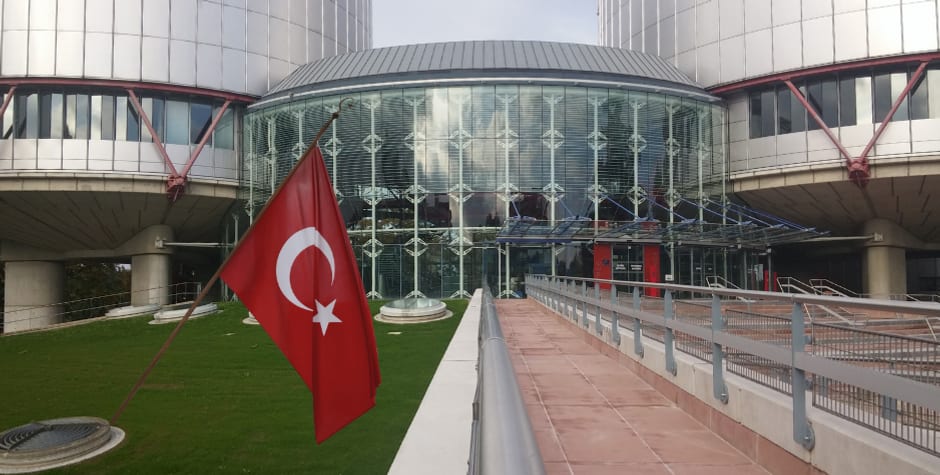
The case of Yedikule Surp Pırgiç Ermeni Hastanesi Vakfı v. Turkey (Application No. 13189/23) exposes the highly sophisticated legal mechanisms deployed by Turkey to misappropriate the heritage of Christian foundations. The European Centre for Law and Justice (ECLJ) has been authorized by the European Court of Human Rights (ECtHR) to submit its written observations in this landmark case, which epitomizes the administrative harassment endured by religious minorities in Anatolia. The ECLJ urges the Court to look beyond a mere technical finding of a violation and explicitly condemn a case of systemic discrimination based on religion.
The applicant, the Yedikule Holy Savior Armenian Hospital Foundation, is a major charitable institution established in 1832. The Turkish administration refuses to register a plot of land in its name, despite the Foundation holding legitimate rights over it since the beginning. To justify this confiscation, the Directorate General of Foundations (VGM) relies on a dual legal artifice:
- The Instrumentalization of the Historical Strawman Practice: Under the Ottoman Empire, minority foundations lacked the legal capacity to own real estate. They systematically resorted to using strawmen (community notables or names of saints). Today, the administration feigns ignorance of this fiduciary arrangement to declare the property an "escheat" (metruken) following the death of the historical strawman in 1963. Yet, Turkish law expressly dictates that the property should have been registered in the name of the foundation.
- Artificial Dissociation and De-establishment: The Turkish State attempts to attribute ownership of the property to the "Armenian Hospital Guest House," separating it from the applicant Foundation. It then declares this autonomous branch to be a "defunct" (mazbut) foundation in order to legally capture its assets. However, they form one and the same continuous hospital work, and mazbut status can legally apply only to structures that have factually ceased all activity or are entirely devoid of directors.
In its written observations, the ECLJ denounces these technical maneuvers against a highly active charitable institution, which constitute an abuse of power aimed at sectarian spoliation. Furthermore, the fairness of the trial, guaranteed by Article 6 § 1 of the European Convention, was overtly compromised by the Istanbul courts. Presented with irrefutable historical evidence of the Foundation's unique identity, the domestic courts confined themselves to boilerplate formulas copied directly from the VGM's decisions. By refusing to examine decisive documents provided by the Armenian Patriarchate and exempting the administration from producing its own decrees, the Turkish courts abdicated their duty of impartiality to act as mere rubber stamps for administrative arbitrariness.
Given the manifest failure of the respondent State's institutions, a simple request to reopen the domestic trial would be both illusory and ineffective. Relying on the landmark judgment Fener Rum Patrikliği v. Turkey (2010), only an order for direct restitution will break this cycle of programmed expropriation and safeguard what remains of the historical Christian heritage in Turkey.
A Strategy of Property and Demographic Attrition
This dispute cannot be analyzed in isolation. It is part of a long-term policy of attrition waged against the Christian presence in Turkey, which now accounts for a mere 0.2% of the overall population, compared to over 20% at the beginning of the 20th century. The ECLJ demonstrated to the Court the structural trap set up by the authorities—such as the deliberate freezing of board elections for Christian foundations since 2013, which knowingly engineering management vacancies and paves the way for mazbut classification. A total of 48 foundations have already been absorbed through this process.
The mechanism remains identical everywhere: to financially and institutionally suffocate Christian communities. The ECLJ is actively mobilized against this strategy, intervening directly before the ECtHR as a third party in several key proceedings, including:
- The case of Mavrakis v. Turkey: The Court heavily condemned the Turkish State for banning elected Greek Orthodox priests from sitting on the boards of directors of their own foundations, solely because they were priests. The judgment relied extensively on the ECLJ's 2025 report regarding the anti-Christian climate in the country. The respondent State has requested the referral of this case to the Grand Chamber, illustrating its procedural obstinacy.
- The applicant's property proceedings: The ECLJ has also been officially authorized by the Court to submit written observations in another land dispute brought by this same Yedikule Armenian Hospital Foundation.
The ECLJ’s participation in the Court’s jurisprudence as an amicus curiae is part of a comprehensive advocacy strategy within international institutions to break the silence surrounding the plight of Christian minorities in Turkey. On October 7, 2026, at the Organization for Security and Co-operation in Europe (OSCE) Warsaw Human Dimension Conference, we denounced the decline of religious freedom in Turkey in an oral statement. Freedom of religion cannot exist without freedom of association and the right to property. Depriving Churches of legal personality and seizing their property has nothing to do with national security; it is systematic religious harassment. In the face of this coordinated policy of attrition, the ECLJ continues to firmly remind Turkey that protecting the religious freedom of Christians is a strict legal imperative, which remains a fundamental pillar for comprehensive security and lasting peace within the Council of Europe as well as across the entire OSCE region.





 Algeria: Two Police Raids on Christian Communities in One MonthBy Constance Avenel
 Baptism and the Right to Erasure of Personal Data - Key ArticleBy Alicja Słowik
 ECHR: Three Christian Foundations WinBy Thibault van den Bossche